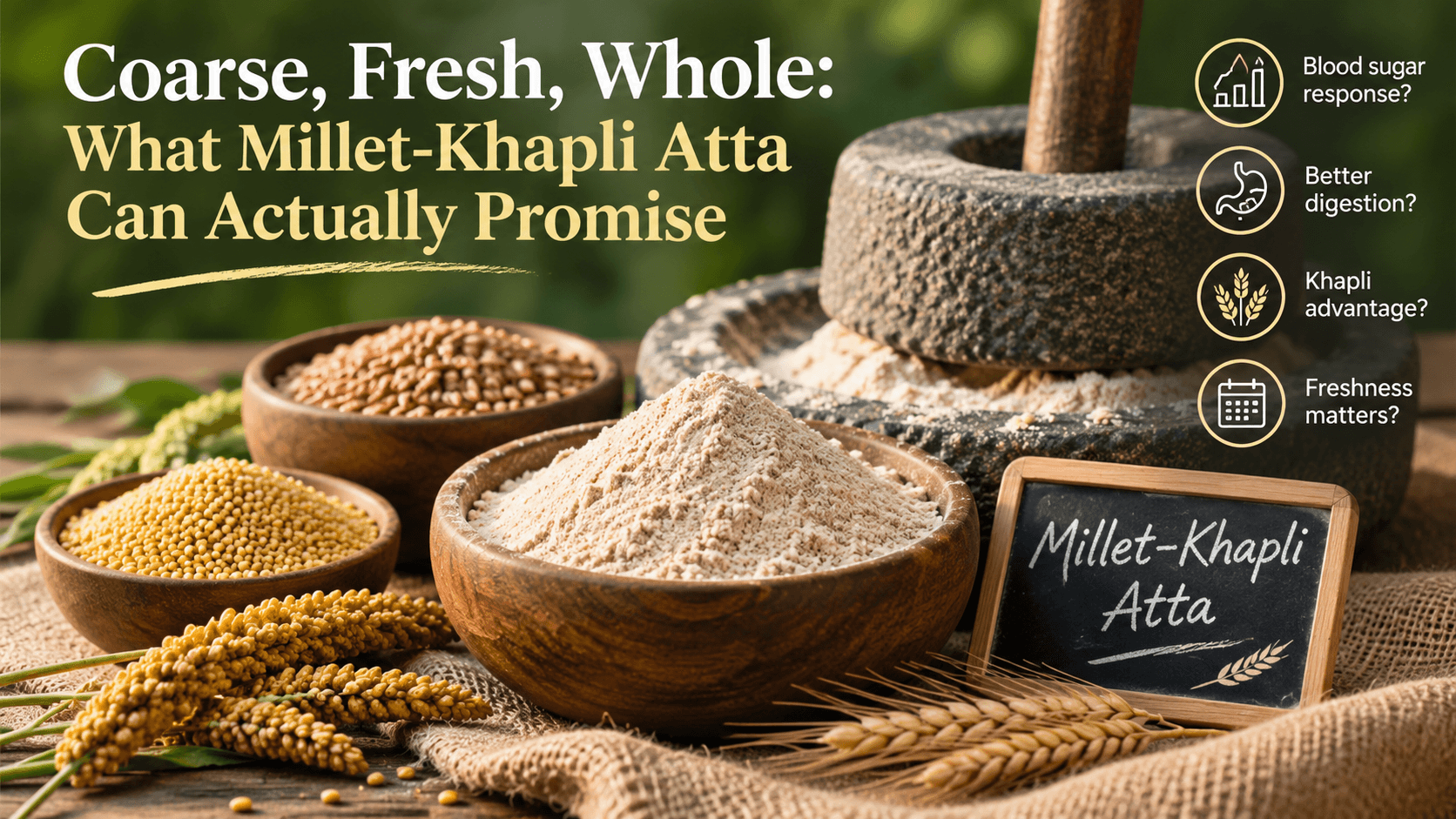
India's relationship with wheat is deeply rooted in its agricultural history and culinary traditions. For generations, the humble roti has remained a staple across millions of households. Yet, as lifestyles change and concerns about diabetes, obesity and metabolic health grow, a fundamental question is emerging: Should India reconsider not only how much wheat it consumes, but also the variety of wheat it grows and the way it processes that grain?
This question has brought renewed attention to Khapli wheat, an ancient variety of emmer wheat, and to traditional stone-ground flour.
Their appeal lies at the intersection of nutrition, agricultural biodiversity, food processing and premium consumer markets. However, the growing popularity of ancient grains also raises questions about affordability, scientific evidence, consumer awareness and commercial scalability.
For India's food industry, Khapli wheat represents more than a nostalgic return to traditional agriculture. It offers an opportunity to examine whether heritage crops can support a new generation of differentiated, minimally processed staple foods.
1. Understanding Khapli Wheat: What Makes It Different?
Khapli wheat, commonly associated with emmer wheat (Triticum dicoccum), is one of the older cultivated forms of wheat. It differs from the modern bread wheat (Triticum aestivum) that dominates India's commercial flour market.
Its renewed popularity is linked to interest in traditional foods, grain diversity and less-refined carbohydrates.
Three characteristics distinguish its commercial and nutritional positioning.
Nutritional composition: Khapli wheat contains protein, dietary fibre, minerals and bioactive compounds. Its precise composition varies with the cultivar, soil, growing conditions and processing method. It is not automatically more nutritious than every modern whole-wheat variety.
Gluten characteristics: Emmer has a different gluten-protein composition from common bread wheat, which can influence dough elasticity, texture and baking performance. However, Khapli still contains gluten and is unsuitable for people with coeliac disease or wheat allergy.
Agricultural heritage: As an ancient cultivated wheat, emmer contributes to crop diversity. Its cultivation can support niche agricultural value chains, although claims of superior drought resistance, lower water requirements or climate resilience must be tested against specific varieties and local growing conditions.
The distinction matters because the term ancient grain is increasingly used as a marketing advantage. Age alone does not establish nutritional superiority.
2. Why Stone-Ground Flour Matters
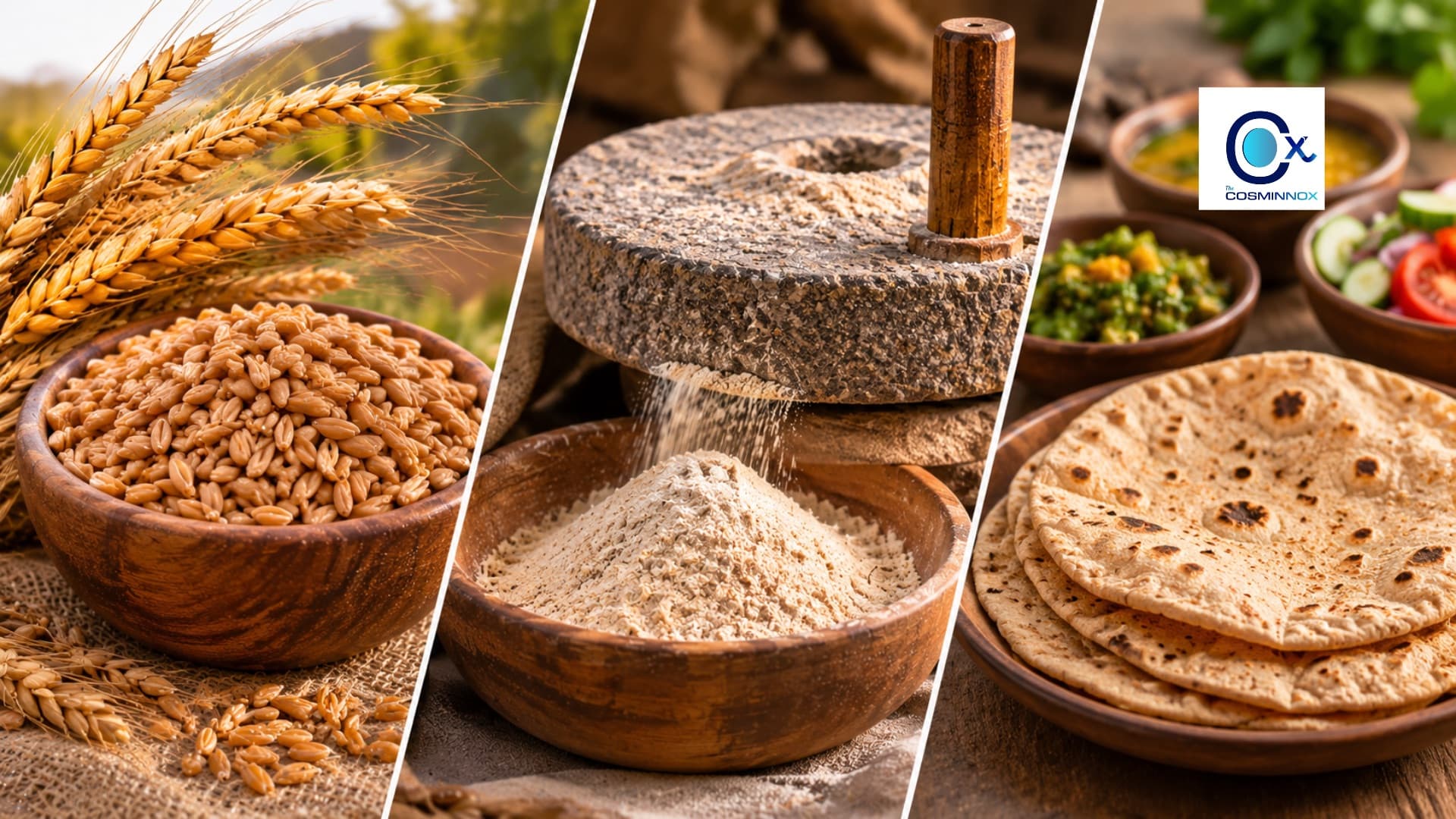
Traditional stone grinding, commonly associated with the Indian chakki, is gaining attention because of the growing preference for whole-grain and less-refined foods.
Unlike a simple distinction between traditional and industrial processing, the nutritional question is more precise: How much of the original grain remains in the flour, and how finely has it been ground?
A whole grain contains three major components:
Component | Nutritional contribution |
|---|---|
Bran | Dietary fibre, minerals and plant compounds |
Germ | Natural fats, vitamin E and B vitamins |
Endosperm | Starch and protein |
When flour retains all three components in their original proportions, it preserves the nutritional advantages associated with whole grains.
Coarser particles may also retain more intact grain structures, reducing how rapidly digestive enzymes access starch. Research on chapati flour indicates that milling conditions and ingredient composition can influence carbohydrate digestibility.
Nevertheless, stone grinding is not inherently healthier than every modern milling technique. A finely ground stone-milled flour may behave differently from a coarser product, and whole-grain roller-milled flour can also retain the grain's nutrients.
The real opportunity is therefore not simply to sell stone-ground flour, but to establish transparent standards for whole-grain content, particle size, freshness and quality.
3. Health Relevance: Promise Without Exaggeration
The renewed interest in Khapli flour is closely connected to India's growing burden of metabolic disorders.
Consumers are increasingly searching for dietary choices that support better glucose management, digestive health and weight control. Whole-grain flour may contribute to these goals, particularly when it replaces refined carbohydrates.
Three areas deserve attention.
Blood-glucose management: Coarser whole-grain flour can sometimes slow starch digestion. However, the glycaemic response depends on the flour's particle size, cooking method, portion size and the other foods eaten with it. Evidence is insufficient to claim that Khapli wheat consistently produces a lower glycaemic response than all modern whole-wheat varieties.
Digestive health: Whole-grain fibre can support bowel regularity and provide substrates for gut microorganisms. Fermentation of certain fibres produces short-chain fatty acids, including butyrate, which contributes to intestinal health.
Satiety and dietary quality: Whole grains can improve dietary fibre intake and may support fullness, especially when combined with vegetables, pulses and other protein-rich foods.
The attached Coarse Stone-Ground Multigrain Atta Guide reinforces an important principle: the greatest dietary benefit comes from combining whole grains, purposeful milling and balanced meals rather than relying on one supposedly exceptional ingredient.
Khapli flour should therefore be understood as a potentially useful staple, not as a treatment for diabetes, obesity or gastrointestinal disease.
4. India's Khapli Wheat Market: A Premium Opportunity
REPORTED RETAIL PRICE RANGE · DECEMBER 2025
Regular wheat atta ~₹50Per kilogram | Khapli wheat atta ₹159–250Per kilogram |
|---|
Indicative prices reported by industry media, not a live national retail average.
India's wheat market is enormous, but the Khapli segment remains relatively small and premium-oriented.
The government's third advance estimate placed India's total wheat production for 2025–26 at approximately 120.66 million tonnes. This illustrates the scale of the national wheat economy, although it does not establish the size of the Khapli market specifically.
A December 2025 report in The Economic Times identified more than a dozen brands entering the heirloom flour category, including ITC, Urban Platter, Anveshan, Conscious Food and Two Brothers Organic Farms. One producer reported a seven- to eightfold increase in Khapli atta sales over two years.
These developments suggest growing commercial interest. However, they should not be confused with independently verified, industry-wide market growth.
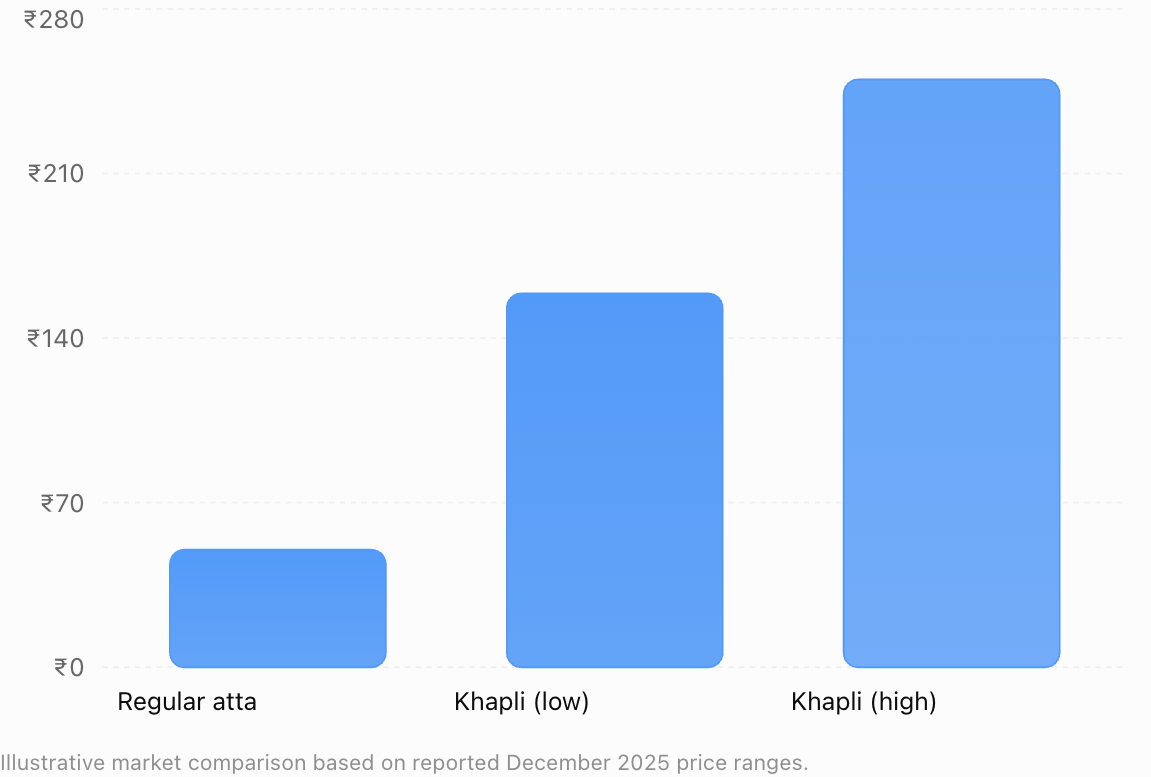
The price difference presents both an opportunity and a limitation. Consumers who value provenance, whole-grain quality and traditional processing may accept premium prices. Yet a staple costing three to five times as much as ordinary atta is unlikely to achieve mass adoption without substantial improvements in affordability.
The immediate market opportunity is therefore concentrated in urban health-conscious households, specialty grocery retailers, direct-to-consumer food brands and premium food-service businesses.
5. Can Khapli Wheat Create Opportunities for Farmers and Entrepreneurs?
Record High Food Grain Output: What It Means For The Economy?
The revival of Khapli wheat could extend beyond consumer nutrition into agricultural entrepreneurship.
For farmers, heritage grains may provide access to differentiated markets where buyers pay for verified crop identity and quality. For entrepreneurs, value addition can occur through cleaning, grading, stone milling, packaging, direct distribution and specialised food products.
Three business opportunities stand out.
Farm-to-flour supply chains: Farmer-producer organisations and food startups could develop traceable Khapli wheat networks, linking growers directly with processors and consumers.
Fresh-milling services: Local chakkis could offer customised coarse whole-grain flour, including Khapli-based blends with barley, chana or millets.
Value-added food products: Khapli flour could be used in traditional rotis, artisanal breads, crackers and other products, provided their formulation and nutritional claims are independently assessed.
However, Khapli wheat is not automatically a more profitable crop. Yield differences, cultivation costs, seed availability, processing losses and guaranteed buyer demand all influence farm economics.
A sustainable model would need to demonstrate that the premium received by the farmer exceeds any additional cost or reduction in productivity.
6. The Challenges Behind the Health-Food Narrative
Despite its appeal, several structural challenges could limit the growth of Khapli and stone-ground flour.
First, the evidence gap. Claims such as diabetic-friendly, low-gluten or superior for weight loss require careful scientific scrutiny. Emmer wheat is not gluten-free, and its effects on blood glucose cannot be generalised without considering flour processing and meal composition.
Second, affordability. Premium pricing creates a divide between consumers who can experiment with specialised staples and those who depend on inexpensive everyday flour.
Third, product consistency. Whole-grain flour contains natural oils from the germ and may have a shorter shelf life than more refined products. Storage, moisture control, hygiene and packaging are essential to maintaining quality.
Fourth, authenticity. Consumers may find it difficult to distinguish genuine Khapli flour from products containing only a small proportion of emmer wheat. Clear ingredient declarations and credible testing are necessary.
Finally, consumer acceptance matters. A healthier product that produces unfamiliar dough, harder rotis or inconsistent cooking results may struggle to become a regular household staple.
These challenges suggest that the next stage of market development should focus less on dramatic health claims and more on product reliability.
7. A Middle Path: Making Traditional Flour Relevant to Modern Households
The most practical opportunity may lie in combining Khapli wheat with other familiar grains rather than expecting every household to replace its regular atta completely.
The supplied household guide proposes an illustrative coarse multigrain blend:
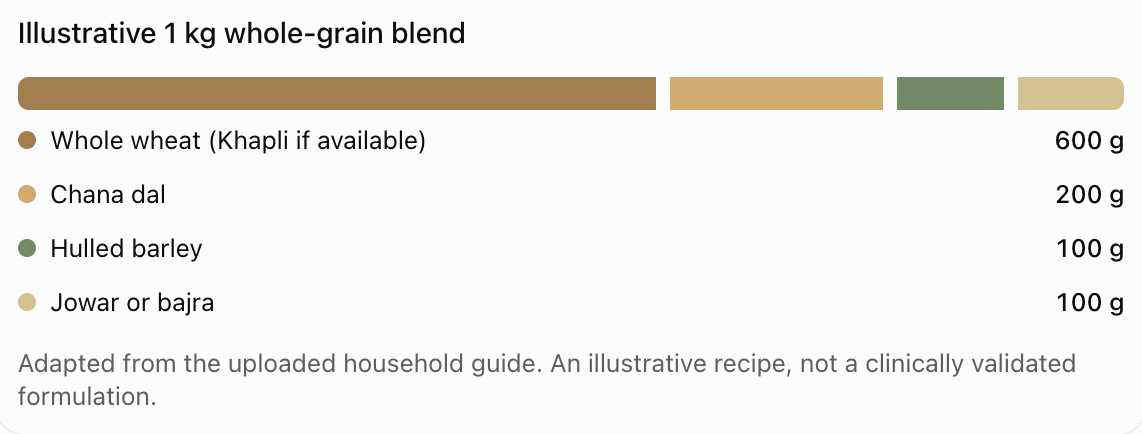
Such blends can combine grain diversity with familiar cooking practices. They may also help consumers manage costs when Khapli is used as one ingredient rather than the entire flour base.
For households, gradual introduction is preferable to abrupt dietary replacement. For businesses, blends create room for different price points, textures and consumer preferences.
Importantly, whole-grain flour remains carbohydrate-rich. Portion size, protein intake and vegetable consumption continue to influence the nutritional quality of the meal.
8. The Policy Question: Heritage Food or Scalable Food Innovation?
India's food innovation agenda increasingly includes agricultural diversification, traditional crops and value-added processing.
Khapli wheat could fit within this broader agenda, but its development requires more than branding.
A coordinated approach would involve agricultural universities studying regional cultivation performance; food scientists comparing grain composition and processing methods; entrepreneurs developing affordable, traceable products; and regulators ensuring that health claims are accurate.
The following priorities would strengthen the sector:
Priority | Recommended intervention |
|---|---|
Scientific credibility | Independent nutritional and glycaemic-response studies |
Farmer viability | Pilot cultivation with documented costs, yields and procurement prices |
Consumer trust | Verified grain identity and transparent ingredient labels |
Affordability | Smaller packs, regional milling and cost-effective blends |
Market development | Support for farmer-producer organisations, local chakkis and food startups |
The central policy challenge is not whether ancient grains deserve attention. It is whether their revival can deliver measurable benefits to farmers and consumers without turning traditional food into an inaccessible luxury.
9. The COSMINNOX Verdict
OUR ASSESSMENT
The Future of Flour Lies in Evidence, Not Nostalgia.
Khapli wheat and coarse stone-ground flour offer a credible opportunity for product innovation, agricultural diversification and improved whole-grain consumption. But their long-term relevance will depend on three tests: demonstrable nutritional value, sustainable farmer economics and prices ordinary households can afford.
India does not need to abandon modern agriculture to rediscover the value of traditional grains. Nor should it assume that everything ancient is automatically healthier.
The more productive path lies in bringing traditional crops into a modern system of scientific evaluation, quality assurance and responsible entrepreneurship.
Khapli wheat may never replace conventional wheat at scale. It does not need to. Its greater contribution could be to demonstrate how crop diversity, thoughtful processing and consumer choice can create value across the food chain.
For The COSMINNOX, the defining question is not whether Khapli wheat is the next superfood. It is whether India can transform a heritage grain into a commercially viable, nutritionally credible and socially accessible staple.
The real innovation may not be in discovering a new grain, but in understanding the value of the grain we once knew.
Research references and editorial notes
The article combines the uploaded Coarse Stone-Ground Multigrain Atta Guide (November 2026) with external market and agricultural reporting. The guide supports the discussion of milling, grain composition, fibre and practical meal design; it does not provide Khapli-specific market statistics or clinical trial evidence.
The Economic Times: Khapli Atta Market Revival, December 2025
Research on Milling and Carbohydrate Digestibility of Chapati Atta
Verified sources
No. | Source | Relevance to article |
|---|---|---|
1 | The Economic Times (2025) — Khapli Atta Returns as Urban Indians Turn Health-Conscious | Khapli market growth, brands, consumer demand and ₹159–₹250/kg pricing. The Economic Times |
2 | CSIR-CFTRI research (2020) — Milling Interventions for the Production of Atta for Indian Flat Bread with Low Carbohydrate Digestibility | Effects of milling and flour composition on starch digestibility and chapati quality. PubMed Central (PMC) |
3 | Ministry of Agriculture & Farmers Welfare (2026) — Third Advance Estimates of Agricultural Production, 2025–26 | India's wheat production and broader agricultural market context. Press Information Bureau |
4 | Reserve Bank of India (2026) — Agricultural Production in 2025–26, Table III.10 | Confirms estimated wheat production of 120.66 million tonnes in 2025–26. Reserve Bank of India |
5 | Anitha et al. (2021), Frontiers in Nutrition — A Systematic Review and Meta-analysis of the Potential of Millets for Managing and Reducing the Risk of Diabetes Mellitus | Evidence on millet glycaemic responses; relevant to multigrain blends, not direct evidence about Khapli. |
6 | George, Garcia & Edwards (2015), Journal of Human Nutrition and Dietetics — Glycaemic Responses of Staple South Asian Foods Alone and Combined with Curried Chicken as a Mixed Meal | Explains why meal composition matters alongside the choice of flour. |
7 | Coarse Stone-Ground Multigrain Atta: A Practical Guide for Gut Health and Glucose Control (November 2026) | Your uploaded reference guide, covering whole grains, stone grinding, gut health, multigrain formulations and dietary precautions. |