
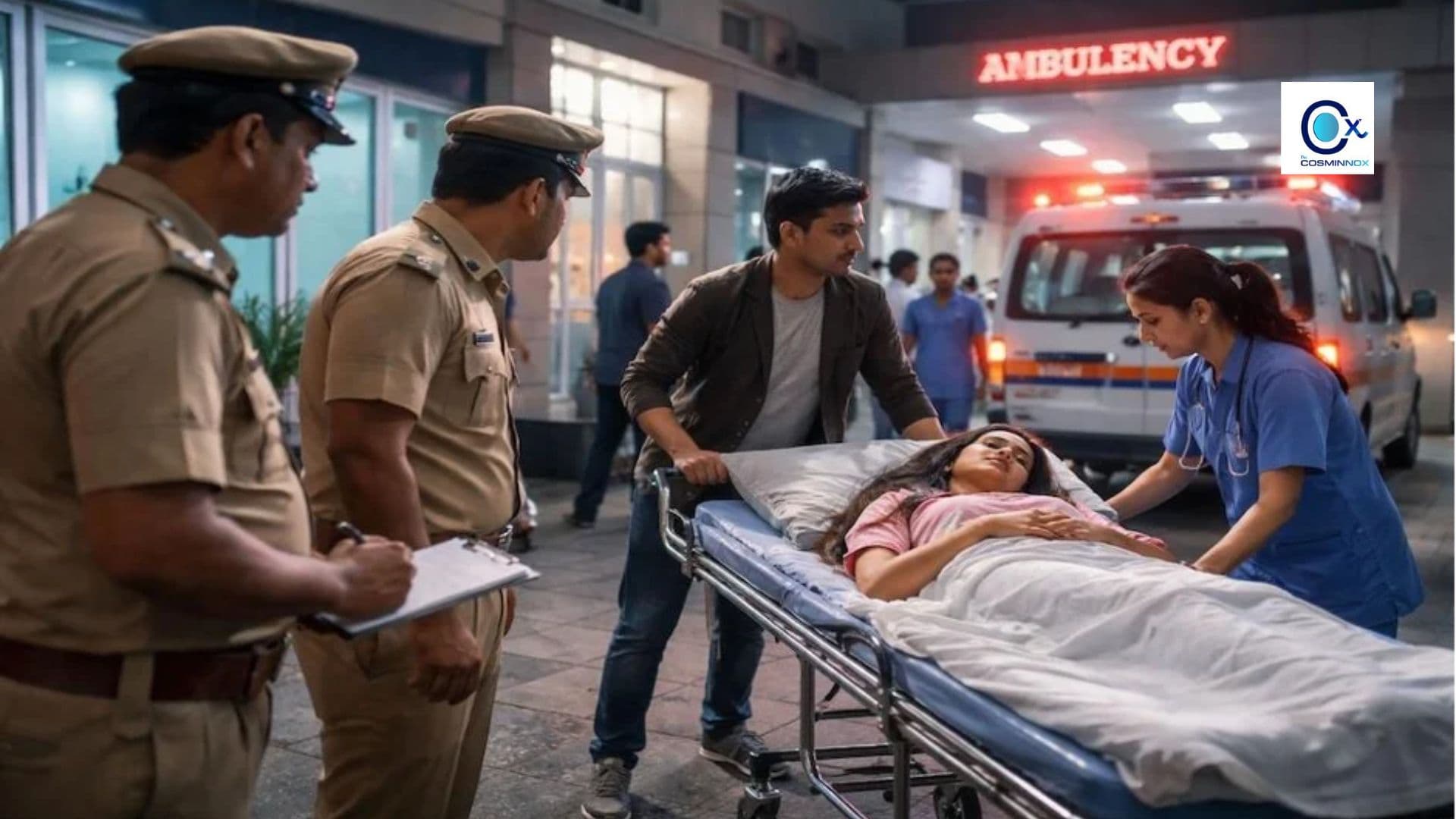
A road accident can turn an ordinary day into a family crisis within minutes. Beyond physical injuries and emotional trauma, families are often confronted with mounting hospital bills, interrupted livelihoods, transport expenses and urgent medical decisions. For many households, financial uncertainty begins immediately, while the legal process for compensation may take considerably longer.
Against this backdrop, the Compensation to Victims (Interim Relief) Scheme, 2026, framed under Section 164A of the Motor Vehicles Act, 1988, represents an important step towards a more responsive system of accident compensation.
As reported in proceedings before the Supreme Court, the scheme provides for interim compensation of ₹2 lakh in cases of death and ₹1 lakh in cases of grievous injury, subject to eligibility conditions and prescribed procedures.
In case of death | Grievous injury |
Reported interim compensation | Reported interim compensation |
Amounts described in the reported Supreme Court proceedings. These are not automatic payments; eligibility and procedural requirements apply.
The underlying principle is significant: financial assistance should not be delayed entirely until a final compensation claim is resolved.
Yet the success of this initiative will not be measured merely by its announcement. Its real value will depend on whether accident victims and their families know about the scheme, understand their eligibility and can obtain assistance without unnecessary administrative obstacles.
Why interim relief matters
The first few weeks following a serious accident can be among the most financially vulnerable periods for a household. A person recovering from injuries may require medicines, rehabilitation, specialised transport or continuous care. Where the victim is the family’s principal earning member, income may suddenly disappear even as expenses multiply.
In cases involving death, surviving family members may face the simultaneous burden of bereavement, immediate household expenditure and long-term financial insecurity.
Interim relief is therefore not a substitute for full and fair compensation. It serves a different purpose: providing assistance during the period between the accident and the resolution of a compensation claim.
Section 164A empowers the Central Government to establish schemes for interim relief to claimants seeking compensation under the Motor Vehicles Act. The provision also contemplates mechanisms for recovering disbursed amounts from prescribed sources.
The larger policy significance lies in recognising that justice is not only about the final determination of legal rights. It is also about whether people receive meaningful support when they need it most.
The Supreme Court's intervention: Awareness is essential to access
On 16 October 2026, the Supreme Court reportedly expressed concern over inadequate public awareness of the interim relief scheme, describing it as an “unannounced law.”
The Court called for wider publicity and sought a concrete plan from the Union Government for nationwide awareness and implementation.
This intervention raises a fundamental question of public administration: What is the practical value of a welfare entitlement if its intended beneficiaries are unaware of its existence?
A scheme may have statutory backing, detailed eligibility conditions and an administrative framework. Yet these features offer little assistance to a family that cannot identify where to apply, which documents are required or whom to approach for help.
The proceedings also highlighted a coverage concern regarding accidents involving uninsured vehicles. If the interim compensation route is restricted to insured vehicles, authorities must explain what alternative mechanisms are available to affected claimants.
The principle should be clear: access to urgent support must be transparent, predictable and understandable, regardless of the complexity of insurance arrangements.
From legal provision to accessible public service
The next stage of reform must prioritise implementation at the district and community levels. Public awareness cannot be confined to government notifications, official websites or administrative correspondence.
Proposed claimant-support pathway
Accident reported |
↓
Eligibility guidance and application |
↓
Verification and decision |
↓
Interim financial relief |
Figure 1. COSMINNOX’s recommended simplified service pathway; this is a policy proposal, not a representation of the officially notified application procedure.
Five implementation priorities deserve immediate attention.
First, make information available at the point of need. Hospitals, trauma centres, emergency departments, police stations and ambulance services should display clear guidance on eligibility, application procedures, documentation and contact details. Communication should be multilingual and accessible.
Second, strengthen frontline institutional capacity. Hospital help desks, police personnel, district legal-services authorities and insurer representatives should receive practical training so that families are guided towards the appropriate office rather than redirected repeatedly.
Third, introduce a transparent and traceable claims process. A digital platform could enable authorised agencies to initiate cases using verified accident records, monitor application status and send updates to claimants. However, offline assistance must remain available to those with limited internet access or digital literacy.
Fourth, establish measurable service standards. Authorities should specify expected timelines for acknowledgement, document verification, decisions and payments. Public reporting on applications, approvals, rejections and delays would strengthen accountability.
Fifth, clarify the position of uninsured vehicles. The government should publicly explain the applicable legal mechanism, funding responsibility and grievance process for claimants whose accidents involve uninsured vehicles.
Together, these measures would move the scheme beyond administrative compliance towards a genuinely citizen-centred system.
Connecting financial relief with emergency healthcare
Compensation and medical treatment are closely related, but they address different needs.
India’s PM RAHAT initiative provides a separate framework for cashless treatment of eligible road-accident victims, with medical coverage of up to ₹1.5 lakh for seven days, subject to its terms.
The interim relief scheme under Section 164A, by contrast, concerns financial compensation to eligible claimants while the final compensation process remains pending.
Two schemes, two distinct purposes
| Section 164A Interim Relief | PM RAHAT |
Purpose | Interim compensation | Cashless emergency treatment |
Reported amount | ₹2 lakh for death; ₹1 lakh for grievous injury | Up to ₹1.5 lakh treatment cover |
Timing | During the compensation process | Up to seven days of eligible treatment |
Primary benefit | Financial support to claimants | Access to eligible medical care |
Figure 2. Comparison of the two policy mechanisms based on their stated purposes. Eligibility, coverage and procedures are governed by their respective official rules.
These initiatives should be communicated as complementary rather than interchangeable measures.
A coordinated system linking hospitals, ambulance providers, police authorities, insurers, legal-aid institutions and designated government agencies could reduce paperwork and prevent families from repeatedly submitting the same information.
Technology can support this coordination through secure document verification, status tracking and timely communication. However, digital efficiency must not come at the expense of privacy, accessibility or personal assistance.
For an injured person or a grieving family, the availability of a trained human representative may be as important as the existence of a digital portal.
The COSMINNOX perspective: Measuring justice through delivery
Public welfare schemes should be evaluated not only by the benefits they announce but also by their actual reach, speed and accessibility.
The interim relief framework creates an opportunity to develop a more accountable approach to road-accident support. Its implementation should be assessed against practical questions: How quickly are eligible applications processed? How many claimants receive assistance? Are rural households able to navigate the procedure? What proportion of applications is delayed, and for what reasons?
Publishing such information, while protecting personal data, would allow policymakers to identify administrative weaknesses and make evidence-based improvements.
There is also an opportunity for responsible innovation. Secure digital records, multilingual assistance tools, automated status notifications and integrated referral systems could reduce friction across institutions. These solutions should complement, rather than replace, trained personnel and accessible grievance mechanisms.
The objective must be to ensure that institutional complexity does not become an additional burden on accident victims.
Conclusion: A right must reach the person it is meant to protect
The Compensation to Victims (Interim Relief) Scheme, 2026 represents a welcome recognition that families affected by road accidents may need financial assistance long before their final compensation claims are decided.
The Supreme Court’s emphasis on public awareness and an actionable implementation plan is therefore timely and necessary.
The responsibility now extends across the Union and state governments, insurers, district administrations, hospitals, police departments and legal-aid institutions. Each has a role in transforming the scheme from a legal provision into an accessible public service.
The question is no longer simply whether interim relief exists. It is whether an affected family, standing in a district hospital or police station, can discover the benefit, understand the process and receive a timely decision.
The true measure of justice is not merely the announcement of relief, but its arrival when people need it most. India Has taken a welcome step. The priority now is to ensure that this step reaches every eligible citizen.
References
1. Ministry of Law and Justice, Government of India. The Motor Vehicles Act, 1988 – Section 164A: Scheme for Interim Relief for Claimants. India Code. https://www.indiacode.nic.in/bitstream/123456789/1798/1/198859.pdf Primary legislative source establishing the legal framework for interim relief.
2. Supreme Court of India. S. Rajaseekaran v. Union of India and Others, Order dated 28 April 2025.https://indiankanoon.org/doc/18278958/ Documents the Supreme Court's direction to the Central Government to frame a scheme under Section 164A.
3. Bar & Bench. (16 October 2026). Supreme Court pulls up Centre over “unannounced” motor accident victim compensation scheme.
4. United News of India (UNI). (16 October 2026). SC calls motor accident interim relief scheme an 'unannounced law', orders wide publicity.
5. Press Information Bureau, Ministry of Road Transport & Highways. (11 March 2026). PM RAHAT – Cashless Treatment of Road Accident Victims. Government of India. https://www.pib.gov.in/newsite/erelcontent.aspx?lang=2®=48&relid=285691 Official source confirming the separate cashless treatment framework, including coverage up to ₹1.5 lakh for seven days.