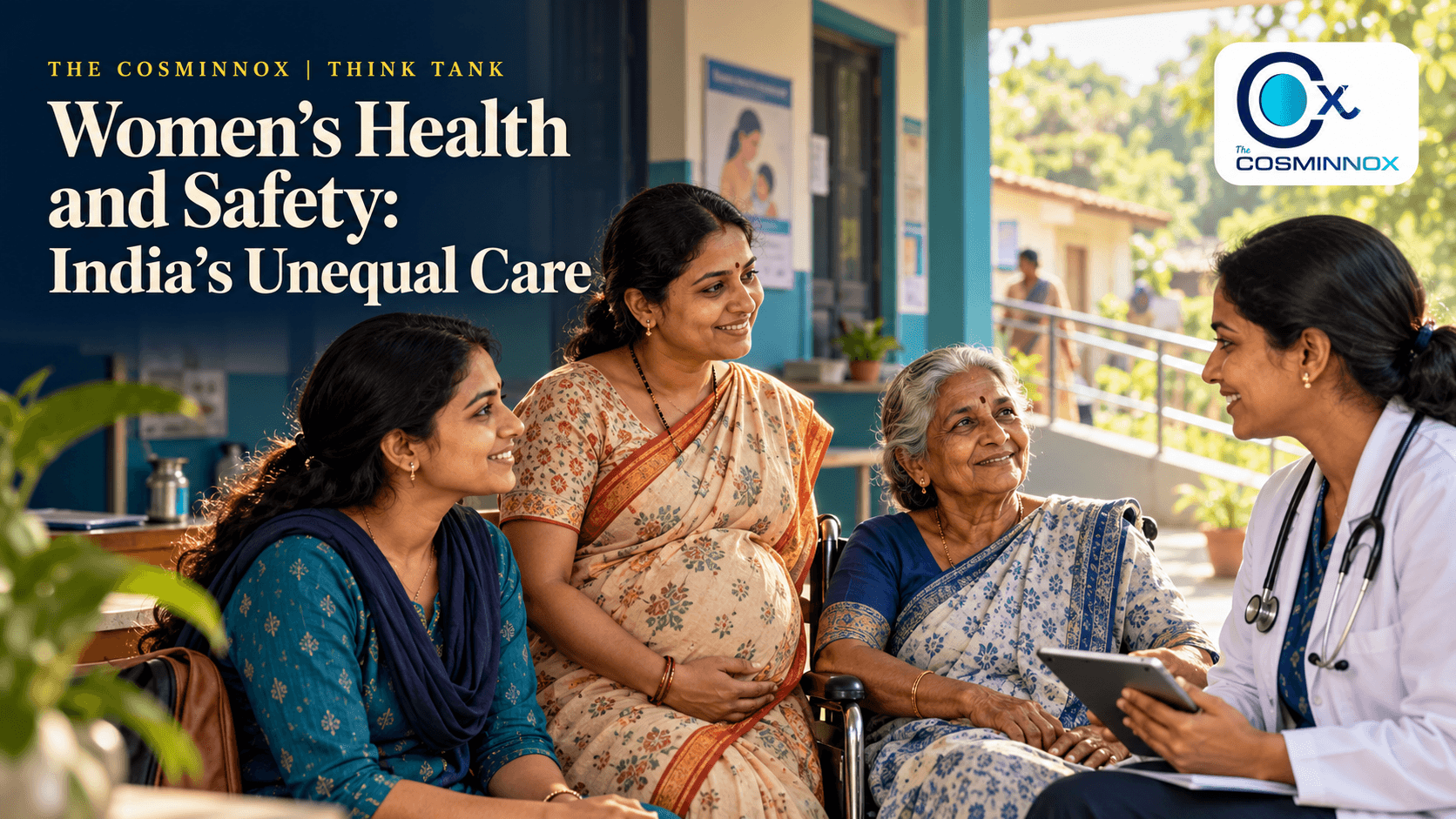
From the first period to the years beyond menopause, every woman deserves health, dignity and safety wherever she lives, whatever she earns.
We celebrate women in speeches, applaud their strength and praise the burdens they bear. But beyond the flowers and familiar words lies a quieter responsibility: making sure help is there. A woman’s life moves through many seasons. Her needs change, her body changes, her circumstances do too. Care should travel beside her, with someone willing to listen and see each concern through.
Through every change, through every year,
She deserves a listening ear.
A girl begins her period and tries to understand what it means. Imagine her checking her clothes before standing up in class, wondering whether she can ask for a pad without embarrassment. Before she can concentrate on a lesson, she needs somewhere private to wash and change.
Period poverty, maternal care and menopause reveal why access must be measured across income, location, caste and disability, and why support should remain available beyond formal employment.
Why do women facing similar health needs have such different chances of receiving support?
This article examines the gaps across adolescence, motherhood and midlife, and how income, education, geography, caste and disability can shape access. The evidence points towards a practical objective: make appropriate care easier to find, afford and complete. Employer-funded support can contribute for women it covers, but a wider response must also reach those outside formal employment.
Period poverty and the gap behind the average
The latest National Family Health Survey, NFHS-6, covered 679,238 households and interviewed 716,397 women and 100,977 men in 2023–24. Its India fact sheet reports 79.2% of women aged 15–24 used a hygienic menstrual protection method. The figure was 90.7% in urban areas and 75.0% in rural areas—a 15.7 percentage-point gap. Compared with NFHS-5, the national figure rose from 77.6% to 79.2%, but the survey’s definition of hygienic methods changed slightly, so this small movement should be read cautiously rather than as a perfectly like-for-like trend. [1]
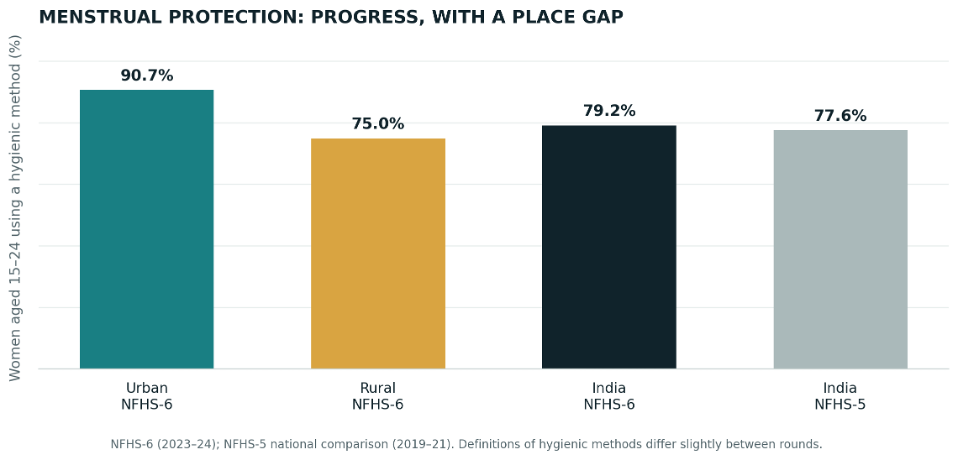
Figure 1. Menstrual protection use by residence and survey round. The rural–urban difference in NFHS-6 is 90.7 − 75.0 = 15.7 percentage points. Source: NFHS-6 India Fact Sheet, indicator 94; NFHS-5 comparison as shown in the same fact sheet. [1]
The average also hides economic and educational differences. PTI’s reporting of the earlier NFHS-5 national report recorded use at 95% among women in the highest wealth quintile and 54% in the lowest. Among those with at least 12 years of schooling, it was 90%; among those with no schooling, 44%. These are rounded historical comparisons from 2019–21, not current NFHS-6 subgroup estimates. [2]
Product use alone does not measure period poverty in full. It does not show whether supplies are consistently affordable, whether a woman has privacy and suitable facilities, or whether she can obtain advice when needed. COSMINNOX therefore proposes assessing menstrual support through practical questions: can a girl obtain the product she chooses, use it with dignity and ask for help without embarrassment?
Maternal care must cover the whole journey
Maternal-care contact has also improved. Among mothers with a birth in the five years before the survey, 95.9% had at least one antenatal care visit, 65.2% had four or more visits, 90.6% delivered in a health facility and 91.3% had a skilled attendant. This pattern matters: a high first-contact rate does not itself show whether care continued through pregnancy, delivery and the postnatal period, or whether it was affordable, accessible and respectful. The difference between any antenatal visit and four or more visits is 30.7 percentage points. These are coverage measures, not direct measures of clinical quality. [1]
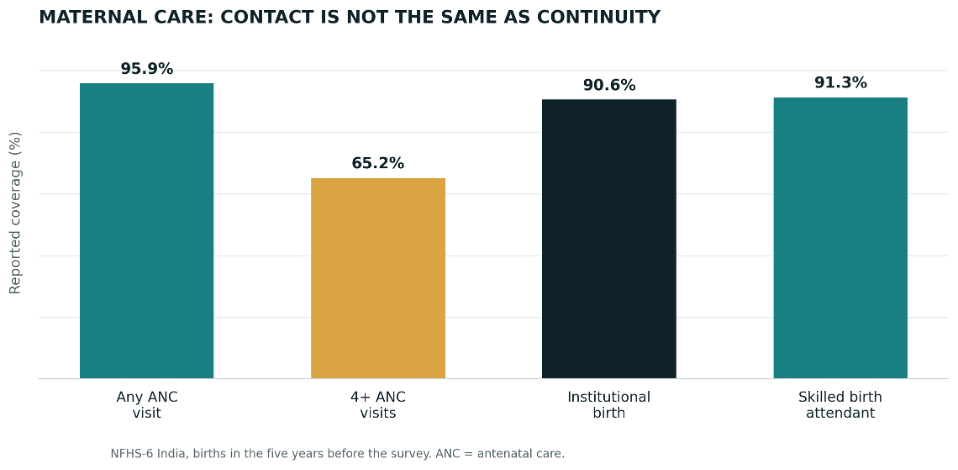
Figure 2. Maternal-care indicators for recent births. Coverage definitions and denominators differ by indicator; the bars should not be treated as a single cohort moving through a care funnel. Source: NFHS-6 India Fact Sheet, indicators 28–37. [1]
The Sample Registration System estimated India’s maternal mortality ratio at 87.4 maternal deaths per 100,000 live births for 2022–24, down from 88 in 2021–23. The decline is real, but the two estimates refer to overlapping three-year periods and the latest national change is small. A national ratio also masks state-level variation and does not tell us which groups are least able to reach emergency obstetric care. [2]
Menopause deserves a place in everyday care
Women’s health needs continue beyond pregnancy and childbirth. WHO describes menopause as a natural transition, usually occurring between ages 45 and 55 worldwide. Experiences vary: some women have few symptoms, while others face changes that affect daily life, including sleep difficulties, hot flushes and changes in mood. [5]
WHO also identifies gaps in awareness, access to information and services, and health-worker training. This is global evidence; it should not be converted into an unsupported estimate of how many Indian women need treatment. [5]
For India’s care system, the relevant question is whether a woman can discuss her concerns, receive an appropriate assessment and understand her options. COSMINNOX proposes including menopause information and referral pathways in routine women’s health services, with workplace flexibility where needed. Support should respect individual needs rather than assume that every woman experiences the transition in the same way.
Income and location are only part of the picture
Caste-disaggregated research adds another dimension. An analysis by Umaer Alam and colleagues using NFHS-5 data reported hygienic-method use at 76.3% among Scheduled Caste respondents, 68.5% among Scheduled Tribe respondents and 84.3% in the study’s “other” caste category. These are the researchers’ estimates. They show differences between groups but do not isolate caste from wealth, schooling or location, or establish the cause of an individual woman’s experience. [3]
Disability requires specific attention to how support is delivered. The Registrar General’s Census 2011 release reported literacy among the female population with disabilities at 44.6%, compared with 62.4% among males with disabilities. This is an old educational baseline, not a current measure of healthcare access. It cannot tell us whether today’s clinics, helplines or digital platforms meet women’s access needs. [4]
That limitation matters. A service may be available in principle but difficult to use if its information, communication channels or premises are inaccessible. COSMINNOX recommends testing services with women with different disabilities, offering accessible voice and text options, and checking physical access to referral providers. Local-language explanations and assisted access should be available where needed.
These barriers should be examined together. Separate averages for rural women, low-income women or women with disabilities cannot tell us what happens when several disadvantages overlap. Programme evaluations should examine those overlaps where sample sizes and consent allow, while protecting personal information and avoiding identifiable reports about small groups.
Safety is part of the health system
NFHS-6 reports that 22.3% of ever-married women aged 18–49 had ever experienced spousal physical and/or sexual violence, compared with 29.2% in NFHS-5. In NFHS-6, the reported figure was 24.4% in rural areas and 17.5% in urban areas. This is an important decline in reported experience, alongside a persistent geographic gap. It is not a count of all gender-based violence: the indicator has a specific definition, relies on disclosure in a survey, and does not capture every form of harassment, coercion or violence in public and private life. Nor can the difference between survey rounds by itself establish why reports changed. [1]
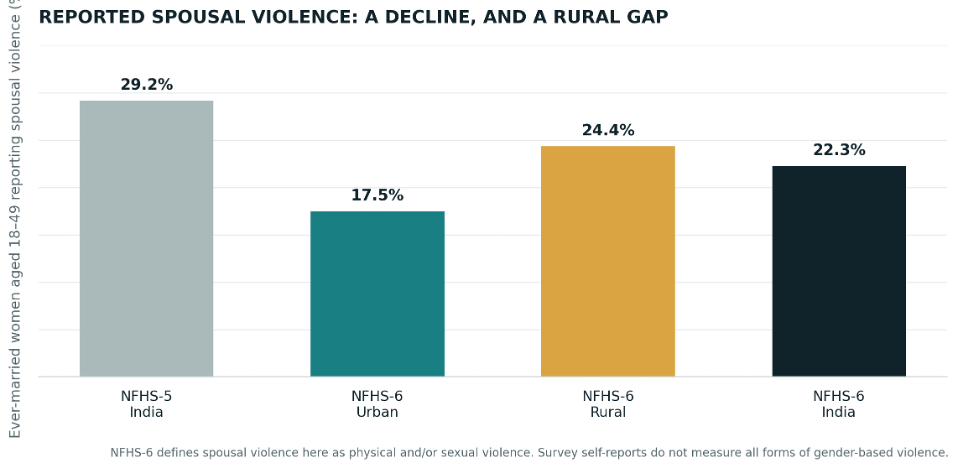
Figure 3. Spousal violence reported in NFHS-5 and NFHS-6. The indicator is physical and/or sexual spousal violence among ever-married women aged 18–49; it is not a measure of all violence against women. Source: NFHS-6 India Fact Sheet, indicator 95. [1]
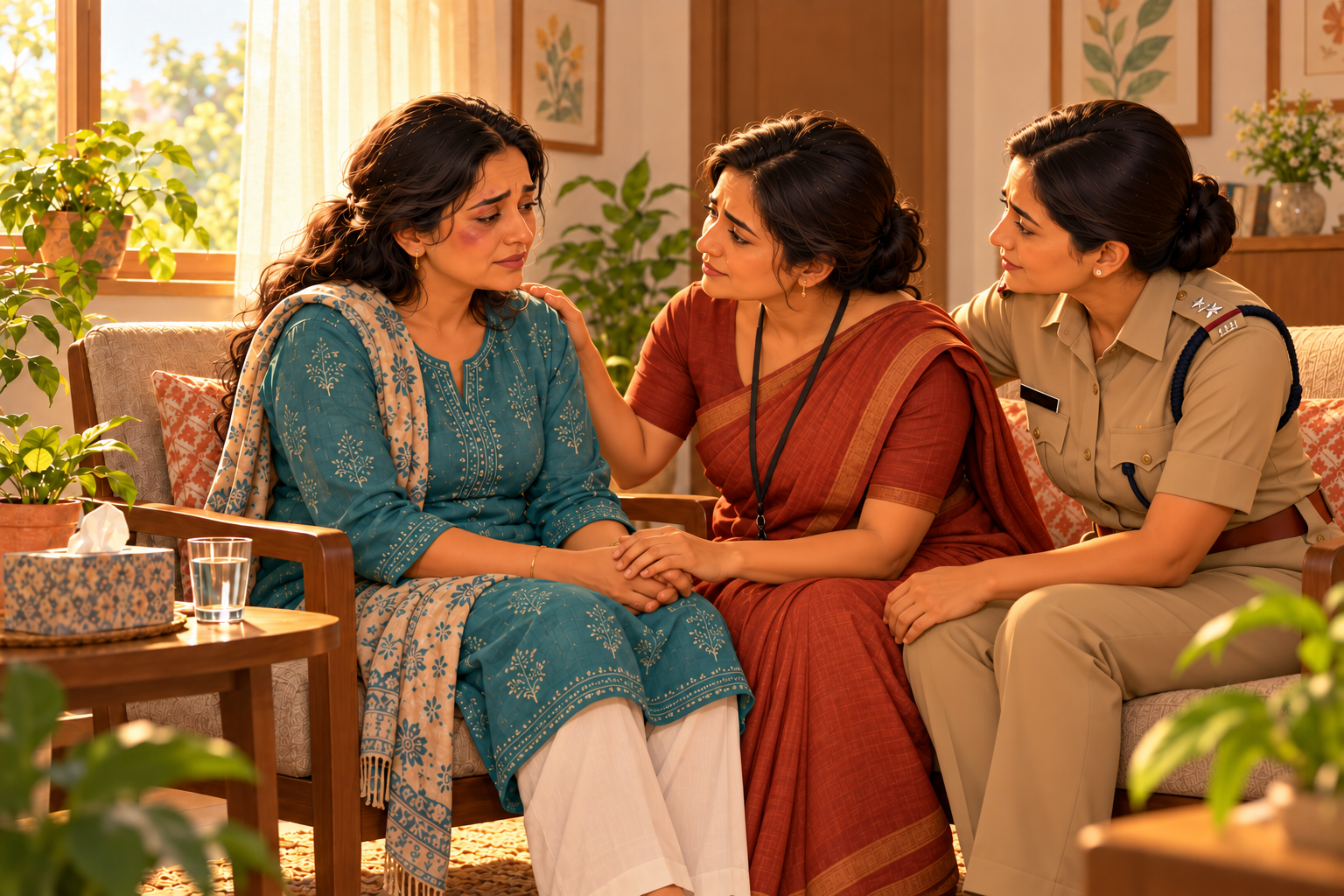
India has response infrastructure. The Ministry of Women and Child Development describes Women Helpline 181 as a 24-hour service that can connect callers to emergency response and One Stop Centres. One Stop Centres are intended to coordinate medical, legal, police, shelter and counselling support. Their existence is a meaningful institutional step; the next question is whether a woman can reach them safely, whether the centres are accessible to women with disabilities, and whether referrals result in timely help. Public reporting should therefore track use, response times, accessibility and case resolution not only the number of centres. [3], [4]
Care responsibilities and returning to work
Health and support needs also intersect with employment. MoSPI’s PLFS 2025 release reports female labour-force participation of 40.0% among people aged 15 and above, using usual status. It reports that 44.4% of females outside the labour force cited childcare or personal commitments in homemaking as their main reason. The latter is not 44.4% of all women, and it does not establish that every respondent wants to return to paid work. [6]
The implication is to make support compatible with women’s choices and responsibilities. Skills training and job introductions may help a returner, but childcare arrangements, suitable working hours and access to care must also be considered. Health support should remain available to women regardless of whether they seek paid employment.
Who is missing from the picture?
Averages can conceal intersecting barriers. A woman may face a long distance to a clinic, transport costs, low control over household spending, discrimination, or a building and examination table she cannot use. These are not interchangeable disadvantages, and their effects should not be assumed from identity alone. They need to be measured together.
The evidence on disability illustrates the problem. A peer-reviewed analysis of 2010–11 Annual Health Survey data for 141,983 women in Rajasthan found that women with disabilities had lower odds of attending at least three antenatal visits (odds ratio 0.84; 95% confidence interval 0.76–0.92). It found no overall association with skilled delivery or postnatal care. The study is valuable because it examined disability, but it is old, limited to one state and cannot establish a current national pattern or causation. Its authors call for disability to be included in nationally representative maternal-health surveys. [5]
Caste-specific barriers are visible in smaller studies too. Interviews with 18 Scheduled Caste women in Bihar identified inadequate frontline-worker coverage, transport costs, poor information and reports of unauthorised charges as barriers to maternal care. The study also recorded the value of ASHA workers and free-care schemes. These findings are not nationally representative; they show why national averages alone cannot settle whether services are experienced equitably. [6]
Menopause is another blind spot. NFHS-6’s main women’s indicators cover women aged 15–49, so its standard fact sheet does not provide a population-level picture of midlife and post-menopausal care. A 2026 Indian Menopause Society guideline review notes limited government funding and policy attention for menopause-related research and programme evaluation, and argues for integrating midlife care into primary and district health services. These are the guideline authors’ recommendations, not an evaluation proving that a specific service model will work everywhere. [7]
The case for an integrated response
The strongest counter-evidence to a picture of uniform failure is substantial: antenatal contact is widespread, institutional births have reached 90.6%, reported spousal violence has declined between NFHS rounds, and 181/One Stop Centre channels exist. Those gains matter. But coverage does not establish quality, and national improvement does not establish equal improvement. The survey factsheets provide useful national and residence-level comparisons; more detailed public evidence that jointly tracks caste, wealth and disability across menstrual, maternal, menopause and safety outcomes remains limited. The appropriate conclusion is a measurement and delivery gap, not a claim that nothing has changed.
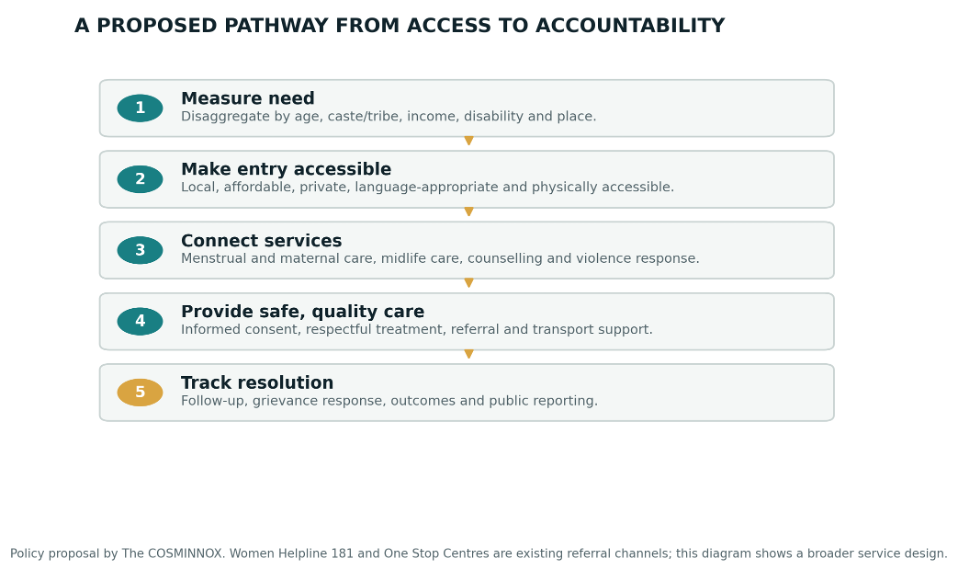
Figure 4. Proposed policy pathway from measuring need to tracking resolution. This is a COSMINNOX recommendation, not a description of an existing government protocol.
A practical next step is to make the service pathway life-course and access-focused. First, future health surveys and administrative dashboards should report outcomes by age, rural/urban location, wealth, caste/tribe and disability, with privacy protections and clear sample-size limits. Second, primary-care facilities should assess physical access, accessible information, privacy, respectful treatment and the availability of referral transport—not just infrastructure on paper. Third, adolescent health programmes, maternal services and non-communicable-disease care should include menstrual and menopause counselling, while local health workers connect women to clinical services and violence-response support. Fourth, governments should publish referral completion, response time, grievance outcomes and follow-up indicators for 181 and One Stop Centres. [1], [3], [4], [5], [7]
This approach has costs. Better disaggregation requires staff training, secure data systems and safeguards against identifying women in small communities. Accessible facilities and transport need recurring budgets, not one-time construction. Wider data collection can also increase survey length and respondent burden. Governments should therefore add indicators in stages, test them with women’s groups and disability organisations, and publish what the data cannot reliably show.
A country’s progress lives in these encounters—in the classroom where a girl can manage her period, the clinic where a woman is heard, and the doorway she can enter independently.
Let care reach the village, the city, the street;
Let every woman find respect in those she meets.
Women deserve more than admiration for enduring difficulty. They deserve the freedom to study, work, grow older and shape their lives with dependable care beside them.
That is a promise worth making and keeping.
A brief role for IDC Bestie
IDC Bestie is a proposed employer-funded, human-led support and career-comeback service. Its concept describes trained coaches helping women plan career breaks, stay connected and prepare to return through a four-week sprint, with follow-up after joining. With consent, women could also be connected to qualified providers for wider support. [7]
For covered employees and eligible returners, it could make guidance, work preparation and referrals easier to navigate. Reaching rural women, informal workers or women without employer sponsorship would require separately funded access and suitable partners. Its concept does not establish dedicated adolescent, maternal-care or menopause services, or demonstrate improved outcomes. It should be assessed as a possible supporting service within a broader care system.
Progress and the limits of the evidence
The evidence does not support a picture of universal failure. Institutional deliveries have increased, and many women report using hygienic menstrual products. At the same time, national progress does not establish equal access across groups or continuity across life stages. Both findings belong in the analysis. [1]
The datasets also answer different questions. NFHS indicators describe selected health practices and service use; PLFS describes labour-market participation; the disability figure is historical; and the menopause guidance is global. Together they identify issues that deserve attention. They do not prove that one barrier causes another, or that any particular platform can resolve them.
The COSMINNOX perspective
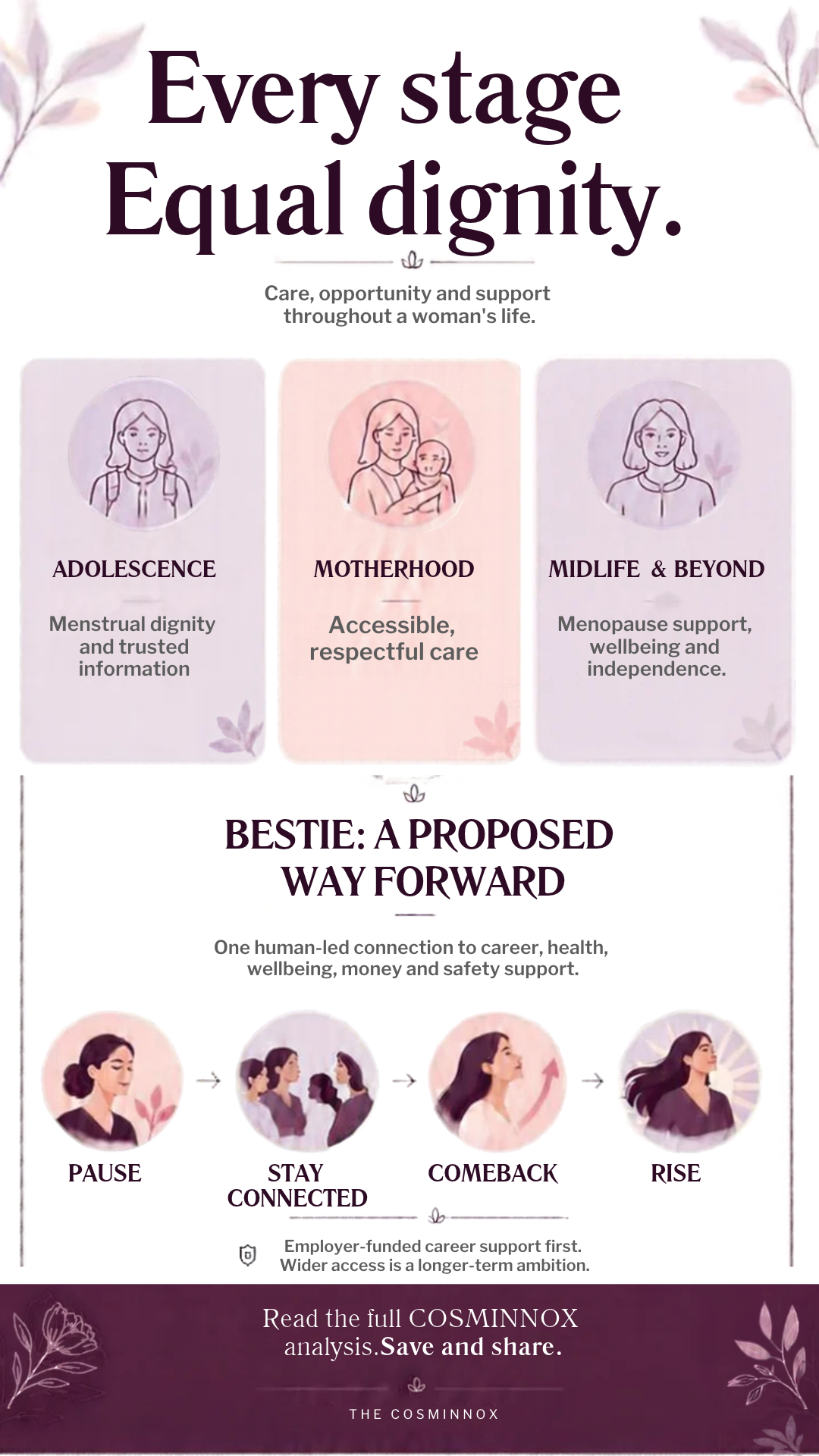
The priority is to organise support around the woman’s needs across her life. Public health authorities should connect menstrual, maternal and midlife care through clear local pathways. Employers can support appointments, leave transitions and return-to-work arrangements. Community organisations can help reach women who do not enter through a workplace.
Accountability should follow the whole journey: who was reached, who could afford the service, who completed a referral and whose need remained unresolved. Programmes should report differences by location and relevant social groups where this can be done responsibly. Confidentiality matters throughout, particularly when an employer pays for support.
The evidence establishes unequal access on specific indicators; it does not establish a single solution. A trusted first contact can be useful, but meaningful access depends on affordable services, accessible delivery and follow-through. The objective remains the same across adolescence, motherhood and midlife: women should be able to obtain appropriate support, including when they are outside formal employment.
Disclosure: The earlier material supplied for this article named COSMINNOX as a proposed Bestie referral destination. The exact institutional or financial relationship has not been established. The brief Bestie description above is attributed to the concept supplied on 22 October 2026; it is not an independently verified impact claim.
References
Evidence cutoff: 21 October 2026. The article uses the latest NFHS-6 India fact sheet available by this date and the SRS 2022–24 maternal mortality bulletin.
[1] Ministry of Health and Family Welfare (MoHFW) and International Institute for Population Sciences (IIPS). National Family Health Survey (NFHS-6), 2023–24: India Key Indicators / Fact Sheets. Released 29 May 2026. See indicators 28–37 and 94–97; survey scope and provisional-results note. Open source
[2] Office of the Registrar General & Census Commissioner, India. Special Bulletin on Maternal Mortality in India, 2022–24. Sample Registration System, 2026. Open source
[3] Ministry of Women and Child Development. Women Helpline 181. Service description and referral links, accessed 21 October 2026. Open source
[4] Ministry of Women and Child Development. One Stop Centre. Service description, accessed 21 October 2026. Open source
[5] Casebolt, M. T., Singh, K., Speizer, I. S., et al. “Maternal healthcare use by women with disabilities in Rajasthan, India: a secondary analysis of the Annual Health Survey.” Maternal Health, Neonatology and Perinatology 9, 11 (2023). Open source
[6] Patel, P., Das, M., and Das, U. “The perceptions, health-seeking behaviours and access of Scheduled Caste women to maternal health services in Bihar, India.” Reproductive Health Matters 26(54), 114–125 (2018). Open source
[7] Indian Menopause Society. “Clinical Practice Guidelines for Menopause: An Executive Summary and Recommendations.” Journal of Midlife Health / Indian Menopause Society, 2026. Open source
[8]. MoHFW and IIPS. National Family Health Survey 6 (2023–24) Fact Sheets, released May 2026. India, printed pp. 3–6 (PDF pp. 25–28), indicators 30, 35 and 94 and footnote 18. Provisional results. Read source
[9] PTI, The Tribune. About 50 per cent of women aged 15–24 years still use cloth for menstrual protection, 11 May 2022. Secondary reporting of NFHS-5 national report; used only for historical wealth and schooling comparisons. Read source
[10] Alam U, Agarwal A, Srivastava N, Beniwal R, Pandey AK. Period poverty in India: an analysis of the National Family Health Survey-5. Journal of Health Inequalities, 2024;10(2):173–181, Table 2, p. 176. Author-uploaded full text inspected. Read source
[11] Registrar General of India / PIB. RGI releases Census 2011 data on disabled population, 15 July 2016. Table on literacy status and sex. Historical data. Read source
[12] World Health Organization. Menopause, 16 October 2024. Key facts and Public health challenges related to menopause. Global guidance. Read source
[13] NSO / MoSPI. Press Note on the Periodic Labour Force Survey Annual Report 2025, March 2026, pp. 2–5. Calendar-year, usual-status measures. Read source
[14] IDC Bestie concept supplied on 22 October 2026. Describes the proposed employer-funded service, four-stage career journey, four-week sprint, follow-ups and consent-based referrals. Company proposal; no independently verified outcomes supplied.