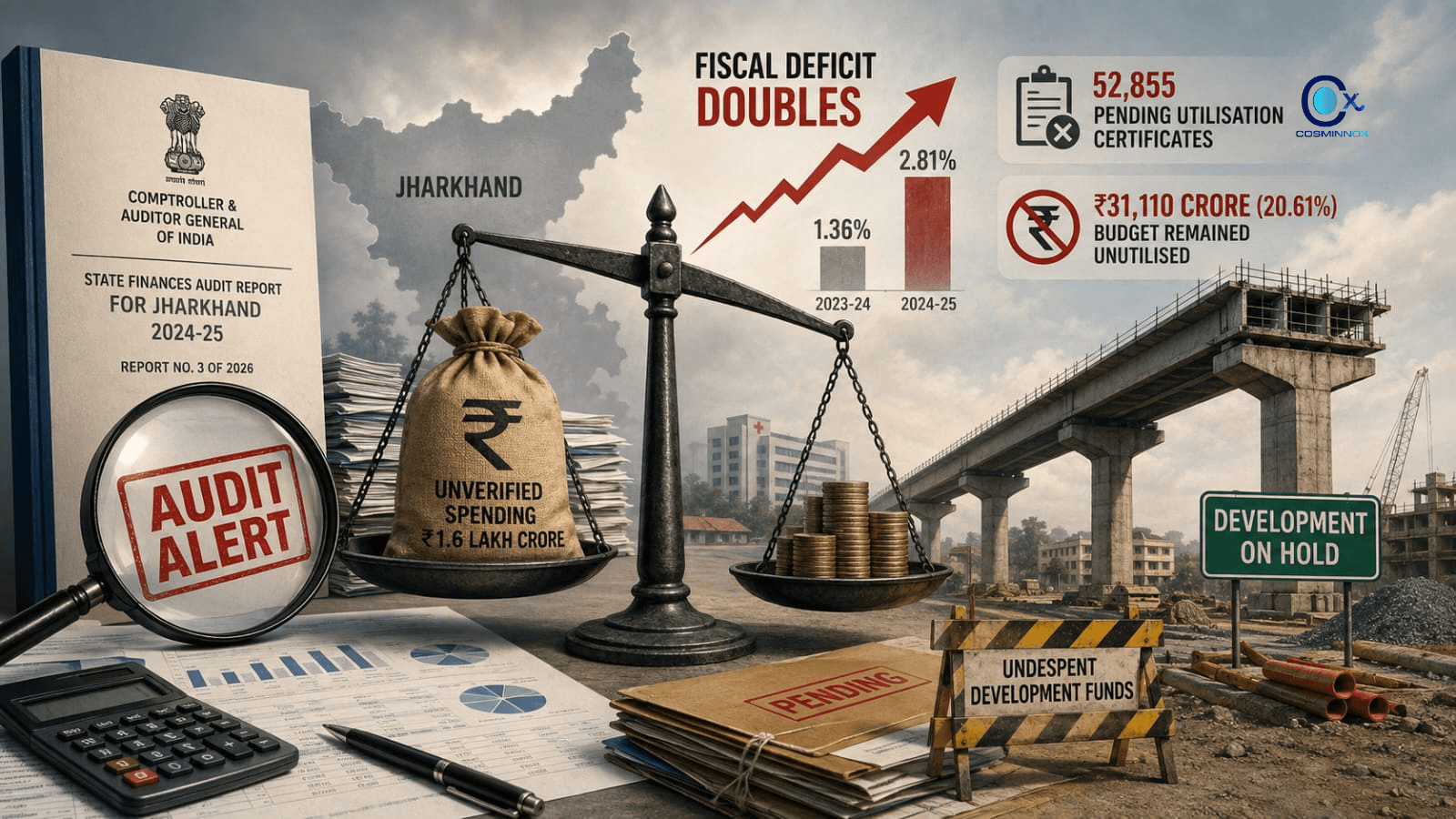
Does the CAG's State Finances Audit Report for 2024-25 show Jharkhand consolidating its finances, or does it show a State whose apparent fiscal discipline is being manufactured by underspending, delayed transfers, and uncertified expenditure rather than genuine consolidation? The evidence, drawn from the Comptroller and Auditor General's Report No. 3 of 2026 on Jharkhand's finances, points toward the latter: every headline indicator that looks reassuring is shadowed by a companion figure — buried deeper in the same report — that tells the opposite story.
The Headline Numbers
On the surface, Jharkhand's fiscal position in 2024-25 reads as stable. The State's outstanding liabilities stood at 25.34 per cent of Gross State Domestic Product (GSDP), the lowest in five years and comfortably under the Fiscal Responsibility and Budget Management (FRBM) Act's ceiling of 27 per cent [CAG, State Finances Audit Report for Jharkhand, 2024-25, Report No. 3 of 2026, Executive Summary, p. x]. The State also ran a revenue surplus for the year — ₹7,924 crore, equivalent to 1.53 per cent of GSDP [CAG SFAR, Executive Summary, p. x]. GSDP itself grew a healthy 10.87 per cent over the previous year, and the State's contribution to India's GDP held steady at roughly 1.56 per cent [CAG SFAR, Executive Summary, p. ix].
Set against these, though, is a fiscal deficit that nearly doubled in a single year — from ₹6,332 crore (1.36 per cent of GSDP) in 2023-24 to ₹14,527 crore (2.81 per cent of GSDP) in 2024-25 [CAG SFAR, Executive Summary, p. x]. That is still within the FRBM's 3.00 per cent ceiling, but only just, and the trajectory is the striking part: a deficit more than doubling year-on-year is not the profile of a State on a consolidation path. The primary deficit — the fiscal deficit stripped of interest payments, which is the cleanest single measure of whether current policy is adding to or reducing the debt burden — moved from a primary surplus of ₹507.19 crore in 2023-24 to a primary deficit of ₹8,663.81 crore in 2024-25, a swing that the report's own tables show grew 354.33 per cent over the previous year alone [CAG SFAR, Table 1.3, p. xi]. That one-year swing is itself part of a longer pattern the report separately tracks: the State ran a primary deficit in every year except 2021-22 through 2023-24, including a primary deficit of ₹9,119.52 crore as recently as 2020-21 [CAG SFAR, Table 1.34, p. 40]. The revenue surplus, too, shrank by more than a third: from ₹11,252 crore in 2023-24 to ₹7,924 crore in 2024-25 [CAG SFAR, Executive Summary, p. x].
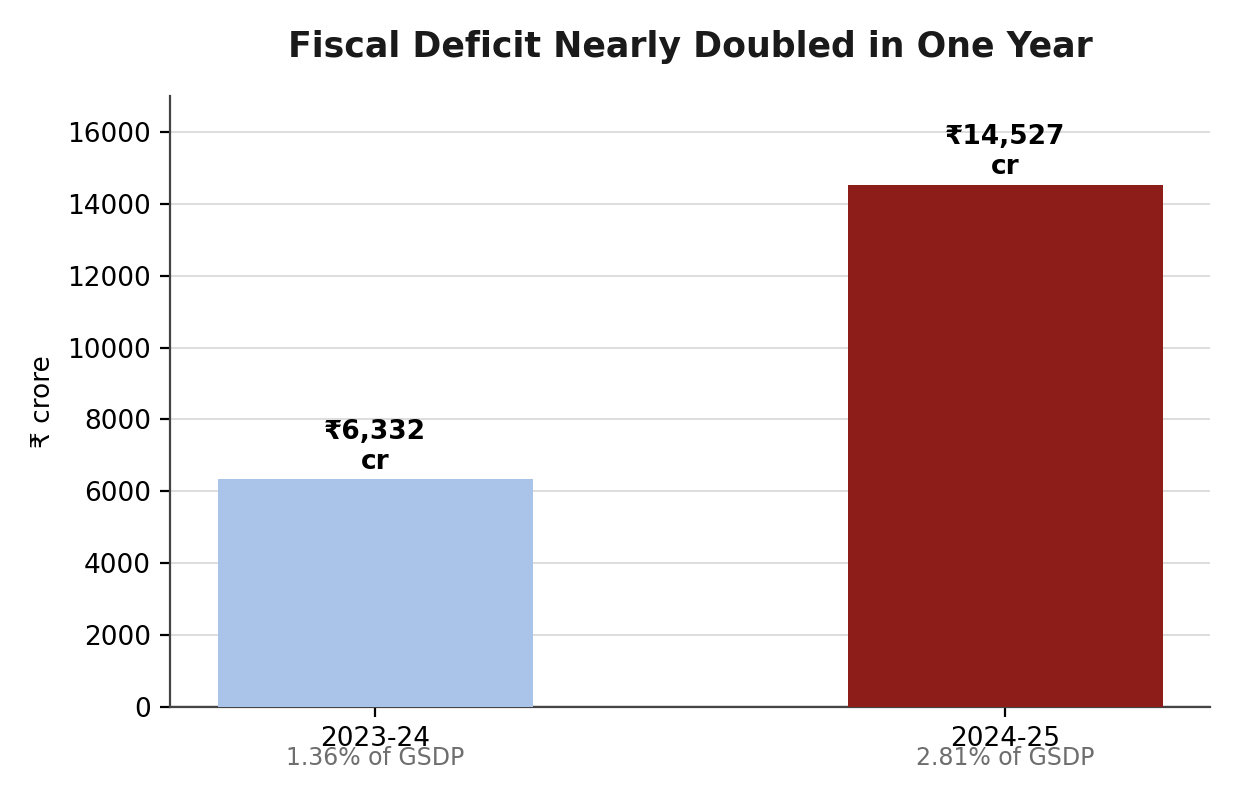
Figure 1. Fiscal deficit, 2023-24 vs 2024-25 [CAG SFAR, Executive Summary, p. x].
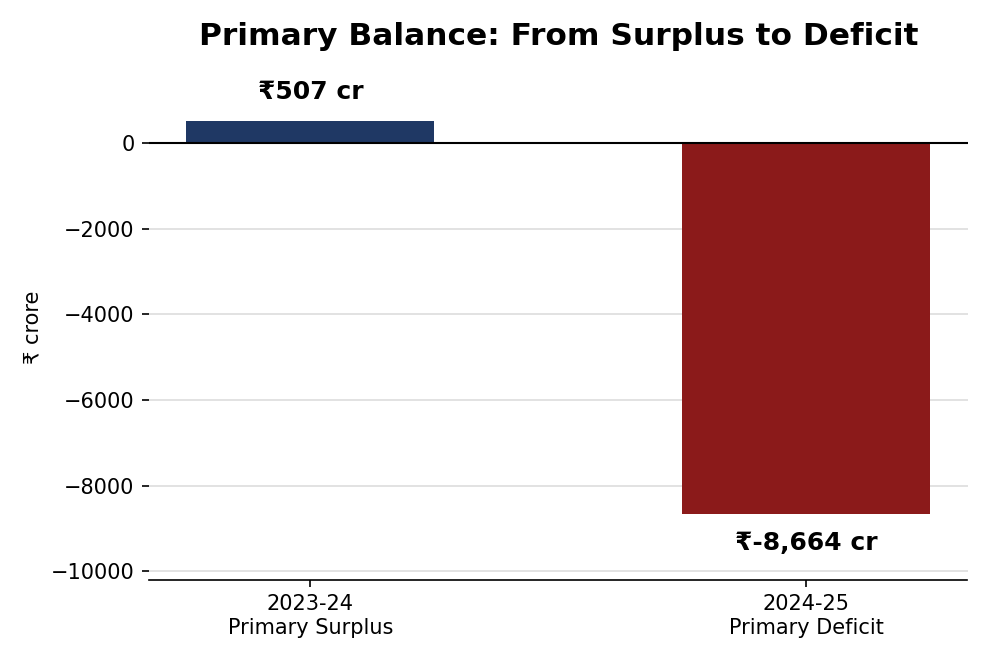
Figure 2. Primary balance swing, 2023-24 to 2024-25 [CAG SFAR, Table 1.3, p. xi].
Table 1. Headline Reading vs. Shadow Figure, 2024-25
Indicator | Headline Reading | Shadow Figure | 2024-25 Value |
|---|---|---|---|
Outstanding liabilities | 25.34% of GSDP — lowest in 5 years, under 27% FRBM ceiling | Fiscal deficit that funds current spending nearly doubled | 25.34% of GSDP |
Fiscal deficit | 2.81% of GSDP — still within 3.00% FRBM ceiling | Up from 1.36% (₹6,332 cr) to 2.81% (₹14,527 cr) in one year | ₹14,527 cr |
Revenue account | Revenue surplus maintained — 1.53% of GSDP | Surplus shrank over a third: ₹11,252 cr → ₹7,924 cr | ₹7,924 cr |
Primary balance | Not separately headlined in Executive Summary | Swung from +₹507.19 cr surplus (2023-24) to −₹8,663.81 cr deficit, up 354.33% y-o-y | −₹8,663.81 cr |
Capital expenditure | 3.57% of GSDP | Fell in absolute terms: ₹20,570 cr → ₹18,410 cr; only 76.75% of RE spent | ₹18,410 cr |
Overall budget use | ₹1,50,938.84 cr total budget approved | ₹31,110 cr (20.61%) went unutilised, reasons often unexplained | ₹31,110 cr unspent |
Compiled from CAG SFAR, Executive Summary, pp. ix–xi and Table 1.3, p. xi.
Where the Money Wasn't Spent
The report's most consequential finding for Jharkhand's development priorities concerns capital expenditure — the category of spending that builds roads, hospitals, and irrigation systems rather than paying salaries and pensions. Capital expenditure fell in absolute terms, from ₹20,570 crore in 2023-24 to ₹18,410 crore in 2024-25, a decline of ₹2,160 crore, taking the capital-expenditure-to-GSDP ratio to 3.57 per cent [CAG SFAR, Executive Summary, p. x]. Actual capital spending also came in well below what was budgeted: against a revised estimate of ₹19,096 crore, the State spent ₹18,410 crore — 76.75 per cent of what was originally budgeted at the start of the year [CAG SFAR, Table 1.3, p. xi]. The CAG's own reading is unambiguous on the implication: the decline reflects, in the report's words, reduced emphasis on asset creation [CAG SFAR, Executive Summary, p. x].
This pattern of underspending is not confined to capital projects. Of the State's total budget of ₹1,50,938.84 crore for 2024-25, ₹31,110 crore — 20.61 per cent of the entire budget — went unutilised [CAG SFAR, Executive Summary, p. xi]. Within that, ₹19,648.71 crore of savings occurred across just ten grants, where the shortfall ranged from 7 to 62 per cent of the budgeted provision and, in the CAG's assessment, the reasons for these shortfalls were not adequately explained in the Appropriation Accounts [CAG SFAR, Executive Summary, p. xi].
Two of the departments singled out for detailed scrutiny illustrate what this looks like on the ground. Grant No. 20, covering Health, Medical Education and Family Welfare, was allotted ₹7,731.83 crore for the year; the department spent ₹5,237.47 crore, leaving ₹2,494.36 crore — 32 per cent of the total grant — unspent, of which ₹414.04 crore was simply allowed to lapse rather than being surrendered in time for redeployment elsewhere [CAG SFAR, Chapter II, Table 2.4, p. 48]. Grant No. 51, covering the Welfare of Scheduled Tribes, Scheduled Castes, Minorities and Backward Classes — a portfolio with direct bearing on a State where 28.81 per cent of the population lives below the poverty line against a national average of 14.96 per cent [CAG SFAR, Chapter I, Table 1.1, p. 1] — saw savings of ₹1,145.38 crore, or 30.78 per cent of its ₹3,721.65 crore budget [CAG SFAR, Chapter II, Table 2.5, p. 49]. In both cases, supplementary grants had been sought and sanctioned during the year — ₹508.83 crore for Health, ₹549.92 crore for ST/SC/BC Welfare — despite the departments ultimately failing to exhaust even their original allocations, a sequence the CAG describes as rendering the supplementary provisions wholly unnecessary [CAG SFAR, Chapter II, para 2.2.2, p. 48].
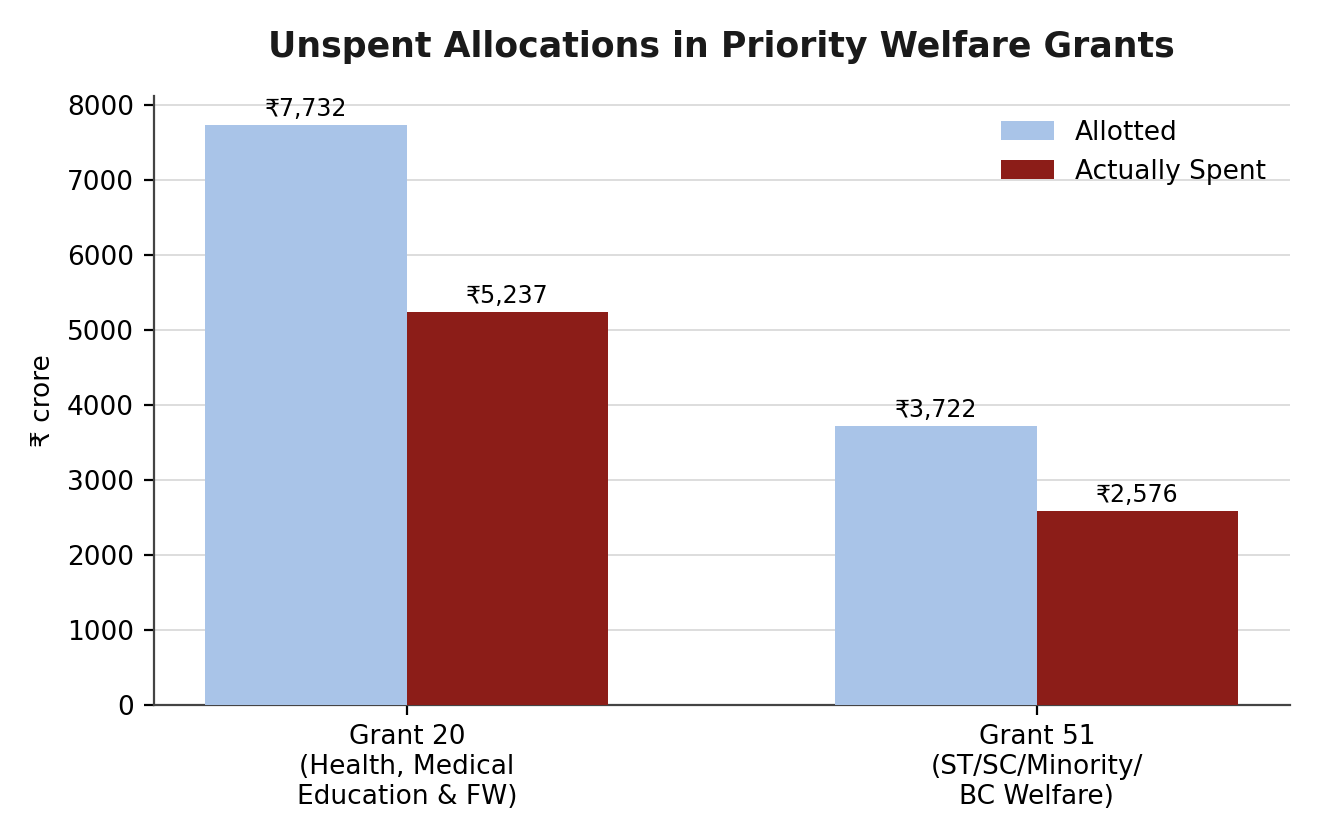
Figure 3. Allotted vs. actually spent, Grant No. 20 and Grant No. 51 [CAG SFAR, Chapter II, Tables 2.4–2.5, pp. 48–49].
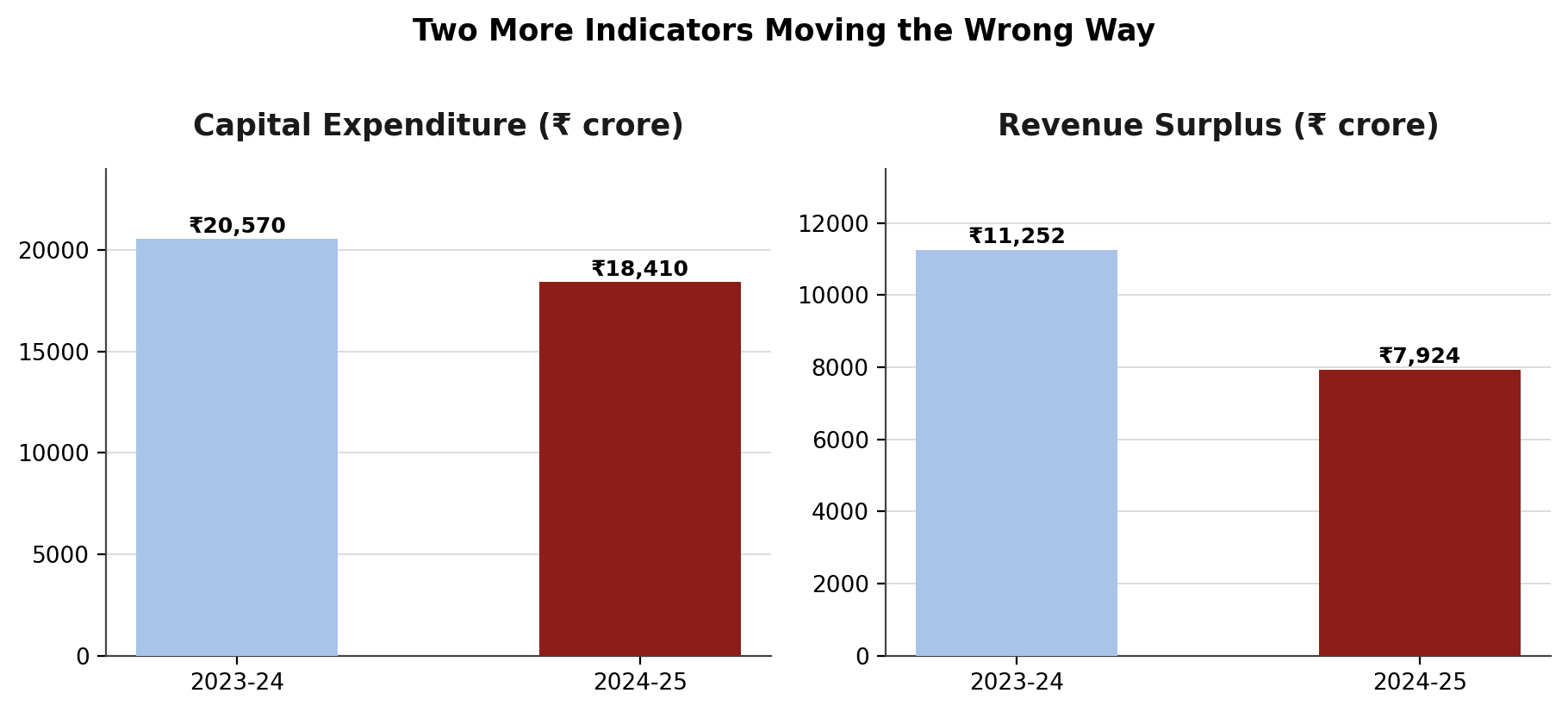
Figure 4. Capital expenditure and revenue surplus, both down year-on-year [CAG SFAR, Executive Summary, p. x].
The Accountability Gap
Beyond what wasn't spent lies a larger question about what cannot currently be verified as having been spent properly at all. As of 31 March 2025, 52,855 Utilisation Certificates — the documents through which a spending authority certifies to the Accountant General that grant money was used for its sanctioned purpose — remained outstanding, covering ₹1,60,565.80 crore [CAG SFAR, Executive Summary, p. xi]. That figure is larger than the State's entire revenue receipts for the year (₹94,488.61 crore) [CAG SFAR, Table 1.3, p. xi]. The report frames the risk in direct terms, warning that the huge pendency of UCs carries a risk of misutilisation of government funds [CAG SFAR, Executive Summary, p. xi].
A related mechanism shows a similar pattern at smaller scale. Abstract Contingent (AC) bills allow officials to draw funds urgently against a promise to furnish a Detailed Contingent (DC) bill later, itemising the actual expenditure. As of 31 March 2025, 17,877 AC bills amounting to ₹4,531.00 crore had no corresponding DC bill on record [CAG SFAR, Executive Summary, p. xi]. The CAG's language here, too, is precise rather than editorial, noting that non-adjustment of advances for long periods carries a risk of misappropriation [CAG SFAR, Executive Summary, p. xi].
A third, narrower mechanism reinforces the same theme. Personal Deposit Accounts — used by designated administrators to hold specific public funds outside the main treasury — are supposed to be reconciled annually against treasury records. Of 24 such administrators in Jharkhand, only three had reconciled and verified their balances and furnished annual certificates for the year under review [CAG SFAR, Chapter III, para 3.5]. The CAG notes that non-reconciliation defies the norms of transparency and obstructs monitoring of such funds [CAG SFAR, Chapter III, para 3.5].
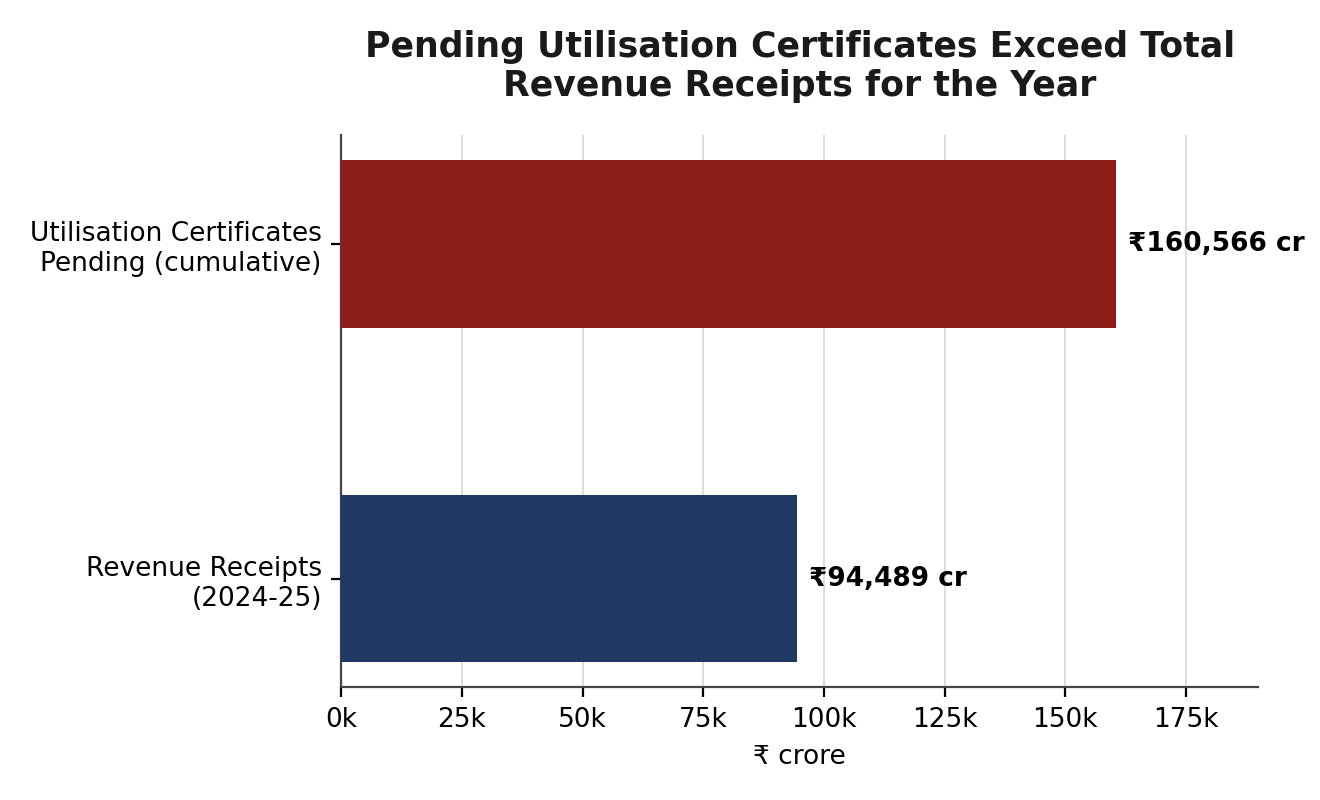
Figure 5. Pending Utilisation Certificates compared with total revenue receipts, 2024-25 [CAG SFAR, Executive Summary, p. xi; Table 1.3, p. xi].
Table 2. The Accountability Gap — Unverified and Unadjusted Expenditure
Mechanism | Outstanding as of 31 March 2025 | Amount / Scale |
|---|---|---|
Utilisation Certificates (UCs) | 52,855 UCs pending | ₹1,60,565.80 cr |
Abstract Contingent (AC) bills without DC bills | 17,877 AC bills unadjusted | ₹4,531.00 cr |
Personal Deposit Account reconciliation | Only 3 of 24 administrators reconciled & certified | 3 / 24 (12.5%) |
BOCW labour cess untransferred | Collected vs. transferred to Welfare Board (3-yr basis) | ₹471.93 cr outstanding(of ₹945.67 cr collected) |
Compiled from CAG SFAR, Executive Summary, pp. xi–xii and Chapter III, para 3.5.
The Counter-Evidence: A State That Is Genuinely Deleveraging
Set against this accountability picture, the report also contains evidence that should not be waved away in service of a uniformly critical narrative. The decline in the debt-to-GSDP ratio, from 36.80 per cent in 2020-21 to 25.34 per cent in 2024-25, is a five-year trend, not a one-year artefact of underspending [CAG SFAR, Chapter I, para 1.5.1, p. 33]. Outstanding guarantees — the State's contingent liabilities on behalf of public sector entities — actually fell during the year, with ₹2,175 crore deleted and no guarantee invoked, leaving outstanding guarantees at ₹2,823.38 crore at year-end [CAG SFAR, Executive Summary, p. x]. Revenue receipts grew 7.46 per cent over the previous year, driven chiefly by central tax devolution, which rose to ₹42,557.30 crore [CAG SFAR, Table 1.3, p. xi]. And over the ten-year period from 2015-16 to 2024-25, revenue receipts compounded at 9.83 per cent annually, broadly keeping pace with revenue expenditure and sustaining a revenue surplus in every year except 2020-21 [CAG SFAR, Chapter I, para 1.1.4, p. 4]. On these measures, Jharkhand's finances have structurally improved over the decade, and the FRBM ceilings — on fiscal deficit and on total liability — were both technically met in 2024-25, even if narrowly on the deficit side.
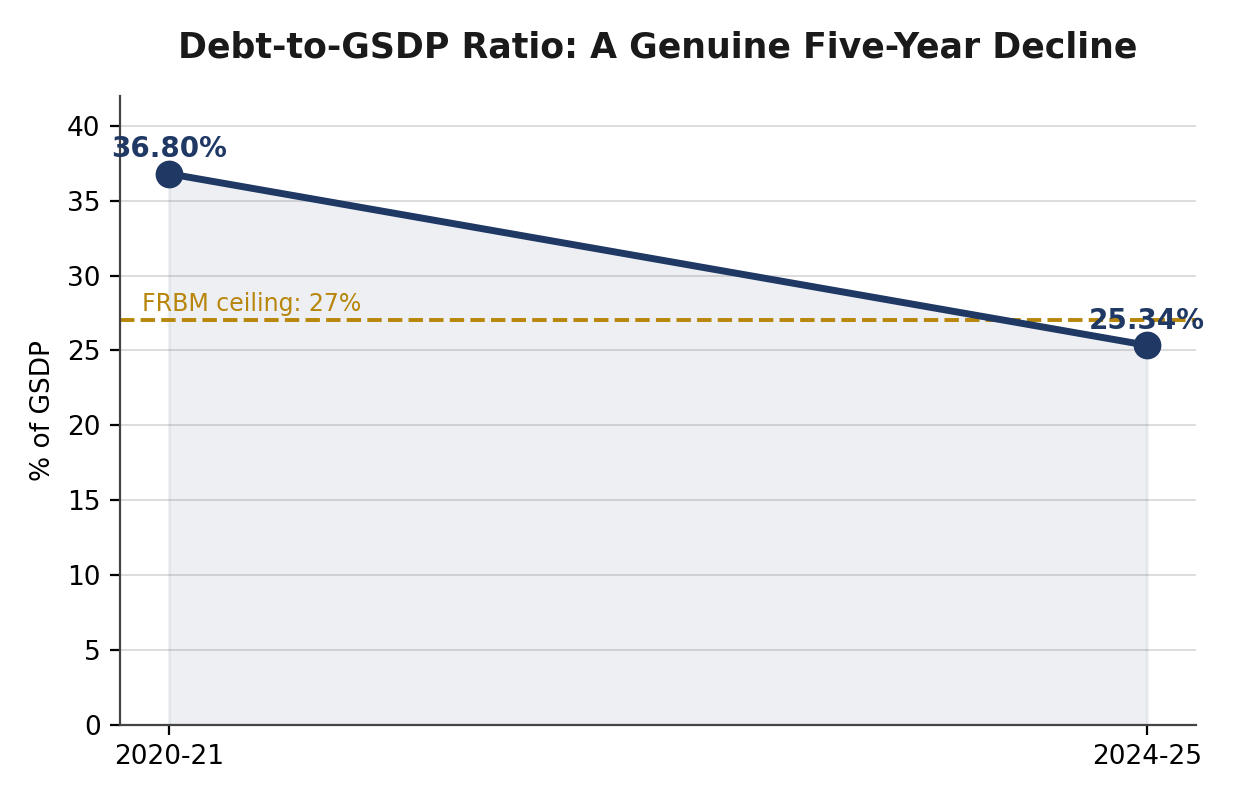
Figure 6. Debt-to-GSDP ratio, 2020-21 vs. 2024-25 [CAG SFAR, Chapter I, para 1.5.1, p. 33].
Table 3. Indicators Supporting the Deleveraging Narrative
Indicator | 2020-21 | 2024-25 |
|---|---|---|
Debt-to-GSDP ratio | 36.80% | 25.34% |
Outstanding guarantees | — | ₹2,823.38 cr (₹2,175 cr deleted in-year; none invoked) |
Revenue receipts growth (y-o-y) | — | +7.46% |
Revenue receipts CAGR (2015-16 to 2024-25) | — | 9.83% p.a. |
Compiled from CAG SFAR, Chapter I, paras 1.1.4 and 1.5.1, and Table 1.3, p. xi.
The tension between these two readings is not resolvable from the SFAR alone, and the report does not attempt to resolve it. What it does establish is that a single-year snapshot of "fiscal deficit within FRBM limits" coexists with a single-year reality of a near-doubled deficit, a shrinking revenue surplus, and a State that left a fifth of its entire budget unspent — including in the two departments (health, and tribal/backward-class welfare) most directly tied to Jharkhand's development indicators, where the poverty rate remains double the national average [CAG SFAR, Chapter I, Table 1.1, p. 1] and the infant mortality rate, at 29 per 1,000 live births, sits above the national figure of 25 [CAG SFAR, Chapter I, Table 1.1, p. 1].
Resolution: What the CAG's Own Post-Audit Numbers Show
COSMINNOX does not resolve this tension by editorial judgment, but the SFAR itself provides a partial, quantified answer through its own post-audit recalculation of the year's deficit and surplus figures. Audit identified two departures from correct accounting in the 2024-25 accounts. First, ₹2,879.71 crore of revenue-nature grants-in-aid was booked as capital expenditure rather than revenue expenditure, and a further ₹42.45 crore was booked under the wrong section entirely, together overstating the reported revenue surplus by ₹2,837.26 crore [CAG SFAR, Chapter II, para 2.5.6]. Second, the State did not provide for ₹268.06 crore in interest liabilities owed on its own interest-bearing deposits and reserve funds, nor for a ₹46.04 crore shortfall in its contribution to the Consolidated Sinking Fund, together adding a further ₹314.10 crore of unrecognised liability [CAG SFAR, Chapter I, para 1.5.6; Chapter III, para 3.2.1].
Correcting for both, the CAG's own post-audit figures show the revenue surplus falling from the reported ₹7,923.57 crore (1.53 per cent of GSDP) to ₹4,772.21 crore (0.92 per cent of GSDP); the fiscal deficit widening from ₹14,526.81 crore (2.81 per cent of GSDP) to ₹14,840.91 crore (2.87 per cent of GSDP); and the primary deficit widening from ₹8,663.80 crore to ₹8,977.90 crore [CAG SFAR, Chapter I, para 1.5.2]. None of these post-audit figures breach the FRBM ceilings — the fiscal deficit at 2.87 per cent stays under the 3.00 per cent limit, and the correction does not touch the separately verified, five-year decline in the debt-to-GSDP ratio. What the post-audit numbers do establish is that even the State's own accounts, before audit correction, presented a more favourable picture of the year than its own auditor's recalculation supports — narrowing, without eliminating, the gap between the headline reading and the shadow figures documented above.
The Mining State's Unfinished Business
One further finding is worth flagging for its symbolic weight in a State whose economy is substantially built on mineral extraction. In November 2024, the Ministry of Mines directed all State governments to establish a State Mineral Exploration Trust (SMET) or State Mineral Development Fund (SMDF), mirroring the National Mineral Exploration Trust, to finance exploration of minor minerals — a statutory obligation under Section 15(A)(g) of the Mines and Minerals (Development and Regulation) Act, 1957 [CAG SFAR, Chapter III, para 3.2.6, p. 88]. As of November 2025, Jharkhand had not established this trust; the State Government's response to audit was that formulation of the policy and creation of the SMET remained underway [CAG SFAR, Chapter III, para 3.2.6, p. 88]. Separately, on the National Mineral Exploration Trust — the Centre-administered fund into which the State is required to remit mining-royalty contributions monthly — ₹14.72 crore collected during the year remained untransferred to the Consolidated Fund of India as of year-end, overstating the State's own cash balance to that extent [CAG SFAR, Chapter III, para 3.2.5, p. 88].
A smaller but recurring theme is the labour welfare cess collected from construction activity under the Building and Other Construction Workers (BOCW) Act. Of ₹945.67 crore collected as of March 2025, only ₹473.74 crore had been transferred to the State's BOCW Welfare Board over the preceding three years, leaving ₹471.93 crore outstanding [CAG SFAR, Executive Summary, pp. xi–xii]. The CAG notes plainly that non-transfer of the cess increased the State's liabilities to that extent [CAG SFAR, Executive Summary, p. xii] — money collected in the name of construction workers' welfare, sitting unremitted rather than reaching the board mandated to spend it on them.
What the Evidence Does — and Does Not — Establish
The CAG's Report No. 3 of 2026 establishes, on Tier 1 primary data drawn from Jharkhand's own Finance and Appropriation Accounts, that the State met its statutory FRBM ceilings on fiscal deficit and total liabilities for 2024-25, and that its debt burden relative to GSDP has genuinely declined over five years. It equally establishes that the fiscal deficit and primary deficit both deteriorated sharply within that single year, that one-fifth of the total budget went unspent with reasons frequently unexplained in the Appropriation Accounts, that capital expenditure — the category most directly tied to future growth capacity — fell in both absolute terms and as a share of what was budgeted, and that ₹1.6 lakh crore in utilisation certificates and ₹4,531 crore in contingent-bill adjustments remain outstanding, leaving a very large share of actual government spending formally unverified as of the report's cut-off.
What the report does not establish — and what would require further audit cycles to determine — is whether 2024-25's deficit spike and underspending represent a temporary disruption in an otherwise improving trajectory, or the start of a reversal in the deleveraging trend of the preceding four years. That is the question the next State Finances Audit Report will need to answer.
Sources: Comptroller and Auditor General of India, Report of the CAG of India on State Finances for the year 2024-25, Government of Jharkhand, Report No. 3 of 2026 (State Finances Audit Report), tabled April 2026.