Midlife is when the numbers turn
Between 40 and 60, many Indians first hear words like "borderline sugar" or "high cholesterol". These are not sudden events. They are the result of years of small daily patterns, and the national data shows how common they are.
The ICMR-INDIAB study surveyed more than 113,000 adults across every Indian state and found that about 11.4% of adults live with diabetes and another 15.3% have prediabetes. That is roughly 136 million people who have not crossed the line yet and still can.
Condition | Share of adults |
|---|---|
Abnormal blood fats (dyslipidaemia) | 81.2% |
Belly fat (abdominal obesity) | 39.5% |
High blood pressure | 35.5% |
Overweight (generalised obesity) | 28.6% |
Prediabetes | 15.3% |
Diabetes | 11.4% |
Source: Venkatesan et al., The Lancet Diabetes & Endocrinology, 2023. Weighted national estimates for 2021.
One finding matters for every Indian family. Researchers note that Asians tend to develop diabetes at lower levels of obesity, and move faster from prediabetes to diabetes, than white Caucasians. A body weight that looks fine on a chart can still carry risk, especially around the waist.
Epigenetics, in plain words
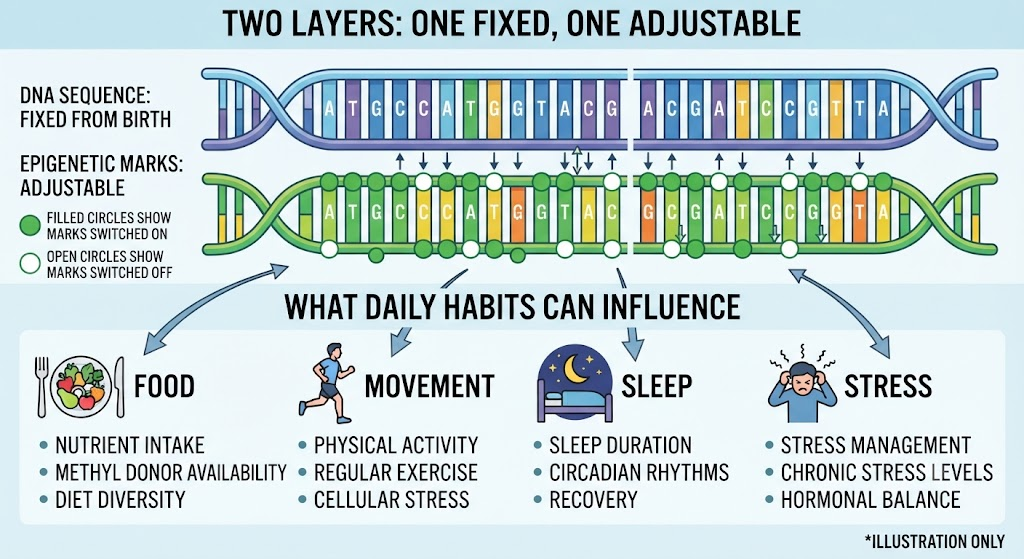
Think of your DNA as a very large cookbook. The recipes stay the same for life. Epigenetics is the set of bookmarks and sticky notes that tell your cells which recipes to cook today. The best studied bookmark is called DNA methylation.
These bookmarks respond to what you eat. Folate, vitamin B12, vitamin B6, choline and the amino acid methionine all feed one chemical pathway, called one-carbon metabolism, that produces the methyl groups your cells use for methylation. Methylation patterns also drift as we age, which is why this field is now studied in healthy ageing.
Here is the nutritional pathway from your plate to gene regulation, broken down into a clear four-stage sequence:
1.1. Food & Key Nutrients:
Sources: Dal, green leafy vegetables, curd, eggs, fish, and nuts.
Nutrients: Folate, Vitamin B12, Vitamin B6, and choline.
2.2. One-Carbon Pathway:
Your cells consume these essential micronutrients to drive biochemical reactions that synthesize a primary methyl donor called SAM (S-adenosylmethionine).
3.3. DNA Methylation:
Active methyl groups are transferred and attached to DNA and structural proteins, functioning as precise chemical bookmarks.
4.4. Gene Activity Regulation:
These molecular bookmarks modulate gene expression, switching genes involved in metabolism and aging either up or down.
Based on reviews in Nutrition Research and Practice (2023) and the International Journal of Molecular Sciences (2026).
Your Genes Are Not Your Entire Destiny
Many people in their fifties say, "Diabetes runs in my family, so there is nothing I can do." The science of epigenetics offers a more hopeful picture. Your DNA sequence does not change, but the chemical marks sitting on top of it do, and enzymes add and remove them every day in response to food, movement, sleep and stress.
Stanford nutrition researcher Lucia Aronica has put it in a memorable way on The Mel Robbins Podcast: genes load the gun and lifestyle pulls the trigger. In that conversation she cited a 2016 study of about 55,000 people, in which those with high genetic risk for heart disease who lived healthily roughly halved their risk.
What the science does and does not say
You may hear that lifestyle explains about 75% of health outcomes. Treat that as a slogan, not a measurement, because it varies by disease and by person. Some inherited conditions cannot be fully offset by lifestyle. Good evidence links folate and B12 to methylation, but researchers say more work is needed to connect diet to long-term disease outcomes.
Can Food Actually Reverse Biological Ageing?
Scientists estimate "biological age" with epigenetic clocks, which read methylation patterns across the genome. A person's clock age can run ahead of or behind the number on their birth certificate. The exciting question is whether diet can move the clock backward.
Two small trials suggest it can, at least over eight weeks. In a 2021 trial of 43 healthy men aged 50 to 72, a programme of diet, sleep, exercise and relaxation guidance, with probiotics and plant-extract supplements, was linked to a DNA methylation age 3.23 years lower than the control group. In a Stanford twin study of 21 pairs, the twin on a healthy vegan diet showed a fall in epigenetic age while the twin on a healthy omnivore diet did not.
Comparison | Lower methylation age |
|---|---|
Treatment group vs control group | 3.23 years |
Change within treatment group | 1.96 years |
Source: Fitzgerald et al., Aging, 2021. The programme combined several changes, so the share due to food alone is not known.
Look at the size of these studies before getting excited.
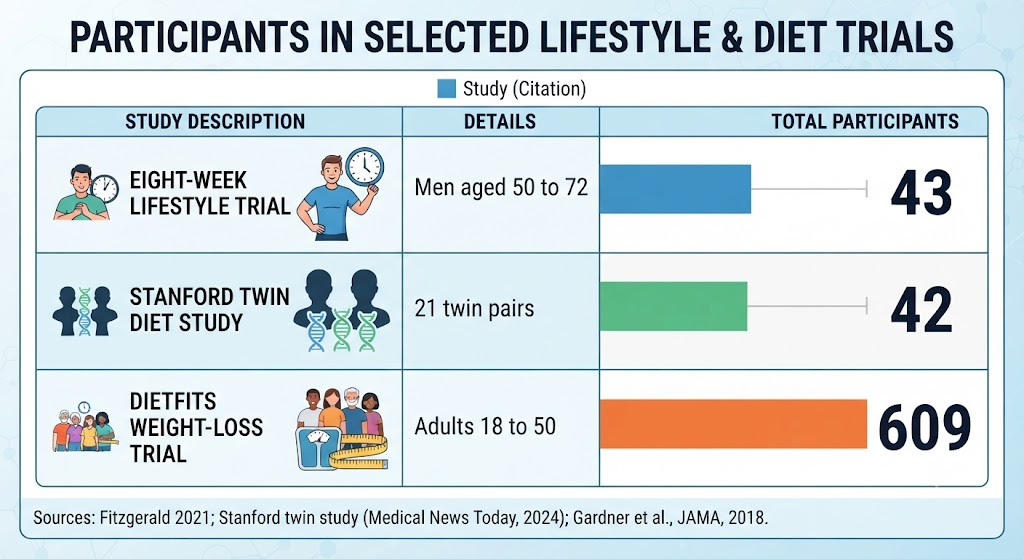
Sources: Fitzgerald 2021; Stanford twin study (Medical News Today, 2024); Gardner et al., JAMA, 2018.
Outside experts have pointed out that in the twin study the vegan twins also ate fewer calories, more fibre and lost about 2 kg more, any of which could explain the result. Aronica herself notes that Mediterranean and other mixed diets have also been shown to shift epigenetic age. The fair summary is that eating well can move these clocks in short studies. Whether that adds healthy years to your life has not been proven.
Does Everyone Need a Special Diet Based on Their Genes?
Gene-based diet plans are now sold in India as well. The best evidence so far comes from DIETFITS, a Stanford trial published in JAMA in 2018. It put 609 adults aged 18 to 50 on either a healthy low-fat or a healthy low-carbohydrate diet for 12 months, and tested whether their genes or their insulin response could predict who would do better on which diet.
Neither could. On average people in both groups lost about 6 kg, and the two diets performed alike. But individual results were very different, from losses of more than 27 kg to gains of 7 to 9 kg, on the same diet.
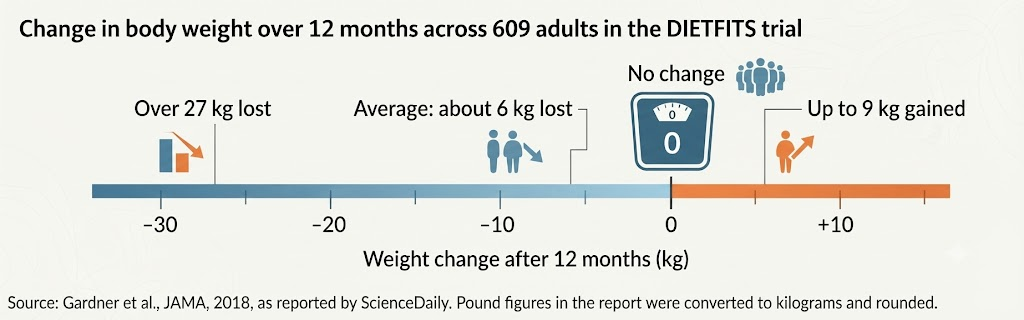
The practical message is reassuring. For most people, the details of a gene test matter less than choosing a healthy pattern they can keep up for years. The people who did well in both diets focused on whole foods, cut added sugar and refined flour, and ate more vegetables. If you have a medical condition such as diabetes, kidney disease or a lipid disorder, your doctor and a registered dietitian can still tailor your plan, but that tailoring is based on your tests, not your DNA report.
The Indian Midlife Challenge: Eating Enough but Nourishing Less
Most middle-aged Indians are not short of food. Plates are full, often of rice, roti and fried snacks. The gap is in the quality of what fills the plate. ICMR's National Institute of Nutrition estimates that 56.4% of India's disease burden is linked to unhealthy diets, and blood tests show what a full but under-nourishing plate can leave behind.
A study of 1,648 adults aged 45 and above in rural Karnataka, from the Indian Institute of Science, measured these levels directly.
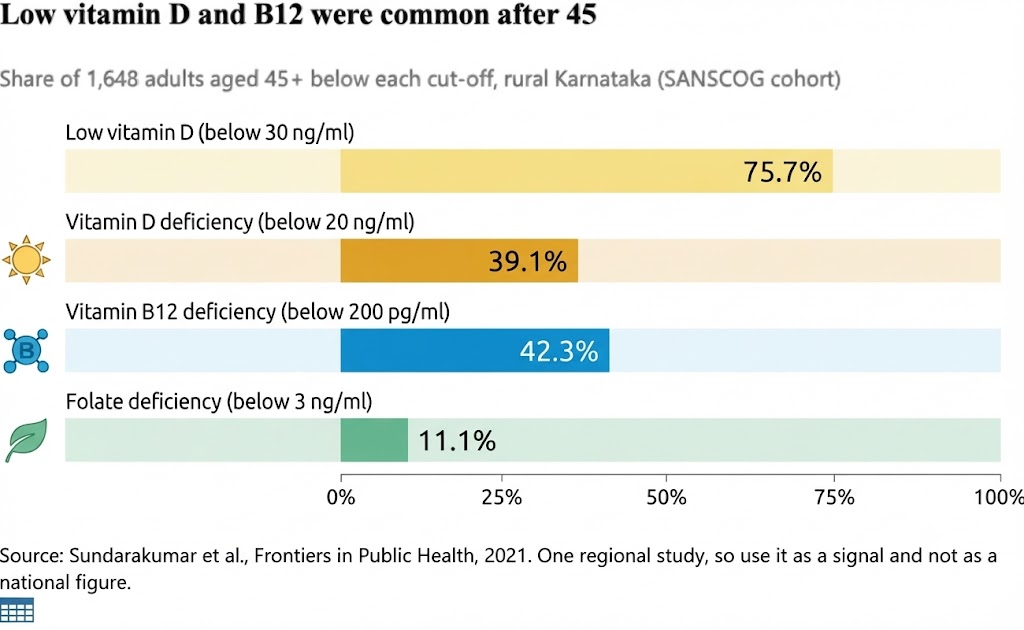
These are exactly the nutrients that feed the methylation pathway and support bones and memory. Vitamin B12 comes mostly from animal foods, and vitamin D comes mainly from sunlight, which many urban office workers rarely get. A hospital-based study of older patients in North India reported a similar pattern. The only way to know your own level is a blood test, which is why a check-up matters more than guessing.
What Should a Healthy Indian Plate Look Like?
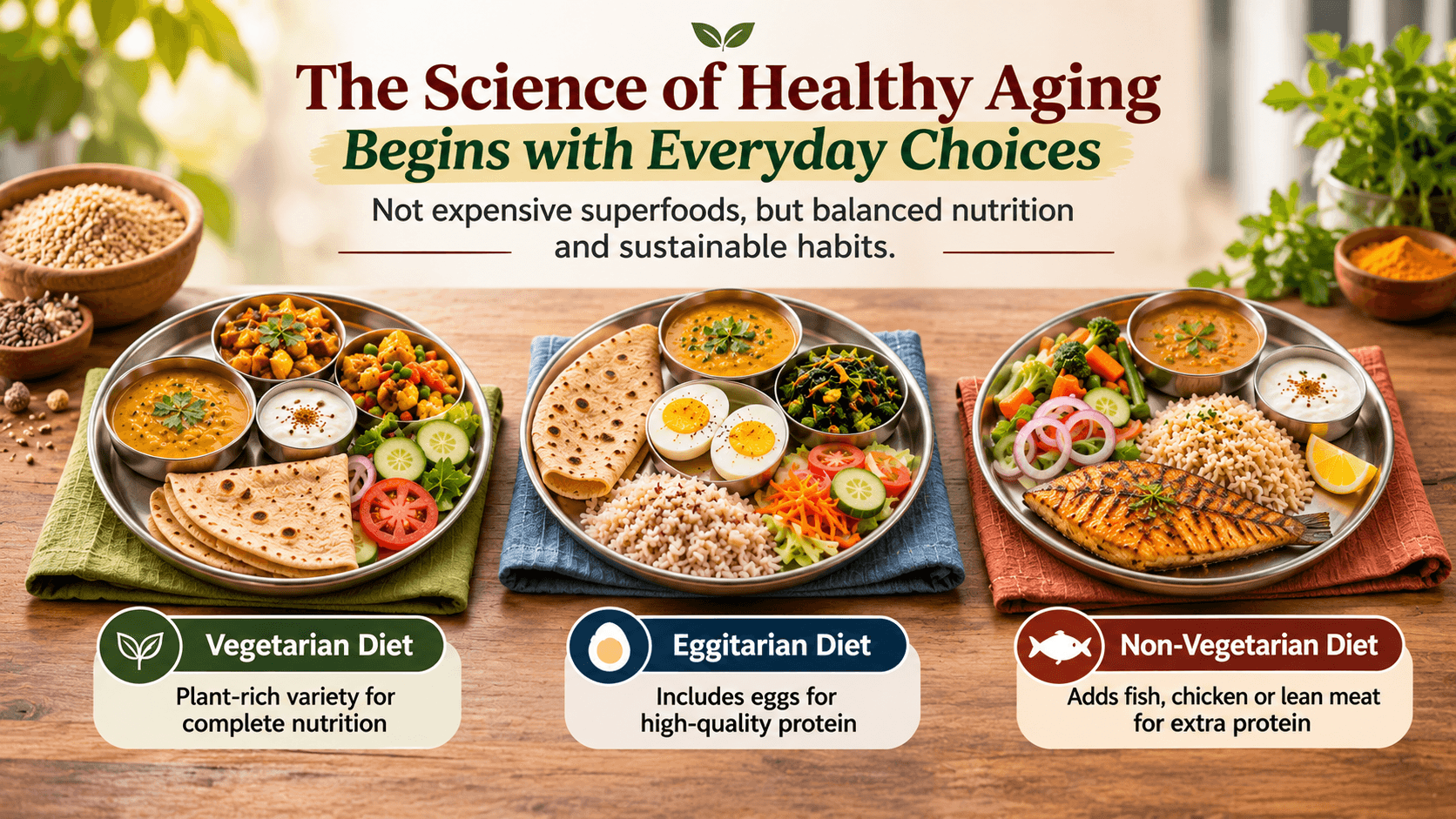
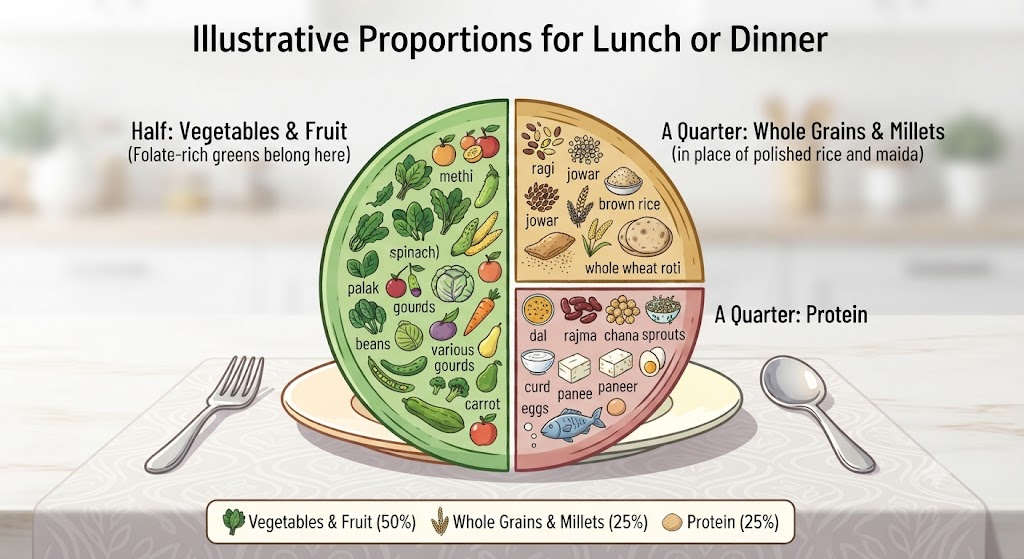
In 2024, ICMR-NIN released its first revised Dietary Guidelines for Indians in 13 years. The 17 guidelines ask for a varied diet built on whole grains and millets, pulses and vegetables, with less salt, sugar and ultra-processed food, and no protein powders for building muscle. Here is a simple way to picture one main meal. It is an illustration of balance, not a prescription.
A balanced midlife plate
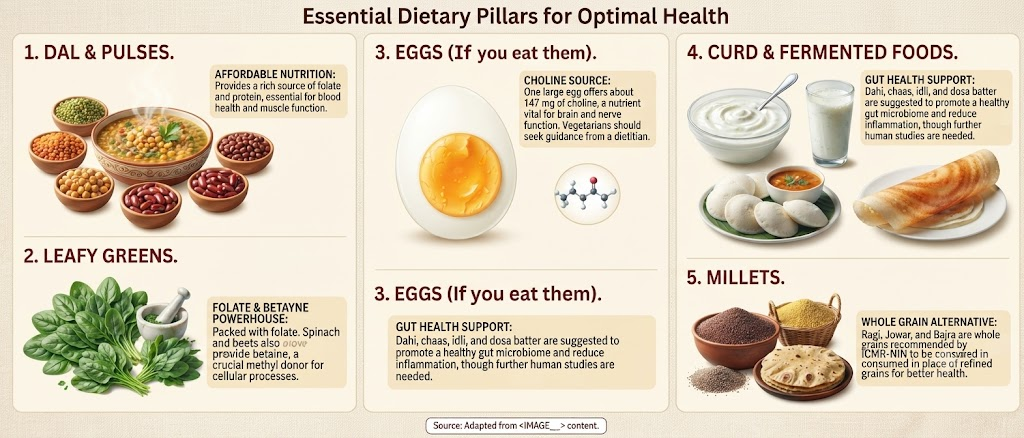
Five Everyday Foods Worth Bringing Back to the Table
None of these is a superfood. They are ordinary Indian foods that supply the nutrients behind the methylation pathway and fit the 2024 guidelines.
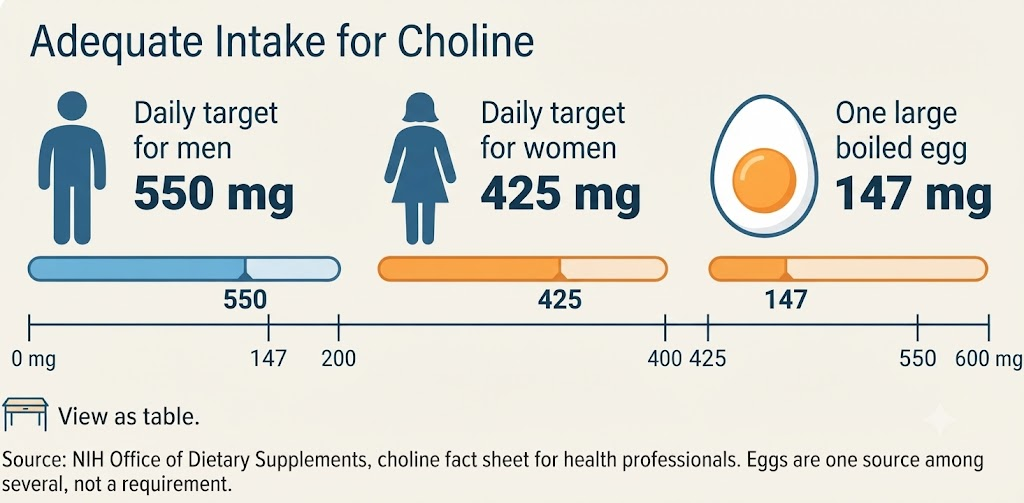
Choline: your daily target against one egg
Are Supplements Necessary After 40?
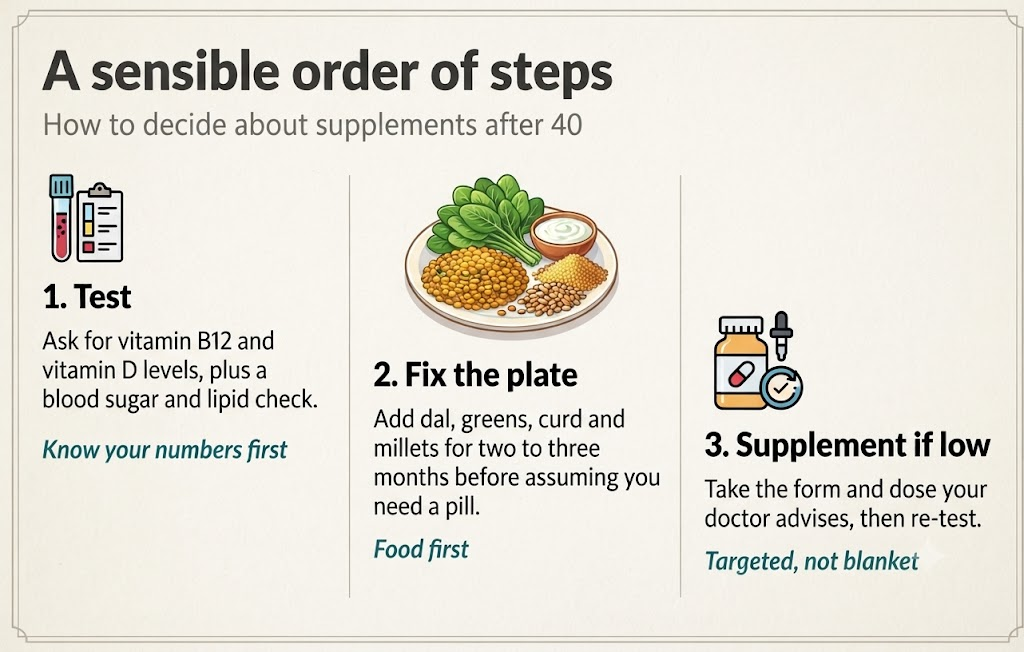
Not automatically. Supplements are worth considering when a blood test shows a shortfall or when your diet leaves out a whole food group. They are not a shortcut to a younger age. The eight-week trial that reported younger DNA methylation age used probiotics and plant-extract supplements together with diet, sleep, exercise and relaxation, so no single product can take the credit.
A few cautions apply. ICMR-NIN advises against protein supplements for gaining body mass, and notes that long-term use of large amounts of protein powder has been associated with bone mineral loss and kidney damage. Vitamin B12 is found mostly in animal foods, so strict vegetarians and vegans need to pay particular attention. And more is not better for methylation nutrients, because studies suggest that excess as well as inadequate folate can affect DNA methylation.
Healthy Aging Is More Than a Diet
The eight-week trial that moved DNA methylation age did not rely on food alone. It combined diet with sleep, exercise and relaxation guidance. The ICMR-NIN guidelines likewise pair eating advice with regular physical activity and advise against tobacco and alcohol. Food is one lever among several, and they work together.
Five levers of healthy ageing

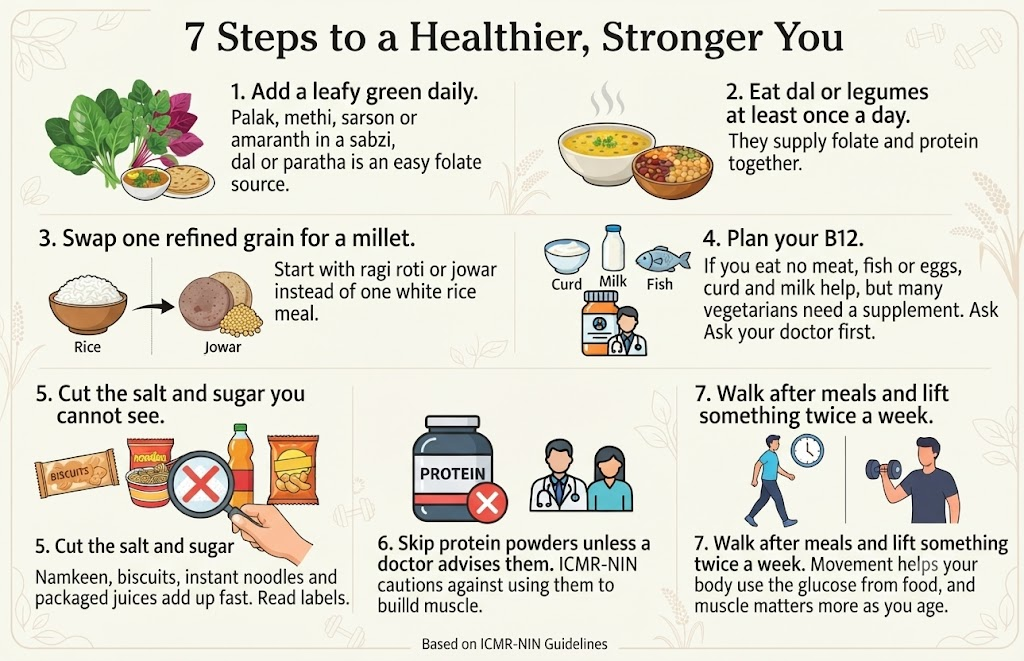
Seven habits to start this week
The Bigger Picture: Add Life to Your Years
The goal of eating well in midlife is not to look younger or to beat a number on an epigenetic clock. It is to stretch the years in which you are well enough to walk to the market, play with grandchildren, travel and think clearly. Researchers call this your healthspan, as distinct from your lifespan.
Midlife is not too late, and it is not too early. The same plate that protects your sugar and heart also supplies the nutrients your cells use to regulate your genes. Small, steady changes, kept up for years, are what the research supports.
References and Further Reading
The Mel Robbins Podcast. "Eat This to Live Longer, Stay Young, and Transform Your Health," with Dr Lucia Aronica on nutrition, epigenetics and longevity, 30 April 2026. Episode summary
NIH Office of Dietary Supplements. Epigenetics and nutrition. ods.od.nih.gov
Stanford University. Dr Lucia Aronica, research profile. profiles.stanford.edu
Gardner C.D. et al. (2018). Effect of low-fat vs low-carbohydrate diet on 12-month weight loss in overweight adults and the association with genotype pattern or insulin secretion: the DIETFITS randomized clinical trial. JAMA, 319(7). doi.org/10.1001/jama.2018.0245
NIH Office of Dietary Supplements. Choline: fact sheet for health professionals. ods.od.nih.gov
ICMR-National Institute of Nutrition. Dietary Guidelines for Indians, 2024. nin.res.in
OTHER STUDIES CITED IN THIS ARTICLE
Venkatesan U. et al. Metabolic non-communicable disease health report of India: the ICMR-INDIAB national cross-sectional study. The Lancet Diabetes & Endocrinology, 2023. thelancet.com
Sundarakumar J.S. et al. Burden of Vitamin D, Vitamin B12 and Folic Acid Deficiencies in an Aging, Rural Indian Community. Frontiers in Public Health, 2021. PMC8446357
Biswas K. et al. Burden of Vitamin D and Vitamin B12 Deficiency among Older Patients in North India. Maedica, 2024. PMC11565148
Fitzgerald K.N. et al. Potential reversal of epigenetic age using a diet and lifestyle intervention: a pilot randomized clinical trial. Aging, 2021. aging-us.com
Stanford twin study of vegan and omnivore diets and biological age, reported by Medical News Today, 2024. medicalnewstoday.com
Choi S.W. and Friso S. Modulation of DNA methylation by one-carbon metabolism: a milestone for healthy aging. Nutrition Research and Practice, 2023. synapse.koreamed.org
Review on DNA methylation and personalized nutrition. International Journal of Molecular Sciences, 2026. mdpi.com
Healthline. Methylation: what it is and how diet may influence it. healthline.com
ScienceDaily. Low-fat and low-carb diets equally effective for weight loss (DIETFITS report), 2018. sciencedaily.com
This article is general information for adults and is not medical advice. Speak to your doctor or a registered dietitian before changing medication or starting supplements, especially if you have diabetes, kidney disease or a heart condition.