Has India's rapid ethanol-blending programme delivered energy-security and emissions gains large enough to justify its fiscal cost and the mileage and trust costs now visible at the pump? The evidence supports a qualified yes on energy security and emissions, a contested middle ground on mileage, and a clear public-trust deficit that the data does not yet resolve.
1. The Global Comparison: Where India Sits
Ethanol blending mandates exist in over a dozen countries, but at very different intensities and for different reasons. Brazil mandates the highest blend in the world — a national minimum that has varied between 18% and 27.5% since the late 1970s, with premium gasoline historically held at 25% on automaker request. Brazil's blend is sugarcane-based and is paired with a flex-fuel vehicle fleet: flex-fuel cars captured 94% of new light-vehicle sales by 2013, and cumulative flex-fuel sales had reached 25.5 million units by mid-2015, giving Brazilian drivers the option to run on E100 hydrous ethanol directly at the pump rather than a fixed blend.
The United States, by contrast, has held its national blend near 10% for over a decade. More than 95% of US petrol sold is E10 under the Renewable Fuel Standard, with E15 available at roughly 10% of stations and E85 restricted to flex-fuel vehicles at a smaller dedicated network. The European Union has taken a similarly cautious path: E10 is standard in France, Germany, and the UK, while E5 remains common elsewhere, reflecting an EU regulatory focus on lifecycle emissions accounting and consumer-protection labelling rather than rapid blend escalation.
India's trajectory is the outlier by speed, not by ceiling. The country moved from 1.53% blending in 2014 to a nationwide 20% (E20) blend by mid-2025 — five years ahead of the original 2030 target set under the National Policy on Biofuels, 2018. That places India's blend ceiling between the US and Brazil, but its ramp-up rate — roughly thirteen-fold over eleven years — has no real precedent among the major blending economies, each of which took two to four decades to reach a comparable mandate level.
Country | Standard blend / ceiling |
|---|---|
Brazil | Mandatory blend variable 18%–27.5%; flex-fuel vehicles can run E100 directly |
United States | E10 on ~95%+ of pumps nationally; E15 at ~2% of stations; E85 for flex-fuel only |
European Union | E10 standard in France, Germany, UK; E5 common elsewhere |
India | E20 nationwide as of 2025; achieved 5 years ahead of original 2030 target |
2. The Budget: What the Ramp-Up Has Cost and Returned
India's ethanol push has been funded through a mix of interest subvention for distillery capacity, an administered procurement price for producers, and a reduced GST rate. The Union Cabinet's December 2020 interest subvention scheme committed ₹4,573 crore to expand distillation capacity; this was later expanded, with the Ministry of Petroleum and Natural Gas citing a total outlay of approximately ₹8,460 crore intended to crowd in roughly ₹40,120 crore of private investment across the ethanol value chain. As of February 2025, ₹1,535 crore of subvention payouts had been released through NABARD. Separately, in March 2025 the Ministry sanctioned ₹1,000 crore to the National Cooperative Development Corporation, intended to mobilise a further ₹10,000 crore in loans for cooperative sugar mills expanding ethanol and cogeneration capacity. GST on ethanol for blending was cut from 18% to 5% to improve producer economics, and OMCs currently procure ethanol at an administered price of roughly ₹65–68 per litre depending on feedstock.
On the return side, the Ministry of Petroleum and Natural Gas attributes foreign-exchange savings of approximately ₹1.36 lakh crore to the blending programme through mid-2025, alongside ₹1.96 lakh crore paid to distilleries and ₹1.18–1.96 lakh crore (depending on the reporting period cited) paid to farmers since the programme's effective start. Ethanol production capacity has grown from under 200 crore litres in 2014 to a capacity the government states now exceeds the roughly 1,016–1,350 crore litres required annually to sustain the E20 mandate.
Indicator | Figure |
|---|---|
Interest subvention outlay (expanded scheme) | ₹8,460 crore; targeting ₹40,120 crore in value-chain investment |
GST on blending ethanol | Reduced from 18% to 5% |
OMC administered procurement price | ~₹65–68/litre, varies by feedstock |
Cumulative forex savings (through mid-2025) | ~₹1.36 lakh crore (MoPNG) |
Cumulative farmer payments | ₹1.18–1.96 lakh crore depending on reporting period (MoPNG/PIB) |
3. Mileage and Engine Efficiency: The Contested Middle
Ethanol carries roughly 30% less energy per litre than pure petrol, which is the underlying physical basis for every mileage-loss claim in this debate — the dispute is about magnitude, not direction. The government's Roadmap for Ethanol Blending in India 2020–25, prepared by an inter-ministerial committee, states that E20 produces a marginal reduction in fuel efficiency for four-wheelers originally designed for E10 and later calibrated for E20, and that the Society of Indian Automobile Manufacturers (SIAM) informed the committee this loss narrows further with engine hardware and tuning modifications. NITI Aayog's energy adviser has stated that Indian vehicles tested up to 100,000 km on E20 showed no abnormal wear, and the Ministry of Petroleum and Natural Gas issued a clarification in 2025 stating that claimed "drastic" efficiency drops are misplaced and that the actual drop, where it exists, has been marginal.
Independent estimates place the range somewhat wider. Industry and technical explainers commonly cite a 3–7% mileage reduction for E10-tuned engines running on E20, rising toward 5–15% in some non-flex-fuel-engine estimates internationally, against the U.S. Department of Energy's figure of a 2–5% reduction for E10 specifically. SIAM's own executive director, P.K. Banerjee, has publicly rejected the more extreme social-media claims of a 50% mileage drop as unfounded, while simultaneously acknowledging that E20 does lower mileage in older vehicles. New vehicles sold since April 2023 are required to be E20-compliant; only Maruti Suzuki has so far announced a retrofit kit, priced up to ₹7,000, for older E10-tuned models.
4. Pollution Curb: What the Emissions Case Rests On
Ethanol's emissions case rests on its function as an oxygenate: blended fuel burns more completely, which the U.S. Department of Energy and India's own programme materials credit with reductions of roughly 20–30% in carbon monoxide and other incomplete-combustion pollutants, alongside a smaller (around 2%) reduction in lifecycle CO2 and greenhouse-gas emissions for low-level blends such as E10. India's government has cited a net reduction of approximately 832 lakh metric tonnes of CO2 attributable to the EBP programme's cumulative blending, alongside an earlier-stage figure of 544 lakh metric tonnes cited at the 15% blending milestone in 2024 — the larger number reflecting additional blending achieved between 15% and 20%. The programme is also credited with substituting roughly 181 lakh metric tonnes of crude oil demand.
These gains are not unconditional. E10 blending is associated in U.S. Department of Energy literature with increased evaporative emissions under certain conditions, and the seasonal Reid Vapor Pressure restrictions the EPA applies to E15 in the United States exist specifically because higher-ethanol blends can increase smog-forming evaporative emissions in warm weather if not properly formulated — a regulatory complication India's own E20 rollout has not yet had to publicly address at comparable scale.
What the Numbers Don't Show: Public Acceptance
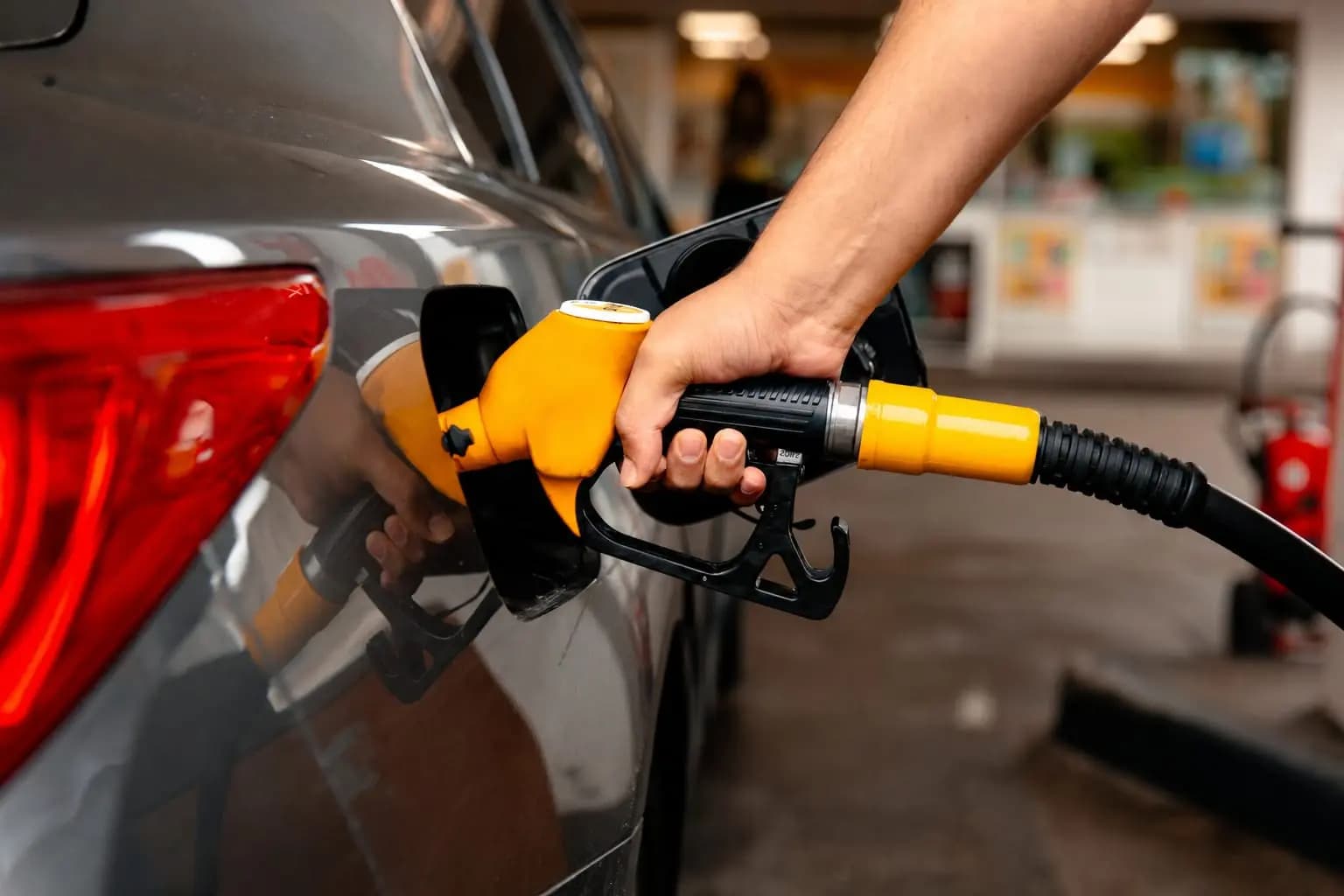
The mileage and engine-safety debate has translated into a documented trust deficit, not just an online grievance. Reuters and Context/Thomson Reuters Foundation reporting from September 2025 found that only about 20% of the roughly 234 million petrol vehicles sold in India between 2011 and 2025 are E20-compliant by design — meaning over 80% of the existing petrol fleet is running a fuel blend its engine was not originally calibrated for. The same reporting noted that E5 and E10 have been withdrawn from nearly all of India's roughly 90,000 fuel stations, leaving drivers without a lower-blend option even where they would prefer one, and that pumps carry no mandatory blend-percentage labelling for consumers, unlike the US, where E15 dispensers must carry visible warning labels under EPA rules.
“SIAM has stated no vehicle breakdown or engine failure has been reported nationally and that warranty and insurance claims will be honoured in full if issues arise; this claim has not been independently verified through published failure-rate data and should be read as an industry-body statement, not an audited finding.”
What This Survey Establishes
The evidence supports a narrower claim than "India's ethanol programme is a clean success." It supports this: India has executed one of the fastest blending ramp-ups in the world, backed by a coherent and reasonably well-documented subsidy architecture, and the government's own cited figures on forex savings, farmer payments, and CO2 reduction are sourced to identifiable PIB releases rather than unverifiable claims. What the same evidence does not establish is that the transition has carried the existing vehicle fleet and the public along with it at the same pace as the policy. A blend ceiling reached five years early, layered onto a fleet where roughly four in five petrol vehicles were not built for it, with no pump labelling and reversed manufacturer guidance, is sufficient to explain the consumer backlash and litigation without requiring either side's most extreme efficiency-loss or zero-impact claims to be true. Where India sits a decade from now — closer to Brazil's flex-fuel model, or holding at E20 the way the US has held near E10 — is not yet resolved by the data available.
Sources
Press Information Bureau, GoI (2025) — India's Ethanol Push: A Path to Energy Security — pib.gov.in
Press Information Bureau, GoI (2022) — India Achieves 10% Ethanol Blending Target 5 Months Ahead of Schedule — pib.gov.in
News on Air / Akashvani (2025) — India Hits 20% Ethanol Blending in Petrol 5 Years Ahead of Target: Hardeep Singh Puri — newsonair.gov.in
S&P Global (2025) — India Ethanol Blending Crosses 18% as Plans Beyond E20 Take Off — spglobal.com
Press Information Bureau, GoI (2025) — India's Ethanol Journey Is Unstoppable: Hardeep Singh Puri — pib.gov.in
Press Information Bureau, GoI (2025) — Government Measures to Increase Ethanol Blending Beyond 20% — pib.gov.in
Wikipedia / cited primary compilations — Ethanol Fuel in Brazil; Ethanol Fuel by Country; Common Ethanol Fuel Mixtures
Business Standard (2025) — How Brazil, US, and EU Tackled Ethanol Blends Before India's E20 Push — business-standard.com
Alternative Fuels Data Center, US Department of Energy — Ethanol Fuel Basics — afdc.energy.gov
Hydrocarbon Processing (2025) — Indian Automakers Say Ethanol Fuel Hurts Mileage but Is Safe, as Motorists Complain — hydrocarbonprocessing.com
Autocar Professional (2025) — What Government Says on Concerns About Impact of E20 Fuel on Mileage, Engine — autocarpro.in
Context / Thomson Reuters Foundation (2025) — In Data: India's Vehicle Boom Poses Challenge for Biofuels Target — context.news
USDA Foreign Agricultural Service (2021) — Indian Government Approves Interest Subvention Scheme for Ethanol Distilleries — fas.usda.gov
Press Information Bureau, GoI — Cabinet Approves Modified Scheme to Enhance Ethanol Distillation Capacity — pib.gov.in
Press Information Bureau, GoI (2023) — Ethanol Production Capacity in the Country Is 1,380 Crore Litres — pib.gov.in
Press Information Bureau, GoI — Government's Decision to Expand Interest Subvention Scheme for Ethanol Distillation Capacity — pib.gov.in
Drishti IAS (2026) — India's Ethanol Blending Programme and the Path to E100 — drishtiias.com
New Delhi, India • IDC Innovation Development Council • The Cosminnox • Reporting compiled from digital content regulatory indicators, Supreme Court case monitoring systems, OTT streaming guidelines, and Hirani & Associates media compliance disclosures.