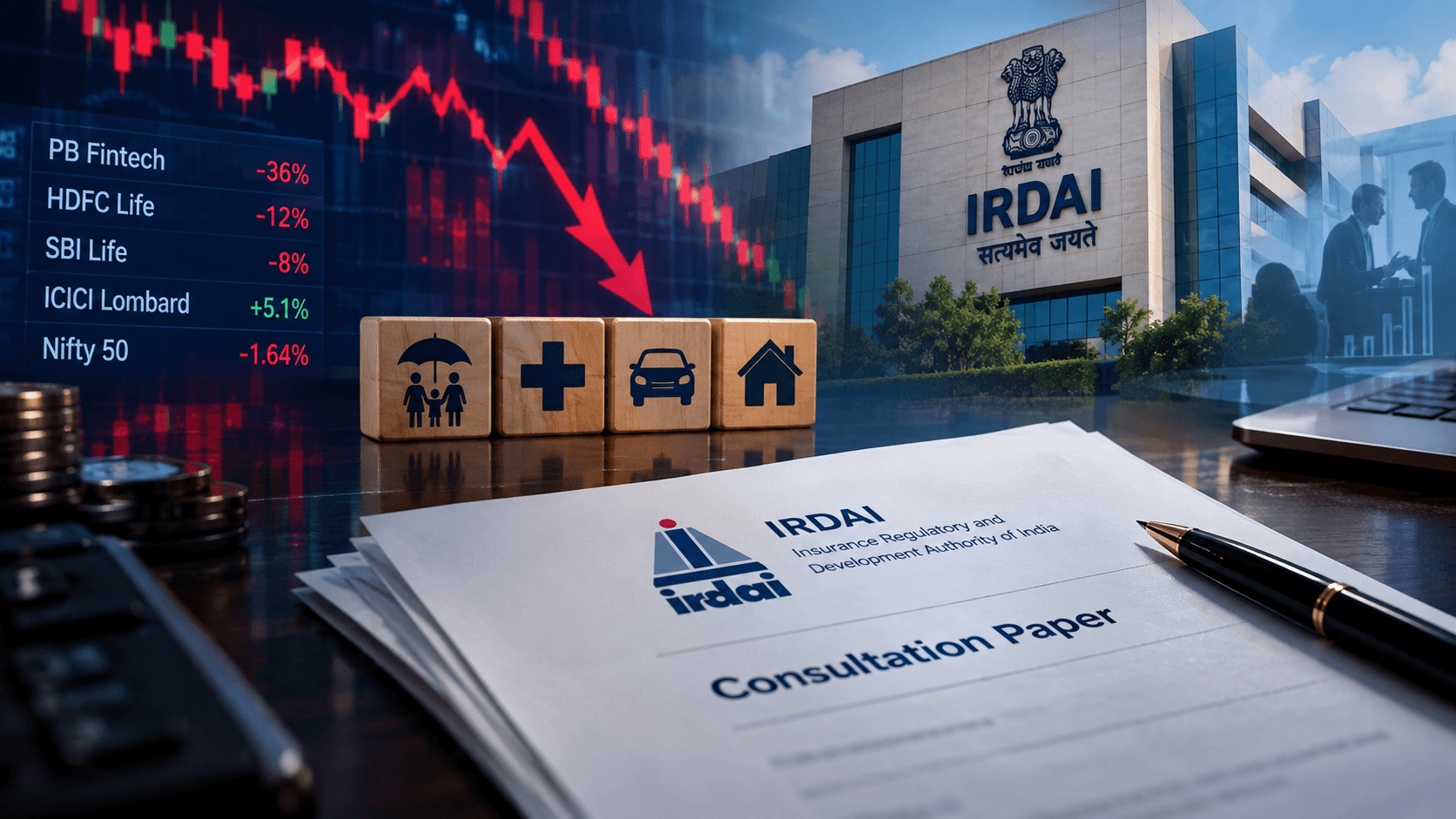
A consultation paper, not a circular, moved listed distributors, lenders and insurers by very different amounts on 24 September 2026, on a day the whole market was also falling.
Rebuilt 28 September 2026 with IRDAI's press release as primary source · Comments on the paper close 25 October 2026
The question. Did an enacted rule cause the 24 September sell-off, and did it hit all insurance-linked stocks alike? Answer supported by the sources: no to both. IRDAI's own release calls the document a public consultation paper, invites comments until 25 October 2026, and says nothing of a final rule or start date.[1] Moves ranged from −36% (PB Fintech) to +5.1% (ICICI Lombard),[2] and the Nifty 50 itself fell 1.64% that day.[2]
1. Status: what the regulator itself says
On 23 September 2026 IRDAI released a Public Consultation Paper covering distribution structure, expenses, commissions, market conduct, transparency and digital infrastructure, anchored in the Sabka Bima Sabki Raksha (Amendment of Insurance Laws) Act, 2025.[1] The release says the paper seeks views on the problems identified, the strategic objectives, the reform measures and “their implementation”; comments may be sent through the web portal, an Excel template or email until 25 October 2026.[1] A start date is not in the release. Reports of an FY2027-28 start, and of a limited chance of major rollback, come from a Jefferies note.[6] The full paper (with its Boxes 2, 4A and 4B) was not retrieved for this article.
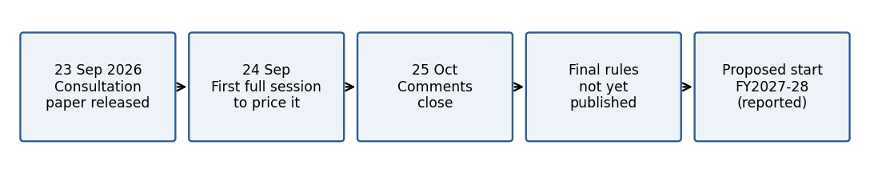
Figure 1. Timeline. Sources: [1], [6]. The FY2027-28 step is a broker-reported proposal, not in IRDAI's release.
2. What IRDAI proposes (primary source)
Area | What IRDAI's release says |
Architecture | Replace a “complex and fragmented” structure with three categories, guided by “same structure, same functions, same norms”: Insurance Distribution Entities (IDEs), Insurance Distribution Persons (IDPs) and Market Infrastructure Institutions (MIIs).[1] Simpler registration, lower entry and capital requirements, lower regulatory fees.[1] |
Expenses (EoM) | Life insurers: company-level limit on gross direct premium income (GDPI) of 15% within two years and 12.5% within five. General insurers: from 30% of gross written premium to 20% of domestic GDPI within five years, with annual reductions. Regulatory fee on insurers also to be reduced.[1] |
Commissions | Limits to reflect segment, line of business, channel, product complexity and selling and servicing effort. Under-served areas (towns up to 50,000 population, rural areas, and cities up to 10 lakh) may carry rewards above normal limits. Cost audits and safeguards against indirect payments.[1] |
Bundling and incentives | Safeguards against compulsory bundling; all remuneration, direct or indirect, monetary or non-monetary, counted as commission; volume-linked or reward-linked incentives for bank and NBFC staff selling insurance prohibited; commission claw-back for mis-selling.[1] |
Transparency | Insurers and large distributors to disclose commission policies; commission disclosed on specified commercial policies (sum insured above ₹50 crore); mis-selling information made public; individual sellers linked to policies sold.[1] |
Dark patterns | The release says the paper proposes “tracking dark patterns” and publishing performance information.[1] It does not say they would be banned. |
Digital infrastructure | MIIs as digital, pull-based channels, with Bima Sugam named as one; wider use of the Public Insurance Registry.[1] |
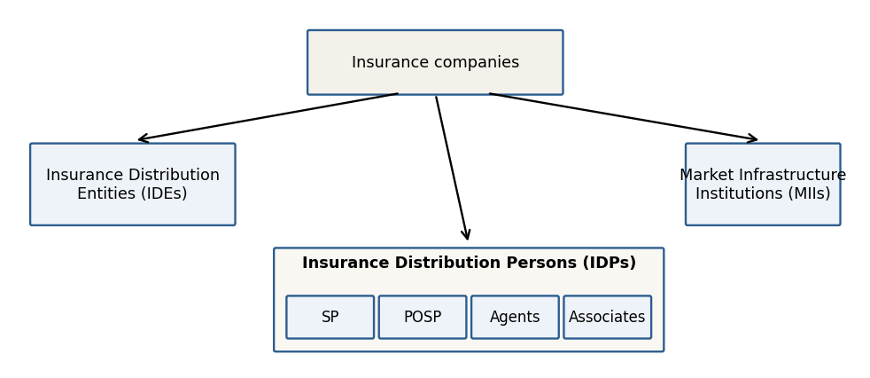
Figure 2. Proposed distribution framework, redrawn from IRDAI's diagram. In the source diagram, SP and POSP connect to the IDE and all four groups sit inside the IDP bracket. Source: [1].
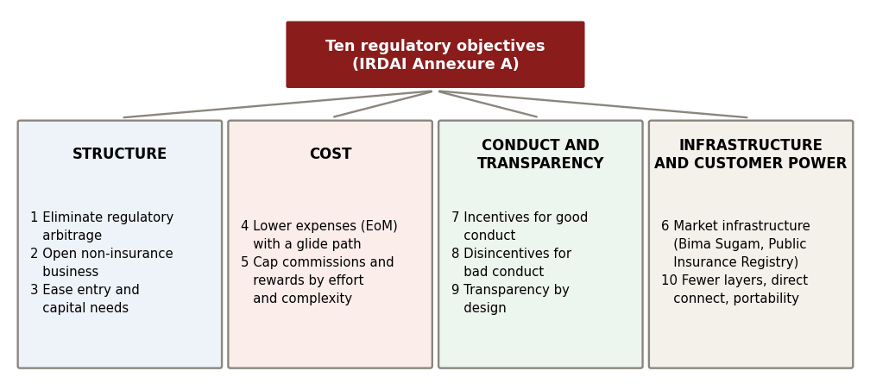
Figure 3. Reform map. The ten objectives are IRDAI's (Annexure A); the four-way grouping is COSMINNOX's. Source: [1].
3. What the release does not contain
Several figures widely quoted on 24 September are not in IRDAI's press release and rest on secondary reporting until checked against the paper's boxes:
Claim | Status |
2% to 2.5% first-year cap on term cover sold with a loan | Reported by Marketcalls;[2] not in the release. |
5% cap on motor own-damage; no commission on third-party motor | Reported;[2] Jefferies describes own-damage commissions as cut by a third.[3] Not in the release. |
Customers not asked for name, phone or email to see price and features | Reported by Marketcalls;[2] the release mentions only tracking dark patterns.[1] |
Implementation from FY2027-28 | Jefferies note via INDIA IPO;[6] not in the release. |
4. Why distributors were exposed first
An insurer's selling cost is a distributor's revenue: lower expense caps and commission limits shrink the pool that pays agents, banks and online platforms.[2] Analysts said even a 10% cut in new-business commission rates could reduce PB Fintech's earnings by 10%–12%.[4] Macquarie called PB Fintech the most exposed, given earnings sensitivity to take rates.[3]
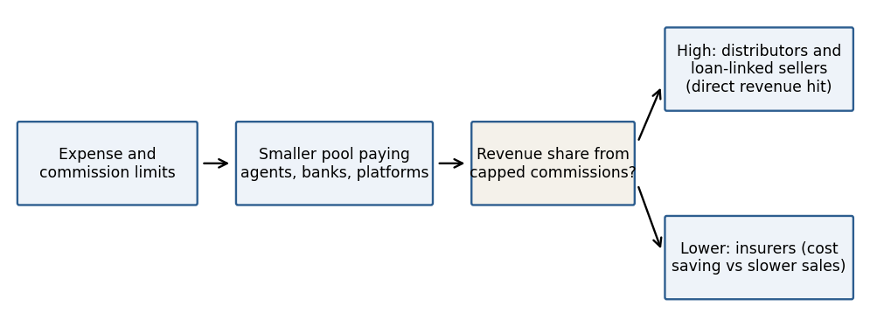
Figure 4. Transmission logic (COSMINNOX schematic of the mechanism described in [1], [2] and [4]).
5. The reaction, stock by stock
Official NSE closes on 24 September: PB Fintech ₹1,207.20 (−36.0%), Turtlemint ₹109.04 (−20.0%), Max Financial ₹1,410.00 (−9.8%), HDFC Life ₹526.90 (−6.2%), ICICI Prudential Life ₹464.50 (−4.1%).[2] Business Standard shows the ICICI Prudential move as −4.23%, a rounding-level difference.[3] Early-morning figures such as “PB Fintech down 20%” were first-hour snapshots.[2]
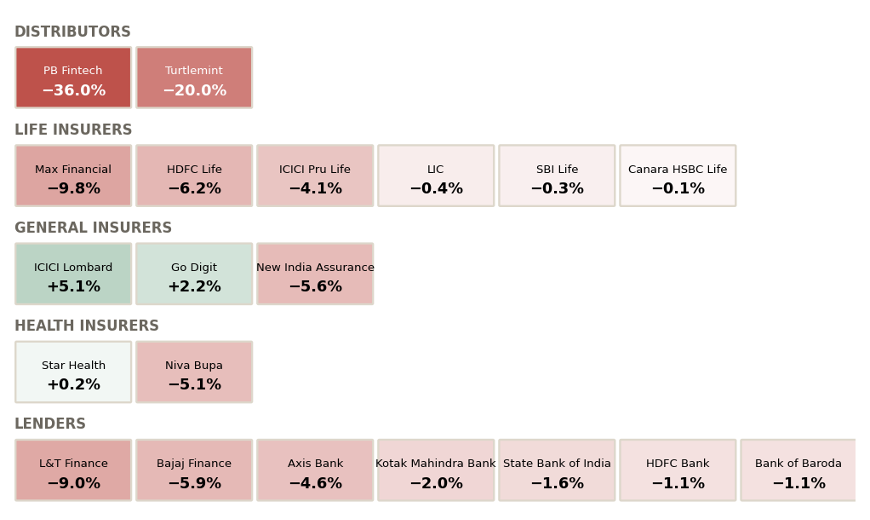
Figure 5. Heat map of the 24 September session by segment. Colour intensity scales with the size of the closing move. Data: [2].
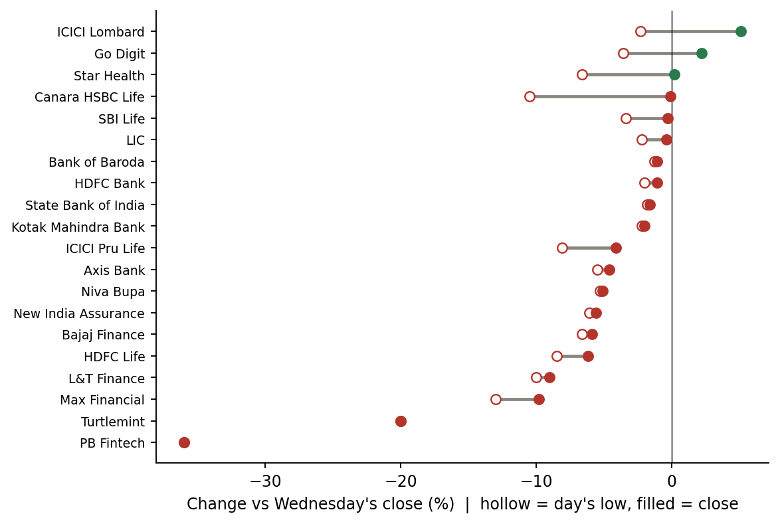
Figure 6. Worst point of the day versus the close (both versus Wednesday's close). A long line means a recovery. Data: [2].
Both listed distributors closed at their lows.[2] Most life insurers were hit hardest in the first hour and recovered part of the fall; Canara HSBC Life was down 10.5% at its low and closed down 0.1%.[2]
6. PB Fintech: a staircase, and a resolved data conflict
PB Fintech opened 10% below Wednesday's ₹1,886.30 and, being in F&O, saw its price band widened in steps as it kept hitting the floor; only about 12% of the day's 2.73 crore shares traded before 2:15 pm.[2] The last continuous-trading price was ₹1,244.50 (−34%), while NSE's official close was ₹1,207.20 (−36%).[2] The two figures seen in reports are therefore different measures, not competing closes. It was the stock's largest one-day fall since its November 2021 listing.[2]
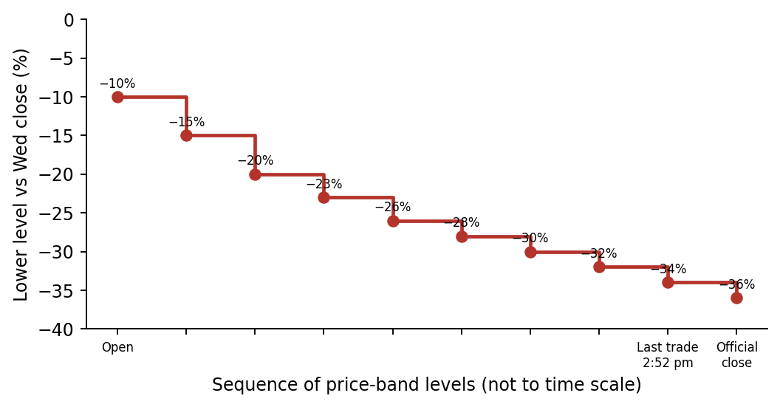
Figure 7. PB Fintech's lower-band sequence, in order (not to time scale). Data: [2]. Market-value loss is ₹31,425.5 crore per Business Standard;[3] one report cited “almost ₹25,000 crore”,[5] likely from earlier in the session (COSMINNOX inference).
7. How much was IRDAI, how much was the market?
The Nifty 50 fell 1.64% to 23,063.10 and the Sensex 1.67%. Reports cited rising US Treasury yields, Brent above $100 and Fed rate-hike bets alongside the IRDAI paper.[2] PB Fintech, Max Financial and L&T Finance opened at their 10% lower bands, while banks opened only 1%–2% lower; several banks and Niva Bupa made their lows in the afternoon with the broader market.[2] Twelve financial stocks lost about ₹1.58 lakh crore together.[4]
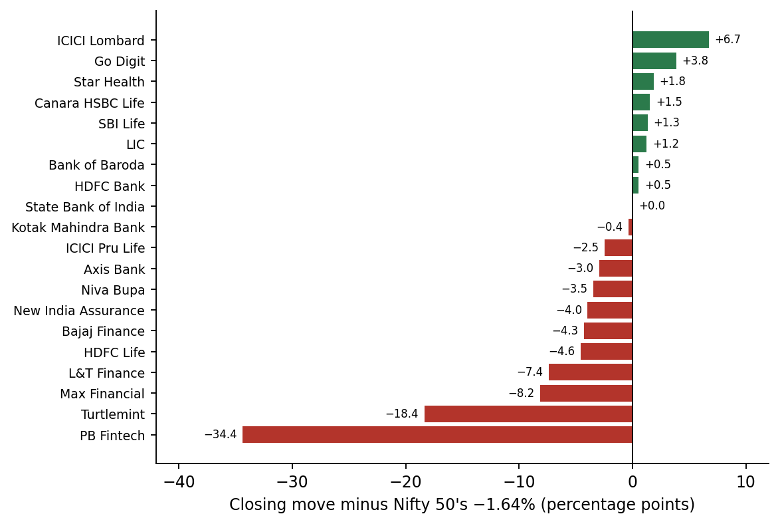
Figure 8. Closing move minus the Nifty's −1.64% (COSMINNOX arithmetic on data from [2]). A single-day, unadjusted comparison; it does not prove causation. Even after removing the index move, distributors stand far apart.
8. Counter-evidence and unresolved points
The regulator's stated purpose is consumer-side. IRDAI says lower EoM is intended to lower the overall cost of insurance, widen the risk pool in general insurance and improve returns to policyholders in life savings products, with a phased approach to balance affordability against insurer sustainability.[1] The market reaction priced in the revenue side of the same proposal.
Not every insurer was a loser. Jefferies said any correction in SBI Life, Star Health and ICICI Lombard was a buying opportunity, while flagging near-term risk to ICICI Lombard and Go Digit motor own-damage growth.[6][3] These are broker views, not outcomes.
What is unknown. The final commission caps, the implementation date, the effect on policyholder prices, and whether the fall reflects lasting earnings changes.
9. What to watch
The 25 October comment deadline; the July–September quarter results starting in October;[2] the commission boxes of the full paper; and each company's share of revenue from capped commissions.
Sources and data notes
[1] Tier 1 (primary; press release, not the full paper). IRDAI, Press Release “Recalibrating Economics of Insurance Distribution: IRDAI issues consultation paper on Distribution Reforms”, 23 Sep 2026. Paper portal named in release: Link
[2] Tier 3 (NSE closing data via broker feed, sourced to Tier 2 outlets). Marketcalls, “IRDAI Distribution Reform: Why PB Fintech Crashed 36%…”, 24 Sep 2026. Link
[3] Tier 2. Business Standard, “Insurance distributors bleed as Irdai proposes sharp commission cuts”, 24 Sep 2026. Link
[4] Tier 2. YourStory, “PB Fintech crashes 36%, Turtlemint 20%…”, Sep 2026. Link
[5] Tier 2. India Infoline, “Why PB Fintech and Other Insurance Stocks Crashed Today”, 24 Sep 2026. Link
[6] Tier 2/3 (Jefferies view). INDIA IPO, “PB Fintech crashes 32% on IRDAI commission rules: Jefferies…”, Sep 2026. Link
Gaps: the full consultation paper and NSE's own bulletin were not retrieved; commission figures and all price data remain secondary. Moneycontrol could not be opened from this environment. Correction log (vs. earlier draft, 28 Sep 2026): IRDAI's press release added as a primary source; EoM limits and the three-category architecture confirmed against it; the architecture diagram corrected to match IRDAI's; “ban on dark patterns” softened to “tracking dark patterns” per the release; loan-linked, motor and FY2027-28 claims labelled as secondary.