

From household trust to shared ownership
Why did Reliance help make shares popular with Indians, and can Jio repeat that influence? The evidence suggests that a recognisable business, repeated engagement with small shareholders and visible industrial expansion helped make ownership feel accessible. But bringing people into the market and delivering a worthwhile investment are different achievements. Jio’s public issue brings that distinction into focus.
The Economic Times reports that Reliance’s 1977 issue raised about ₹2.8 crore and attracted roughly 58,000 shareholders. Its account describes large shareholder meetings and repeated fundraising that kept ordinary investors connected to the company. Reliance’s own history confirms the 1977 IPO and says it was subscribed seven times. These sources support an important role for Reliance; they do not establish that one company created India’s entire investing culture. [1,2]
The mechanism is understandable. A household can find an abstract financial product intimidating, but a business it recognises is easier to discuss. Shareholder meetings can make ownership feel participatory. Stories of earlier investors doing well can encourage relatives and neighbours to consider shares. This is an interpretation of Reliance’s appeal, not a measured explanation of every investor’s decision.
There is also a warning inside that success: familiarity can become a shortcut. Knowing a company’s products does not tell us whether its shares are reasonably priced. The useful inheritance from Dhirubhai Ambani’s era is the idea that ordinary people can own businesses—not that a famous surname removes investment risk.
An IPO, explained without financial jargon
IPO means Initial Public Offering: an unlisted company offers shares to the public for the first time, preparing the way for exchange trading. A share is a small ownership interest in the company. An IPO can create new shares, sell existing shareholders’ shares, or combine both routes. [3]
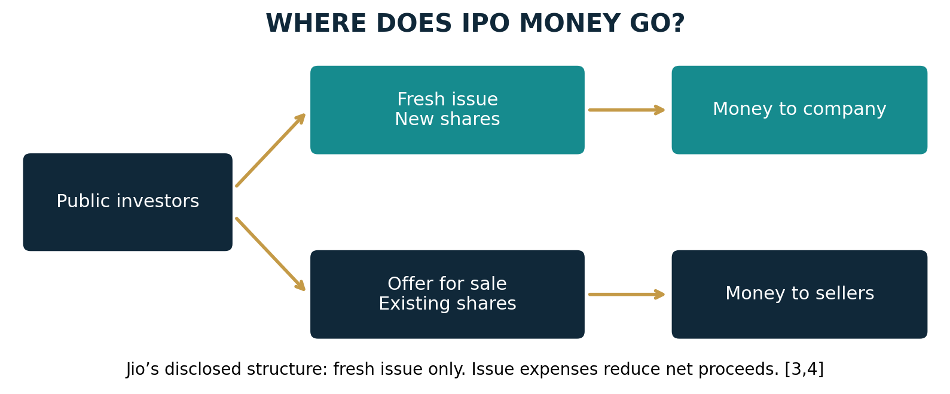
The destination of the money matters. In a fresh issue, the company receives money for newly created shares. In an offer for sale, the selling shareholders receive the proceeds. After listing, ordinary stock-market purchases generally transfer money between buyers and sellers; they do not keep raising money for the company. [3]
Here is an illustrative example. A business has 100 shares and creates another 25. If the public buys those new shares, it owns 25 of 125 shares, or 20%. The original owners retain 80%. Their percentage falls, but the business gains cash. That is dilution; it is not automatically a loss of economic value.
An investor hopes to benefit through a higher share price or dividends if declared. Neither is guaranteed. Owning shares is therefore different from receiving a promised interest payment on a deposit. The sensible first question is not ‘How famous is this company?’ but ‘What am I buying, and at what price?’
Figure 1. Follow the money: two different IPO routes.
Why Jio chose to go public
Jio Platforms is the issuer; Reliance Jio Infocomm is its telecom subsidiary, and Reliance Industries is its promoter. The abridged prospectus describes up to 27 crore new shares, no offer for sale, and bidding scheduled for 21–23 October 2026. Its stated uses of net proceeds are prepayment of certain subsidiary borrowings and general corporate purposes. It also identifies creating a public share market as a benefit. [4]
That changes the explanation of ‘why Jio had to do this’. The documents establish a chosen financing route, not an unavoidable requirement or proof of financial distress. Reuters reports a proposed allocation of up to ₹27,500 crore towards subsidiary debt repayment or prepayment. It would be misleading to describe the entire IPO as a dedicated AI investment fund. [5]
The economic logic is straightforward: replacing some borrowing with shareholder capital can reduce future financing pressure. However, the benefit depends on the borrowing repaid, its cost, issue expenses and how the business subsequently uses its financial flexibility. Raising equity also means sharing future profits with more owners.
A separate listing can make the market’s assessment of Jio easier to see. Investors can judge the digital business directly rather than only through a diversified parent. That does not guarantee a higher combined value: investors may already have anticipated the listing, or may assign a less generous valuation than management hopes.
A growing business still needs a fair price
The filing’s restated consolidated figures show revenue from operations rising from ₹1,09,558.1 crore in FY2024 to ₹1,46,885.3 crore in FY2026. Profit after tax increased from ₹21,423.2 crore to ₹30,049.1 crore. The chart uses full financial years and converts the filing’s ₹ million figures into ₹ crore. [4]
Growth is evidence of business progress; it is not a valuation verdict. Reliance’s FY2025 annual report attributed digital-services revenue growth partly to mobile tariff increases and expansion of home services. That distinction matters: growth can come from more customers, higher spending per customer, or new services, and each route has different limits. [6]
Consider a deliberately simplified example, unrelated to Jio’s actual valuation. If a company earns ₹10 per share, a ₹200 share price represents 20 times annual earnings. At ₹400, the same earnings cost 40 times. The second price requires a stronger belief about future growth. A good business can still disappoint investors who pay too much.
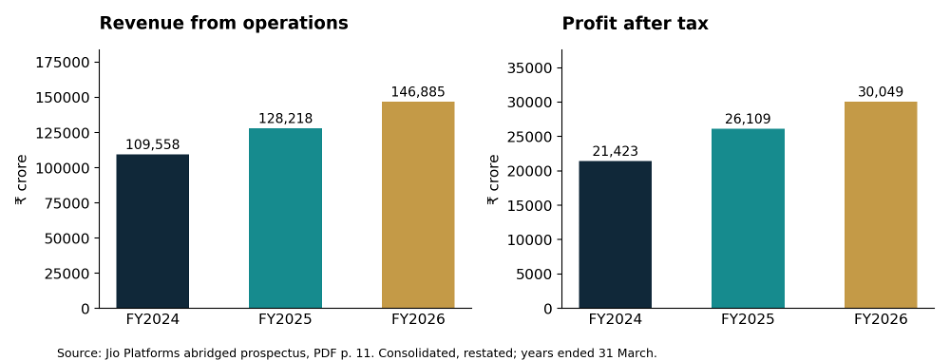
Figure 2. Growth in revenue and profit is not a guarantee of investment returns. The panels use different scales.
The benefits and the trade-offs
For Jio, fresh equity offers financial flexibility and a wider ownership base. The trade-offs include dilution, the expense of listing and continuing public scrutiny. Management must explain investment decisions to shareholders whose preferred time horizons may differ.
For investors, the opportunity is direct ownership in a digital business. The risks include an expensive entry price, competitive pressure and the cost of maintaining and upgrading infrastructure. Operating profit alone is insufficient: cash available after investment and financing commitments is also important.
For the wider economy, public equity can connect household savings with business financing. Yet one large offering cannot demonstrate broad financial inclusion. The relevant questions are whether participation widens across households and regions, whether investors understand the risks, and whether their portfolios become dangerously concentrated. These are policy questions, not outcomes that a subscription headline can settle.
Counter-evidence: demand is not the same as conviction
The Financial Express reported that, at the end of 21 October, institutional demand was 9.42 times its reserved allocation, compared with 1.68 times for non-institutional investors and 0.73 times for retail investors. These are separate category ratios, not percentages of total bids. The chart is a first-day snapshot, not the final subscription result. [7]
This qualifies the claim that Reliance’s retail-investor history has already repeated itself. Strong institutional bidding can make an issue look overwhelmingly popular while small-investor participation remains more modest. Early demand also cannot establish how investors will behave after listing.
A second limitation is historical selection. Looking back at a successful company highlights the investors who stayed and benefited; it can obscure different purchase prices, selling dates and unsuccessful alternatives. Reliance’s history illustrates what equity ownership can achieve. It cannot supply a guaranteed return for a new Jio shareholder.
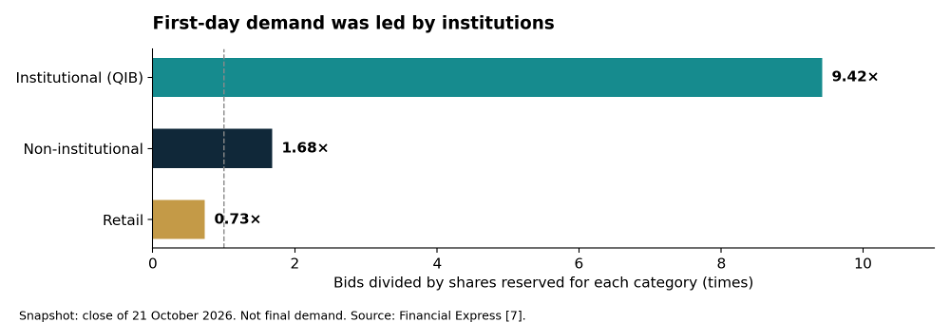
Figure 3. Each ratio uses its own category allocation; it is not a share of total demand.
The future depends on execution, not opening-day excitement
Three scenarios offer a more useful framework than a confident price prediction. These are COSMINNOX analytical scenarios, not forecasts or assigned probabilities.
In the stronger scenario, customer spending and profitable services grow while investment remains disciplined. Debt reduction then supports a business that produces more cash for each share. In the middle scenario, the business expands but much of the improvement is absorbed by spending or was already reflected in the purchase price. In the weaker scenario, competition, investment costs or disappointing new services leave earnings below expectations.
The quarterly questions are practical: Are customers staying? Is revenue per customer improving without weakening affordability or retention? Are new services producing paying customers? Is debt actually falling? How much cash remains after network investment? A longer list of technologies is less informative than answers to these questions.
There is a public-interest tension too. Higher customer spending can support shareholder earnings, but affordable connectivity matters to households and small businesses. Policymakers should assess competition, service quality and access alongside capital-market success. A well-received IPO is not a substitute for a well-functioning digital market.
The COSMINNOX perspective
COSMINNOX proposes a simple standard: make participation informed, and make performance measurable. Issuers should explain the use of money and report progress in language a first-time shareholder can follow. Exchanges and intermediaries should display retail and institutional demand separately. Investor education should explain dilution, price and concentration risk as clearly as it explains how to apply.
Reliance helped make ownership imaginable for many households. Jio’s opportunity is to turn that familiarity into an accountable relationship with public investors. The evidence supports a story about access, financing and business growth. Whether this becomes a rewarding investment will depend on future cash generation and the price paid—not on nostalgia alone.
References
[1] Economic Times, ‘From Dhirubhai to Akash Ambani, Reliance made stocks popular with Indians’, 21 October 2026; historical sections. Read source
[2] Reliance Industries, ‘Our History’, 1977 entry; accessed 22 October 2026. Company account, attributed as such. Read source
[3] SEBI, ‘Issues by Indian Companies in India’, FAQ, section 1, pp. 2–3. Used only for basic issue definitions, not current procedural rules. Read source
[4] Jio Platforms, Abridged Prospectus accompanying RHP dated 14 October 2026, filed 15 October; PDF pp. 1–2 (issue), 9 (objects), 11 (financials). Issuer disclosures hosted by SEBI; not SEBI endorsement. Read source
[5] Reuters, Aditya Kalra and Vibhuti Sharma, ‘India’s Jio lures marquee investors to IPO anchor book, bids top $25 billion’, 19 October 2026; use of proceeds. Read source
[6] Reliance Industries, Integrated Annual Report 2024–25, Digital Services, performance discussion. Read source
[7] Financial Express, Kushan Shah, ‘Jio Platforms IPO fully subscribed in 100 minutes’, updated 21 October 2026, 20:10 IST; category-level subscription figures. Read source