On July 2, 2026, Narendra Modi and Sanae Takaichi announced 16 outcomes at the 16th India-Japan Annual Summit — three joint statements (economic security, AI, energy resilience) and a first bilateral defence co-development project. The narrower question: does this package mark a structural change in how the two countries build defence and technology capacity together, or extend a pattern, visible since 2015, of large MoU baskets that move slower than the signing ceremony suggests? The evidence is mixed — weighted toward the latter on execution, toward the former on defence.
Defence: A Real First, on an Older Timeline
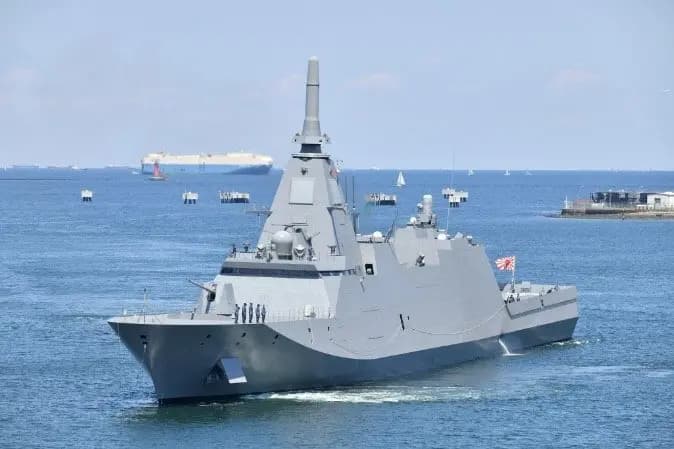
The joint statement records agreement in principle on remaining technical details of the UNICORN radar-signature-reduction project, which Indian officials call the countries' first defence co-development programme. Two qualifiers bound its novelty: the project traces to a November 2024 Memorandum of Implementation, so the summit closed out an initiative already 18 months old and the opening rests on Japan's April 2026 decision to end its lethal-arms export ban and a rising defence budget, not an Indian-side change. Both sides also committed to a fourth 2+2 ministerial in Tokyo and expanded naval MRO and maritime-domain cooperation— deepening an existing track, not new co-development on UNICORN's scale.
AI: Real Plumbing, Mostly Aspirational Framing
The AI joint statement reaffirms a January 2026 target of 500 Indian AI professionals in Japan by 2030, and commits both sides to treat each other as “strategic R&D partners” on data centres, GPU compute and semiconductors. The concrete content sits in five institutional MoUs: BharatGen–National Institute of Informatics on multilingual LLMs ; SarvamAI–Preferred Networks on foundation models ; IndiaAI Mission–METI, reportedly linked to Japan's GENIAC compute-sharing initiative: and NIXI–JPNIC on internet-registry operations and cybersecurity. None had produced a public deliverable as of this writing.
The Money, Against a Longer Baseline
Modi cited roughly 120 business agreements over the past year opening over $10 billion in Japanese investment; a parallel figure from the accompanying Economic Forum put it at 150 firms and $12.5 billion — the two counts aren't obviously the same. This sits inside Japan's August 2025 pledge to double its ten-year India investment target from ¥5 trillion to ¥10 trillion; actual disbursement between April–December 2025 totalled just $3.2 billion. Roughly 1,400 Japanese firms operate in India, and FY2025-26 bilateral trade stood at $27.48 billion, with India's $6.04 billion in exports against $21.44 billion in import.
Counter-Evidence
Bilateral trade has underperformed stated ambitions for years, with non-tariff barriers and limited defence-tech transfer cited as recurring, unresolved constraints . The Mumbai-Ahmedabad High-Speed Rail project, the relationship's earlier flagship, continues to face delays both governments acknowledge. The $3.2 billion actual disbursement against the ¥10 trillion target is the clearest evidence that summit pledges here have historically moved slower than announced (India Sentinels). One independent analysis argues none of the 16 outcomes shifts the underlying balance overnight, since decades of Chinese industrial capacity can't be offset by a handful of agreements (India's World).
“What the Record Establishes: Three bounded claims: on defence, a genuine first enabled by an 18-month-old MoI and a Japanese, not Indian, policy shift; on AI, real institutional infrastructure beneath a mostly aspirational statement; on money, fresh pledges sitting inside a larger target whose first tranche ran well behind pace.”
What Comes Next
Whether execution changes will be visible in three markers before the next summit: whether UNICORN reaches a signed contract; whether FY2026-27 disbursement closes the gap against the ¥10 trillion target; and whether any AI MoU produces a named joint output rather than a further statement of intent.
The COSMINNOX — Think Tank Vertical. Sourced from Government of India (PM India joint statements) and reported coverage from Business Standard, The Tribune, The Week, DD India/DD News, India's World, India Sentinels, Drishti IAS, Sanskriti IAS, ANI, Organiser, GrowJust India and New Delhi Times, as cited inline. Figures current as of July 7, 2026; investment/trade figures should be checked against updated RBI/DPIIT data on Japanese FDI disbursement when available.