For two decades, the Mediterranean diet has occupied a strange place in nutrition science: everyone agrees it works, almost no one has been able to say precisely how. A new study led by researchers at the USC Leonard Davis School of Gerontology offers the clearest mechanistic answer yet — and it comes from a part of the cell most people have never heard of.
The research, led by Instructional Associate Professor of Gerontology Roberto Vicinanza, examined blood samples from older adults who followed the Mediterranean diet to varying degrees. Those with the strongest adherence carried significantly higher levels of two mitochondrial microproteins called humanin and SHMOOSE — both previously linked to protection against cardiovascular disease and neurodegeneration, including Alzheimer's. They also showed lower markers of oxidative stress, the cellular wear-and-tear caused when unstable molecules overwhelm the body's defenses and damage proteins, fats and DNA over time.
Small Proteins, Big Discovery
Humanin and SHMOOSE are not proteins in the conventional sense. Unlike the vast majority of proteins, which are encoded by nuclear DNA, both are produced from small reading frames tucked inside the separate mitochondrial genome — regions of DNA that scientists long dismissed as functionally empty. Humanin, identified by Cohen's lab in 2003, has since been tied to improved insulin sensitivity, cardiovascular protection, longevity and preserved cognitive function. SHMOOSE was discovered later and carries its own genetic footnote: a variant of it has been associated with higher Alzheimer's risk, while the standard form appears to help shield neurons from amyloid-related damage.
“These microproteins may act as molecular messengers that translate what we eat into how our cells function and age. It's a new biological pathway that helps explain why the Mediterranean diet is so powerful.”
— Roberto Vicinanza, Instructional Associate Professor of Gerontology, USC Leonard Davis School
The study's senior author, USC Leonard Davis School Dean Pinchas Cohen, believes the findings give these molecules a new dimension. “Humanin and SHMOOSE could serve as biomarkers for adherence to the Mediterranean diet and have clinical significance,” Cohen said. “These peptides are emerging as key regulators of aging biology.”
Not All Ingredients Are Equal
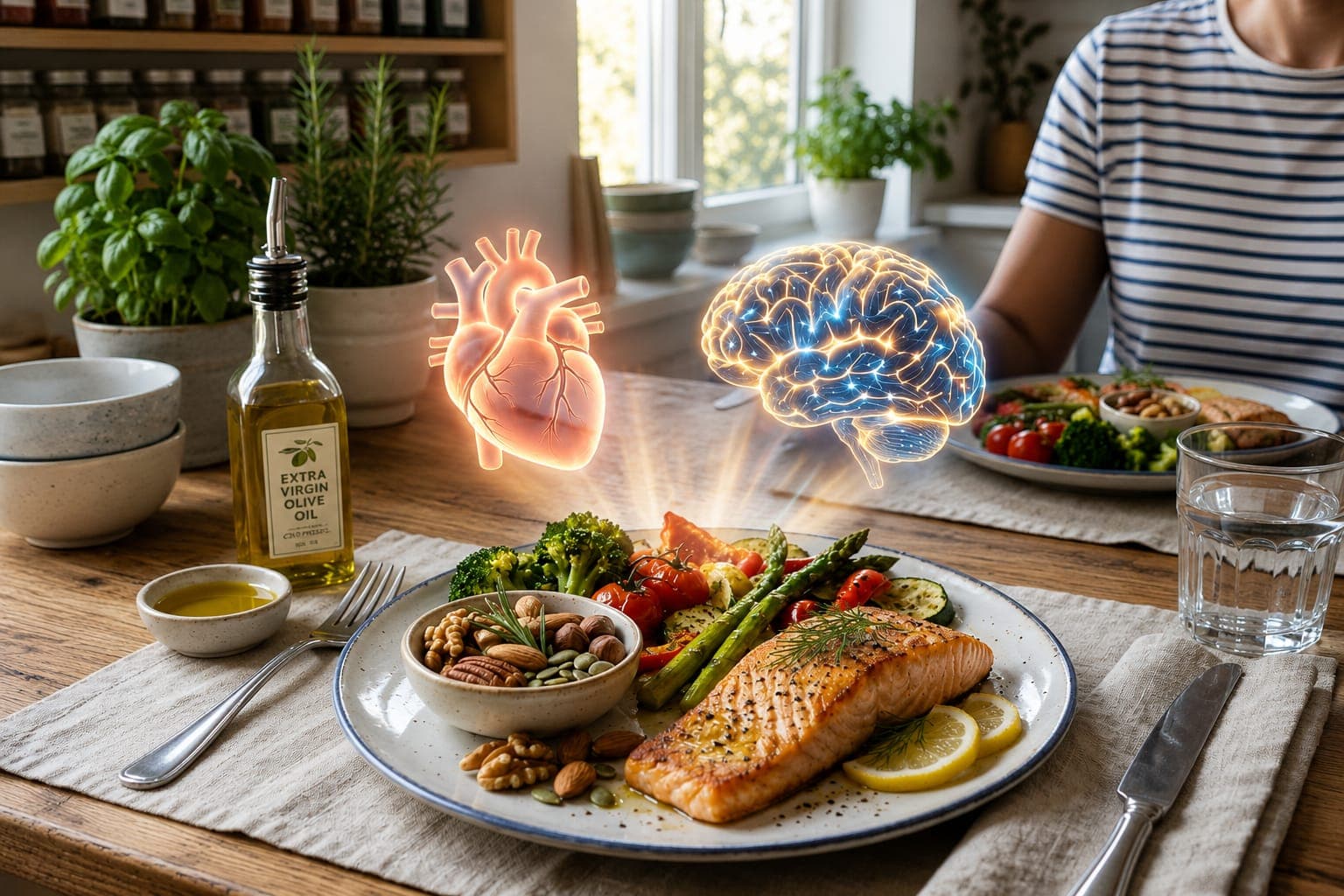
The diet's components did not contribute equally. Higher consumption of olive oil, fish and legumes tracked with increased humanin levels; olive oil and a lower intake of refined carbohydrates were linked to higher SHMOOSE. That granularity hints at a future where dietary guidance could be tuned to specific biological targets rather than broad food-group recommendations.
The team also traced a possible mechanism: higher humanin levels correlated with lower activity of Nox2, an enzyme that generates the reactive oxygen species behind oxidative stress. “This could represent a new cardioprotective mechanism of the Mediterranean diet,” Vicinanza said.
The Last Word
Published in Frontiers in Nutrition, the study doesn't overturn existing dietary guidance — it supplies a biological paper trail for advice that has, until now, rested largely on population statistics. Sometimes the most sophisticated health technology isn't a molecule engineered in a lab, but one already sitting in a bottle of olive oil.
The Cosminnox • Reporting based on findings published in Frontiers in Nutrition and research from the USC Leonard Davis School of Gerontology.