THE IMMEDIATE CASE
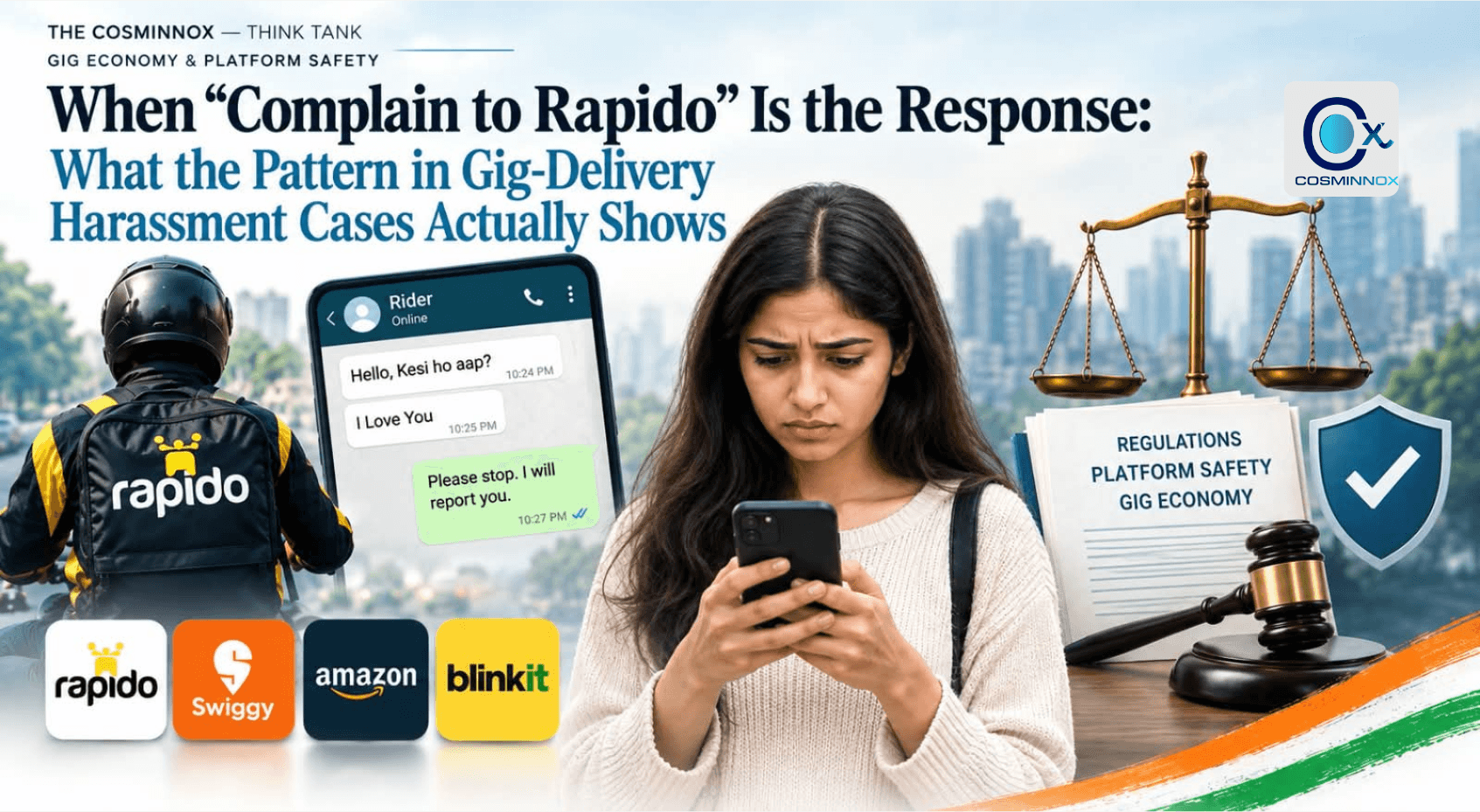
A Noida resident, Geetika Srivastava, booked a parcel pickup through Rapido; the assigned rider, after completing the job, messaged her “Hello, Kesi ho aap?” followed by a direct “I Love You.” When she said she would report him, he responded by daring her to go ahead and complain to Rapido itself, showing no apparent concern about consequences. She subsequently raised the broader question of whether platform partners face any real accountability for misconduct toward women users. Rapido’s public response called the executive’s conduct a serious matter and stated that customer safety, dignity and respect were its top priorities.
NOT AN ISOLATED INCIDENT
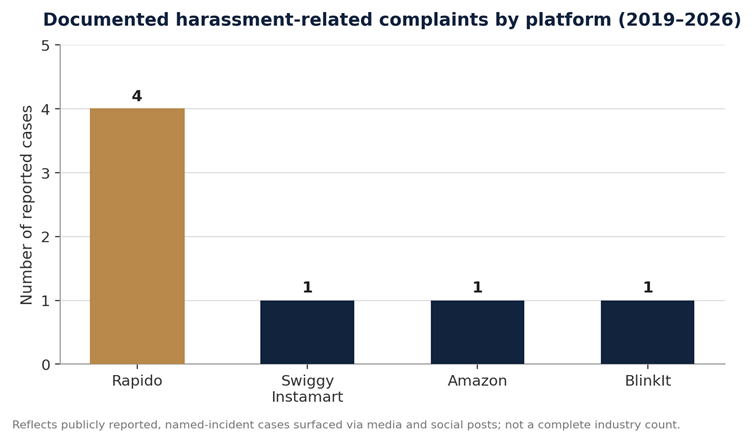
This is at least the fourth documented Rapido case of this specific kind in three years. In Bengaluru in 2023, a rider allegedly engaged in indecent conduct during the ride and, after the trip, sent her messages with kissing emojis and the words “love you.” In Ghaziabad this June, a rider who had just dropped a passenger contacted her afterward, opening with “Pehchaana nahi? Abhi toh drop karke aaya hoon” — asking if she recognised him. Separately, a Rapido rider was accused of telling a passenger he had only agreed to pick her up after seeing her WhatsApp display picture and hearing her voice.
The pattern isn’t confined to one company. On Swiggy’s grocery arm, a delivery executive sent a customer messages like “miss you lot” and comments on her appearance after a doorstep delivery; she noted at the time that this was neither the first nor the last time something like it had happened to her. And the risk isn’t limited to messaging — Noida and Greater Noida have also seen an Amazon delivery agent booked over an alleged assault during a product pickup, and a BlinkIt delivery worker arrested in a rape case at a customer’s residence, both involving personnel who had legitimate doorstep access through the platform’s own logistics chain.
Documented Incidents at a Glance
Platform | Location | Approx. date | Nature of complaint | Company action stated publicly |
Rapido | Noida | Sept 2026 | Unsolicited romantic messages post-delivery; rider dared her to complain | Public apology; no confirmed suspension or police case reported |
Rapido | Ghaziabad | June 2026 | Rider contacted passenger on WhatsApp after drop-off | Company apology after post went viral |
Rapido | Bengaluru | 2023 | Alleged indecent conduct during ride, followed by ‘love you’ messages | Rider arrested; company assisted investigation |
Rapido | Unspecified | Undated | Rider messaged passenger citing her display picture/voice | Rapido Cares apologised, said action would be taken |
Swiggy Instamart | New Delhi | June 2025 | ‘Creepy’ post-delivery messages on WhatsApp | Delivery executive ‘deactivated’ after investigation |
Amazon (logistics partner) | Noida | Oct 2019 | Alleged assault during product pickup | Amazon said it engaged its logistics partner |
BlinkIt | Greater Noida | Oct 2023 | Alleged rape at customer’s residence during delivery | Accused arrested; no public company statement found |
Table compiled from public reporting cited at the end of this piece; entries reflect what was publicly reported, not court-established fact.
Reported Cases by Platform
WHAT THE COMPANIES ACTUALLY DID DIFFERENTLY
The response wasn’t uniform. Swiggy said it had deactivated the delivery executive following an internal probe. In a separate Bengaluru case involving a fare-inflation scam, Rapido said it had suspended the driver’s account after investigating. But in the Ghaziabad and original Noida “I Love You” cases, there is no public record of an account suspension, police case, or resolution timeline — only a general statement of concern. The gap isn’t in whether companies respond, but in whether the response is a published, verifiable action or a message posted under a viral thread.
WHAT IS ALREADY REQUIRED, AND ISN’T VISIBLE
Under the Ministry of Road Transport and Highways’ Motor Vehicle Aggregator Guidelines, aggregators must appoint a grievance officer, display that officer’s contact details on the app, and complete an inquiry into any passenger complaint within three days before taking action against a driver or delivery partner. Driver and rider onboarding is also meant to include identity, background and psychological-fitness verification. None of the cases above show a company citing this specific process, timeline, or officer by name in its public reply — the response has stayed at the level of a comment on a social media post.
OPTIONS ON THE TABLE
The record above shows gaps at more than one point in the chain — visibility, verification, and enforcement — not one alone. These are the distinct levers available, presented without ranking one over another:
Option | What it would involve | Trade-off |
Publish the MoRTH grievance-officer process | Display the officer’s contact details and the mandated 3-day inquiry timeline per complaint, city-wise, as the guidelines already require | Improves visibility; doesn’t by itself stop repeat onboarding of flagged individuals |
Independent third-party safety audit | An external agency annually audits verification, complaint volumes and deactivation rates, published as a report | Adds accountability; audits lag real-time incidents and add cost |
Stricter pre-onboarding verification | Third-party validation of the background and psychological checks the guidelines specify, before activation | Targets root cause; may slow onboarding and reduce partner supply |
Direct law-enforcement escalation in-app | A safety-specific escalation path separate from customer-service chat, linked to local police | Fastest response for physical-safety threats; depends on city-by-city police-system readiness |
Sources: India.com; LatestLY; IANS/ianslive.in; India TV News; SheThePeople; The Tribune; Deccan Herald; The Quint; Ministry of Road Transport & Highways, Motor Vehicle Aggregator Guidelines.