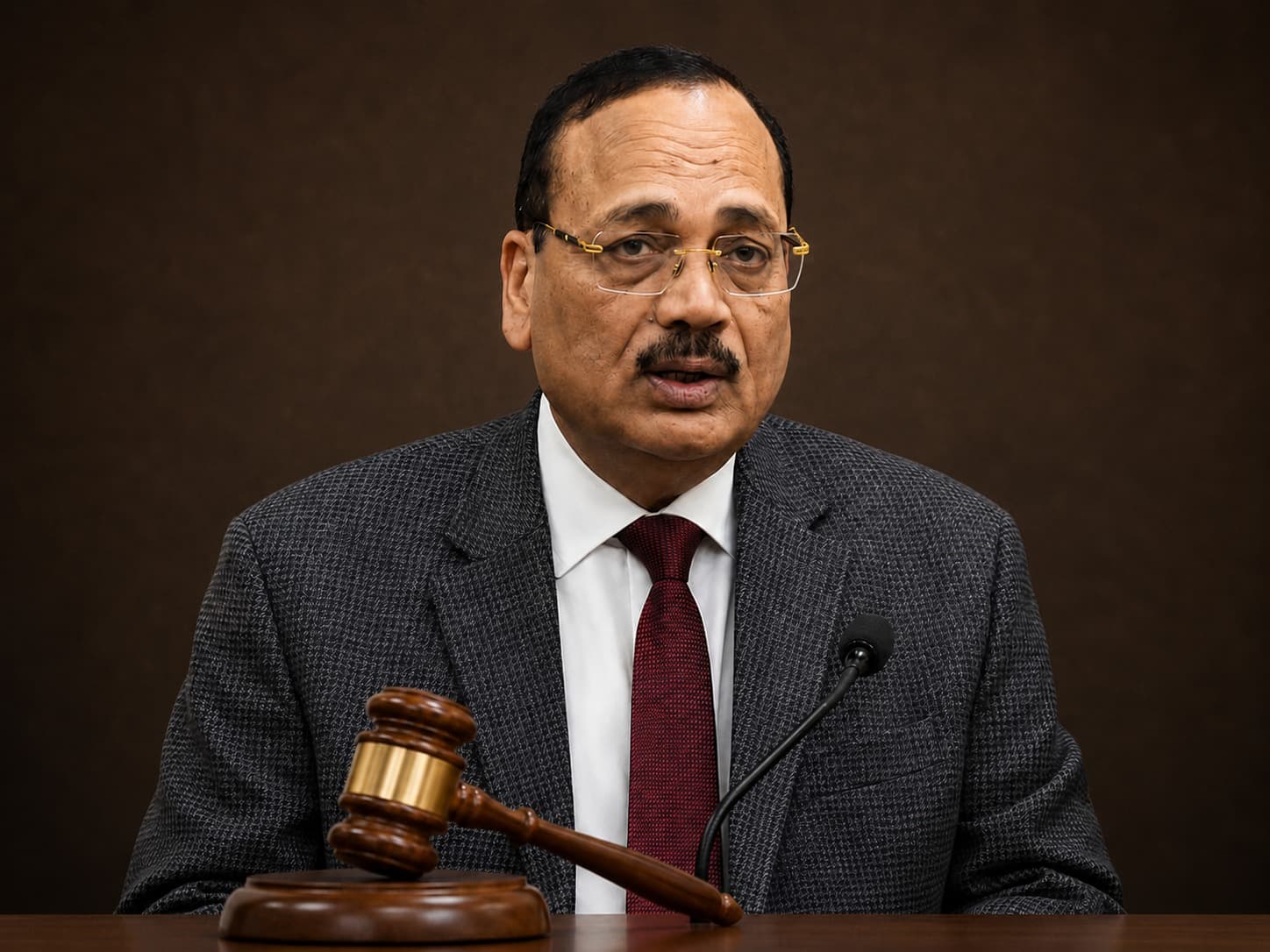
Chief Justice of India Surya Kant has constituted four special Division Benches of the Supreme Court to exclusively hear the court's oldest pending civil and criminal matters, in what is being described as one of the first major administrative reforms of his tenure. The revised roster took effect from mid-July 2026 — July 13, according to the notification reported by India Legal, and July 15 per the CJI's own account in an interview with Bar and Bench.
The initiative is expected to fast-track nearly 800 long-pending matters that have been identified for priority adjudication, with each of the four benches initially taking up around 200 of the oldest cases for continuous hearing. According to the National Judicial Data Grid, the Supreme Court currently has over 96,000 pending cases.
How the Benches Are Split
Under the new roster, the benches headed by Justice P.K. Mishra and Justice S.V.N. Bhatti will exclusively deal with the oldest civil matters, while the benches headed by Justice Manoj Misra and Justice Ujjal Bhuyan will exclusively hear the oldest criminal matters. All four benches will sit on non-miscellaneous days — Tuesday, Wednesday and Thursday — which are typically reserved for detailed hearings and final disposal, rather than on Mondays and Fridays, which are set aside for fresh filings and admission matters. By keeping these benches free of routine miscellaneous work, the Registry intends to give them uninterrupted time to work through the backlog.
A Strictly Chronological Method
Speaking to Bar and Bench, CJI Kant explained that the dedicated benches would list cases purely by age, rather than by convenience or subject matter. “If the oldest civil appeal is from 2005, it will be listed at serial number 1. Similarly, if the oldest criminal appeal is from 2009, that will be listed first,” he said. The CJI added that the decision followed months of studying disposal trends and listing patterns together with the Registry, and that the move was intended to correct a listing system under which very old appeals could otherwise be pushed indefinitely behind newer filings.
“Frankly speaking, I am putting myself to the test. If these benches perform well and the outcome is good, then it will be an attractive incentive for the next Chief Justice of India to continue with the system. But if this new initiative fails, then obviously nobody would like to continue it.”
— CJI Surya Kant, in conversation with Bar and Bench
The CJI called the initiative “probably a first” for the Supreme Court and said the proposal was his own, though he noted that all judges extended their cooperation once it was put forward.
Part of a Wider Pendency Push
Justice Surya Kant was sworn in as the 53rd Chief Justice of India on 24 November 2025, succeeding Justice B.R. Gavai, and holds a tenure of about 14 months, until his retirement on 9 February 2027. Even before his oath-taking ceremony, he had flagged pendency as a priority area, at a time when the Supreme Court's docket had crossed 90,000 cases, with a sharp rise of nearly 10,000 filings in 2025 alone. Alongside the new special benches, the CJI has separately spoken of prioritising Constitution Bench matters — of which 25 are currently pending — and of promoting mediation as what he has called “an easy game changer” for reducing the load on the court.
The special benches follow the resumption of regular court functioning after the Supreme Court's reduced summer-vacation schedule, and mark a shift from earlier backlog-clearance measures such as the SC-JUDICARE case-classification project and thematic Lok Adalat weeks introduced under previous Chief Justices. Whether the model becomes a permanent fixture of the Supreme Court's case-management system will depend, in the CJI's own words, on how the four benches perform over the coming months.
The Cosminnox • Reporting based on statements from CJI Surya Kant, the Supreme Court Registry's roster notification, and coverage in Bar and Bench, India Legal, Supreme Court Observer and The Tribune (November 2025–July 2026).