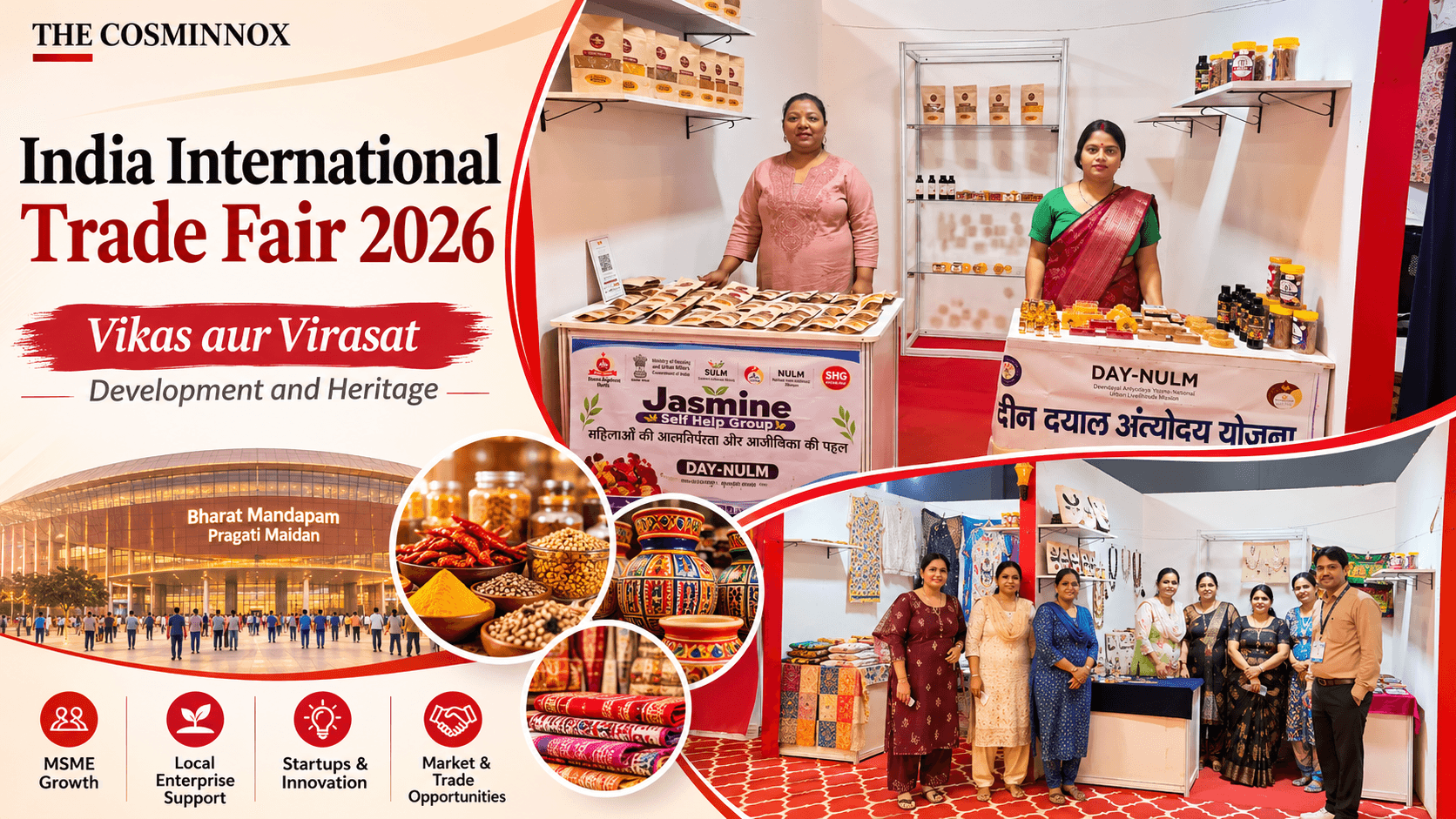
The 45th India International Trade Fair (IITF) is underway at Bharat Mandapam, Pragati Maidan, from 14 to 27 November 2026. Organised by the India Trade Promotion Organisation (ITPO), it brings together businesses, government institutions, international exhibitors, traditional artisans and technology-driven startups. The organisers report more than 3,500 exhibitors, participation from 32 states and Union Territories, and representation from 11 countries.
For visitors, IITF offers regional products, cultural experiences and emerging technologies. For businesses, particularly smaller enterprises, its value lies in access to customers, distributors and markets that might otherwise remain difficult to reach.
1. The beginning: Why was IITF established?
The first IITF was held in 1979 at Pragati Maidan, New Delhi, under the Trade Fair Authority of India (TFAI). The Government of India incorporated TFAI in 1976 by combining existing exhibition and trade-promotion bodies; it began operations in 1977. Following a merger with the Trade Development Authority in 1992, the institution became ITPO.
The purpose was to give Indian enterprises an organised platform to demonstrate products, meet domestic and overseas buyers and develop trade relationships. At a time of limited international visibility for many Indian producers, exhibitions offered direct exposure to new customers and industrial practices.
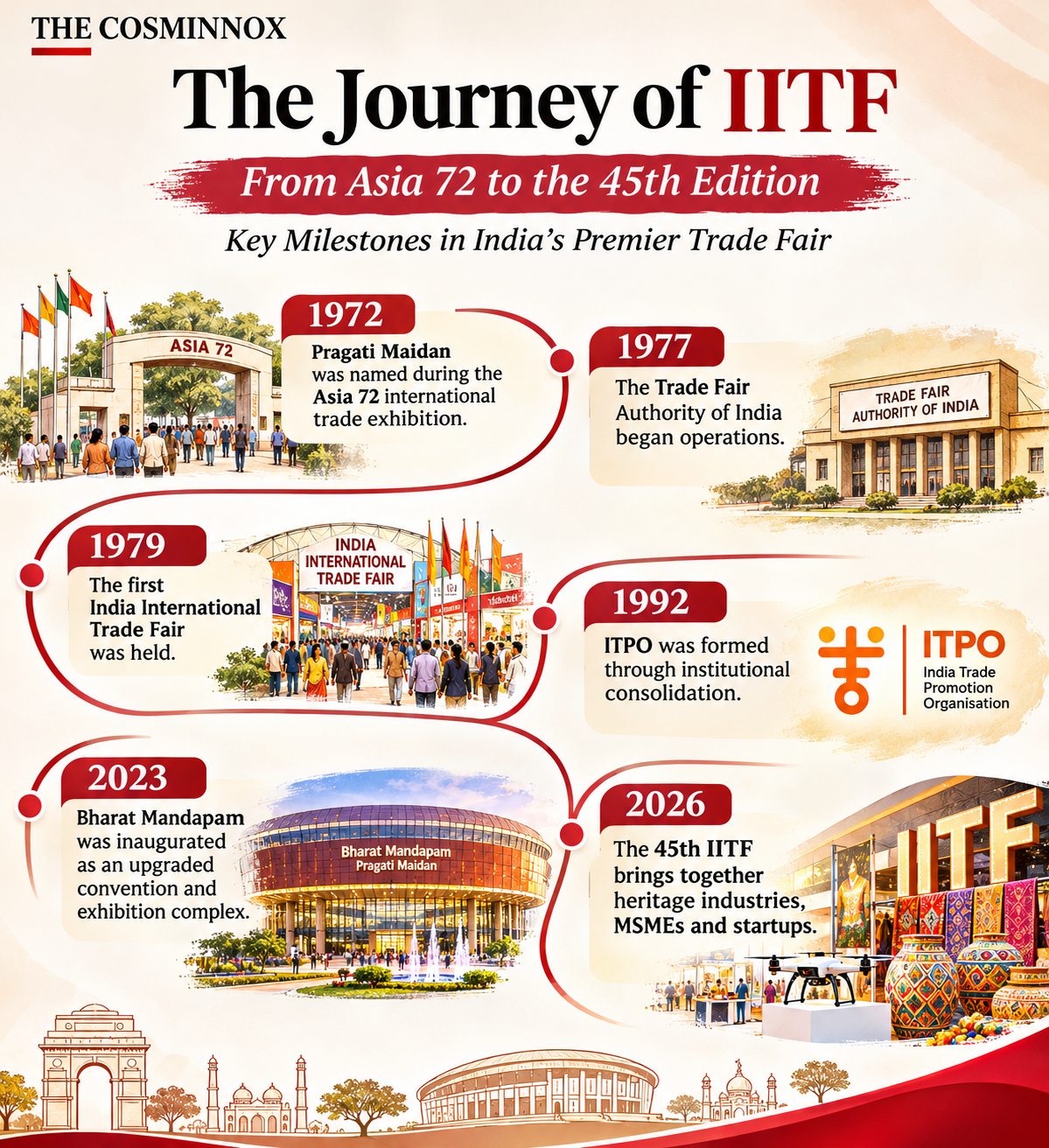
Early reporting described displays of electronics, machinery and industrial technology alongside consumer products, demonstrating that commercial exchange was central to the fair from its beginnings. The event has since expanded into a broad showcase of manufacturing, regional crafts, entrepreneurship, technology and cultural exchange.
2. What has IITF brought to small businesses?
For an enterprise operating in a district market, national advertising and distribution may be unaffordable. IITF can offer a first opportunity to introduce products to customers from other regions, meet wholesalers, collect feedback and build brand recognition.
A 2025 Ministry of Commerce and Industry backgrounder described individual small producers benefiting from IITF, including a farmer who reported profits and follow-up orders and an artisan from Latur who displayed traditional Godhari quilts. Such examples demonstrate potential, but do not establish a cumulative income figure for all exhibitors.
The practical benefits include wider market access, visibility beyond the home district, direct contact with prospective buyers, and feedback on packaging, design, quality and price. The results vary widely by product, preparation and follow-up.
3. Why local businesses and MSMEs benefit
India’s micro, small and medium enterprises work across manufacturing, services, food processing, textiles, engineering and traditional crafts. Many face limited marketing budgets, reliance on intermediaries and restricted distribution. A trade fair brings different customer groups into one place, reducing some of the effort required to test new markets.
Consider a small kitchen-equipment manufacturer from Uttar Pradesh: instead of relying only on local retailers, it can demonstrate products to potential distributors from several states. A Rajasthan spice producer can test whether its packaging and price appeal to customers outside its existing market. These are illustrative scenarios, not verified accounts of specific exhibitors.
Participation also costs money: stall rental, transport, accommodation, staffing and inventory can be substantial for microenterprises. Affordable participation options, shared logistics and reliable buyer introductions would make the fair more inclusive.
Women Entrepreneurs: From Local Enterprise to National Markets
As IITF 2026 highlights the contribution of local enterprises and MSMEs, another initiative places women entrepreneurs at the centre of India's economic development agenda.
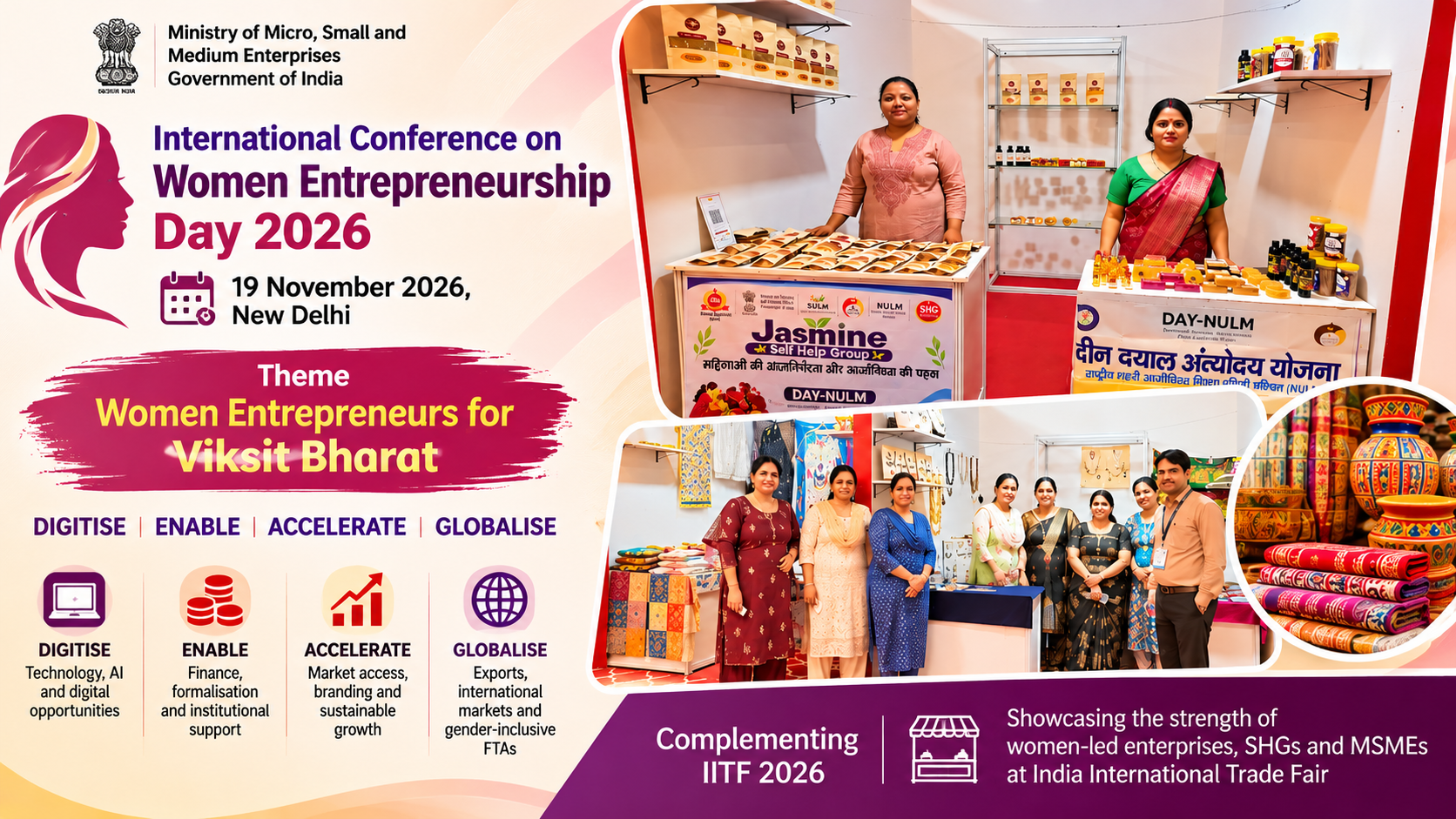
The Ministry of Micro, Small and Medium Enterprises has announced the International Conference on Women Entrepreneurship Day 2026, scheduled for 19 November in New Delhi.
Under the theme Women Entrepreneurs for Viksit Bharat, the conference focuses on four priorities: Digitise, Enable, Accelerate and Globalise. These emphasise digital adoption, financial and institutional support, market access, business growth and international opportunities.
The relevance is visible at IITF itself, where women-led Self Help Groups (SHGs), including the Jasmine Self Help Group from North Delhi, are showcasing packaged spices and other locally produced goods.
Such participation illustrates how government-supported entrepreneurship initiatives can help women bring their products beyond neighbourhood markets and gain wider commercial exposure.
Together, these initiatives reinforce an important principle: women's economic empowerment requires more than encouraging entrepreneurship; it requires access to finance, technology, customers and sustainable markets.
4. Vikas aur Virasat: What the 2026 theme means
Vikas means development: industrial modernisation, technology, infrastructure, entrepreneurship and economic opportunity. Virasat means heritage: traditional skills, regional products, craftsmanship and the cultural knowledge embedded in local industries. The theme proposes that these forces can reinforce each other rather than compete.
A handloom producer can preserve regional designs while adopting digital payments, modern packaging and online sales. A traditional food enterprise can retain its recipe while improving food-safety practices and distribution. The point is not to replace traditional work with modern industry, but to help producers participate in changing markets without losing their identity or bargaining power.
The theme is visible in state pavilions, the One District One Product (ODOP) initiative and the Hall of Inspiration for startups. Bihar, Maharashtra, Rajasthan and Uttar Pradesh are Partner States; Assam, Delhi, Jharkhand and West Bengal are Focus States. The ODOP Pavilion includes participation from 21 states, highlighting district-specific products, crafts and foods.
Cultural recognition alone does not ensure fair earnings. A successful heritage-based business model must improve quality, branding and market reach while ensuring that artisans and local producers retain meaningful value.
5. What products and attractions are showcased?
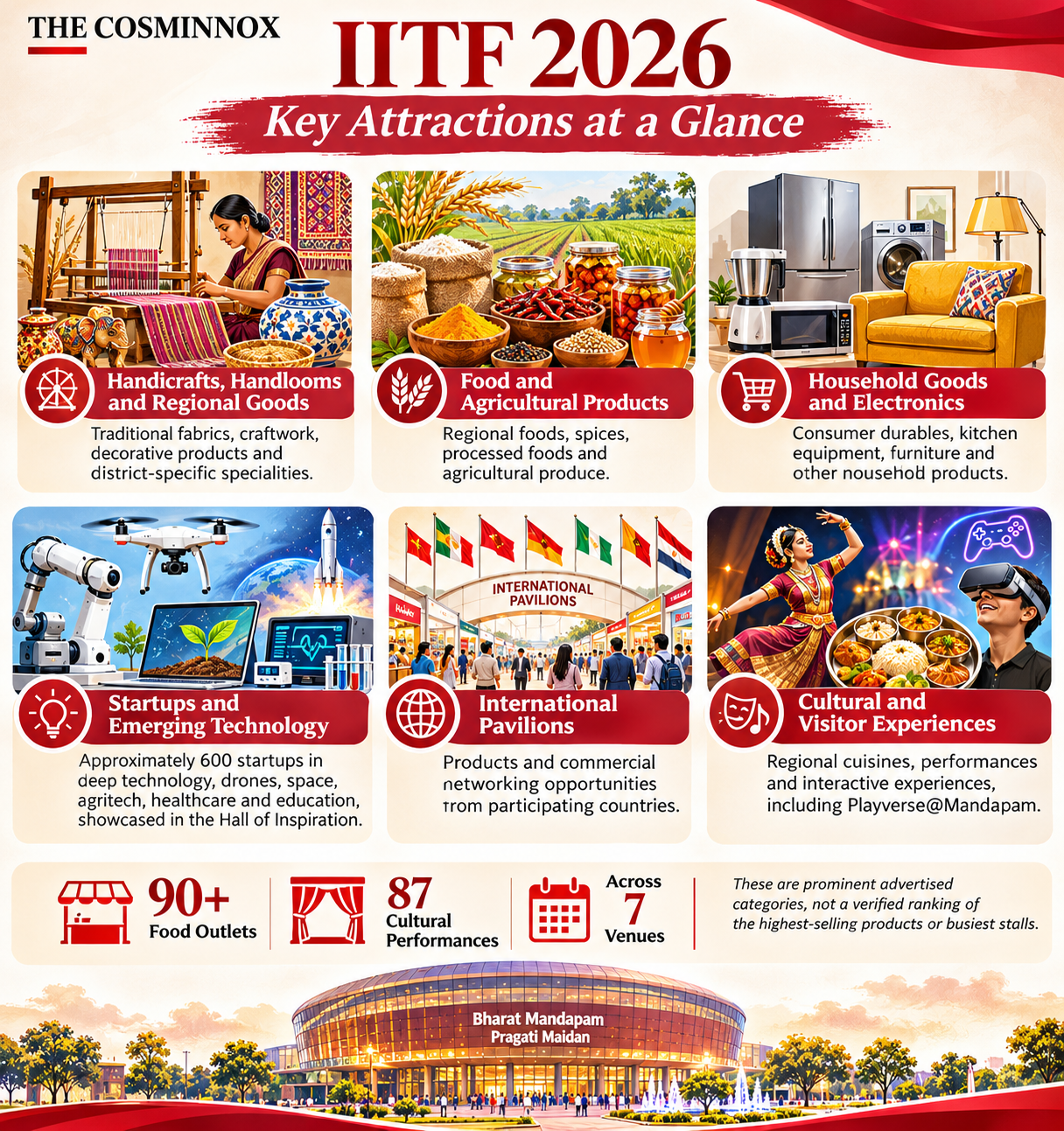
Handicrafts, handlooms and regional goods: Traditional fabrics, craftwork, decorative products and district-specific specialities.
Food and agricultural products: Regional foods, spices, processed foods and agricultural produce.
Household goods and electronics: Consumer durables, kitchen equipment, furniture and other household products.
Startups and emerging technology: Approximately 600 startups in deep technology, drones, space, agritech, healthcare and education, showcased in the Hall of Inspiration.
International pavilions: Products and commercial networking opportunities from participating countries.
Cultural and visitor experiences: Regional cuisines, performances and interactive experiences, including Playverse@Mandapam.
These are prominent advertised categories, not a verified ranking of the highest-selling products or busiest stalls. The programme also advertises more than 90 food outlets and 87 cultural performances across seven venues.
6. Startups: Taking innovation beyond laboratories
The Hall of Inspiration gives emerging businesses a chance to demonstrate products, meet users and identify potential pilots or commercial partners. An agritech startup might connect with distributors and farming organisations; a healthcare technology firm might explore institutional demand. Yet visibility is only the first step. Commercial success depends on solving real problems, meeting standards and building repeat customers.
7. International participation: Connecting businesses to the world
The fair’s international participation offers exposure to different product standards, consumer preferences and trade practices. Exhibitors from countries including Thailand, Iran, Nepal, the UAE, Turkey, China, Sri Lanka and Bangladesh feature in the programme. For Indian MSMEs, these interactions may initiate export or distribution discussions. They do not, by themselves, guarantee orders: quality, certification, logistics and follow-through remain essential.
8. The way forward: Better support for smaller enterprises
IITF can become more useful to small businesses through affordable exhibition space, shared logistics, verified buyer meetings, digital-marketing guidance and post-event support. Coordination between trade-promotion agencies, state governments, MSME institutions and lenders could help entrepreneurs respond to commercial enquiries after the exhibition ends.
For women-led enterprises, rural producers, artisans and first-generation entrepreneurs, the objective should be to leave with more than publicity: practical market knowledge, useful relationships and a realistic route to growth.
The COSMINNOX Verdict
Since its beginnings in 1979, IITF has developed into a meeting point for India’s traditional industries, consumer markets, international trade and emerging technologies. Vikas aur Virasat captures a useful principle: India need not abandon traditional skills to become technologically advanced, nor preserve heritage only as a decorative reminder of the past.
When artisans and small manufacturers gain access to better infrastructure, modern marketing and dependable markets, heritage can become a source of sustained livelihoods. The fair opens doors; its longer-term contribution depends on whether those introductions become stronger enterprises and commercial relationships.
India’s progress should be measured not only by the technologies it develops or the markets it enters, but also by how successfully its smallest enterprises participate in that growth.
Sources and references
· ITPO — IITF official website: https://www.itpo.gov.in/iitf
· Ministry of Commerce and Industry — IITF 2026 announcement: https://www.pib.gov.in/PressReleseDetailm.aspx?PRID=2335428&lang=1®=1
· Press Information Bureau — IITF and small businesses (2025): https://www.pib.gov.in/PressReleasePage.aspx?PRID=2193109
· India Today — historical reporting on IITF (1981): https://www.indiatoday.in/magazine/indiascope/story/19811215-india-international-trade-fair-to-become-an-annual-affair-773532-2013-10-25
· ITPO institutional history: https://www.itpo.gov.in/assets/images/aahar-2026-delhi/pdf/aahar_2026_directory_for_website.pdf