
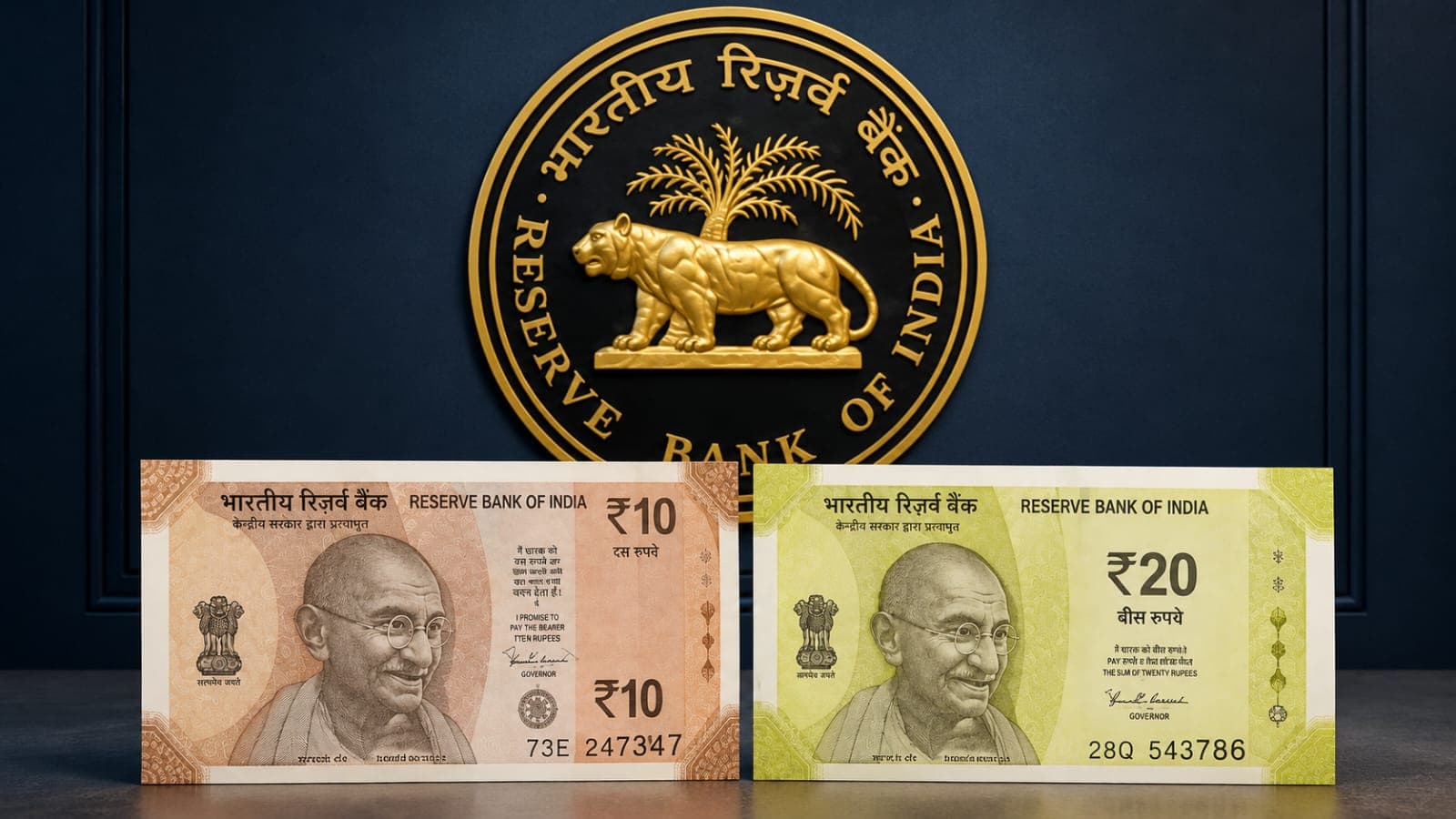
The rupee is getting a makeover, and it starts with the two denominations that pass through the most hands every single day. The government has approved a Reserve Bank of India proposal to roll out one billion polymer banknotes each in ₹10 and ₹20 denominations, setting the stage for the first serious trial of plastic currency in India in over a decade.
A Parliament Reply, Not a Press Conference
The announcement came not through a press conference but through the quieter machinery of Parliament. Minister of State for Finance Pankaj Chaudhary, responding to a written question in the Lok Sabha, confirmed that the RBI's Central Board had recommended the move under Section 25 of the Reserve Bank of India Act, 1934, and that the Centre had signed off on it. Two billion notes, split evenly between the ₹10 and ₹20 notes, will now be printed on polymer substrate and pushed into circulation as field trials, with a decision on full-scale, regular issuance to follow only if those trials succeed.
A Decade-Old Idea Returns
This is not India's first flirtation with plastic money. The RBI explored polymer notes back in 2012, only to shelve the idea over technical hurdles. More than a decade later, RBI Governor Sanjay Malhotra reopened the conversation in June, confirming the central bank was weighing the pros and cons afresh. What has changed since then is durability data from around the world — and a currency-printing bill that keeps climbing. The RBI's own annual report shows the cost of securely printing paper notes rose from ₹5,101.4 crore in FY24 to ₹6,372.8 crore in FY25, a jump the central bank attributes largely to higher printing demand.
Why Durability Matters More for Small Notes
That rising cost is central to the case for polymer. International studies cited by the RBI show polymer notes last significantly longer than their paper counterparts, largely because the material resists moisture, grime and the everyday crumpling that reduces a ₹10 note to tatters within months. A note that survives longer in circulation is a note the RBI has to print, transport and destroy less often — and for low-value denominations like ₹10 and ₹20, which change hands constantly and wear out fastest, that durability advantage compounds quickly. Fewer replacement cycles mean lower long-term printing costs, and notes that hold up better across India's varied climate, from humid coastlines to dusty interiors, also mean fewer torn or unusable notes clogging the system.
The Quiet Security Upgrade
Security is the other quiet winner here. Polymer substrates are harder to counterfeit convincingly than paper, since they carry transparent windows and other features that are difficult to replicate with ordinary printing equipment. For denominations as small as ₹10 and ₹20, counterfeiting has historically been less of a headline concern than it is for larger notes, but tightening security across the currency spectrum strengthens public trust in cash as a whole.
Paper Currency Isn't Going Anywhere
Crucially, the government has been careful to frame this as an addition, not a replacement. Chaudhary was explicit that polymer notes will circulate alongside existing paper-based currency, with no proposal on the table to phase out paper money in favour of plastic. The RBI has also pushed back on any suggestion that this move signals doubt about digital payments, insisting that cash and digital transactions are complementary tools rather than rivals — an impact that, in any case, can only be properly assessed once the polymer notes are actually out in the market.
India Joins a Well-Worn Global Path
India would be joining a well-worn path rather than blazing a new one. Roughly sixty countries have already adopted polymer banknotes in some form, starting with Australia in 1988 and followed over the decades by Singapore, Thailand, Malaysia, Indonesia, Canada and Romania, among others. Their experience offers the RBI a template for what to watch during the trial phase: how the notes hold up in daily wallets and cash registers, how vending machines and ATMs handle the different texture, and how the public responds to a currency that feels distinctly different in the hand.
What Changes at the Till — For Now
For now, nothing changes at the till. The ₹10 and ₹20 notes people already carry remain valid, and polymer versions will only begin appearing gradually as the trial rolls out. But if the pilot delivers on its promise, it could mark the first real shift in the physical feel of Indian currency in a generation.