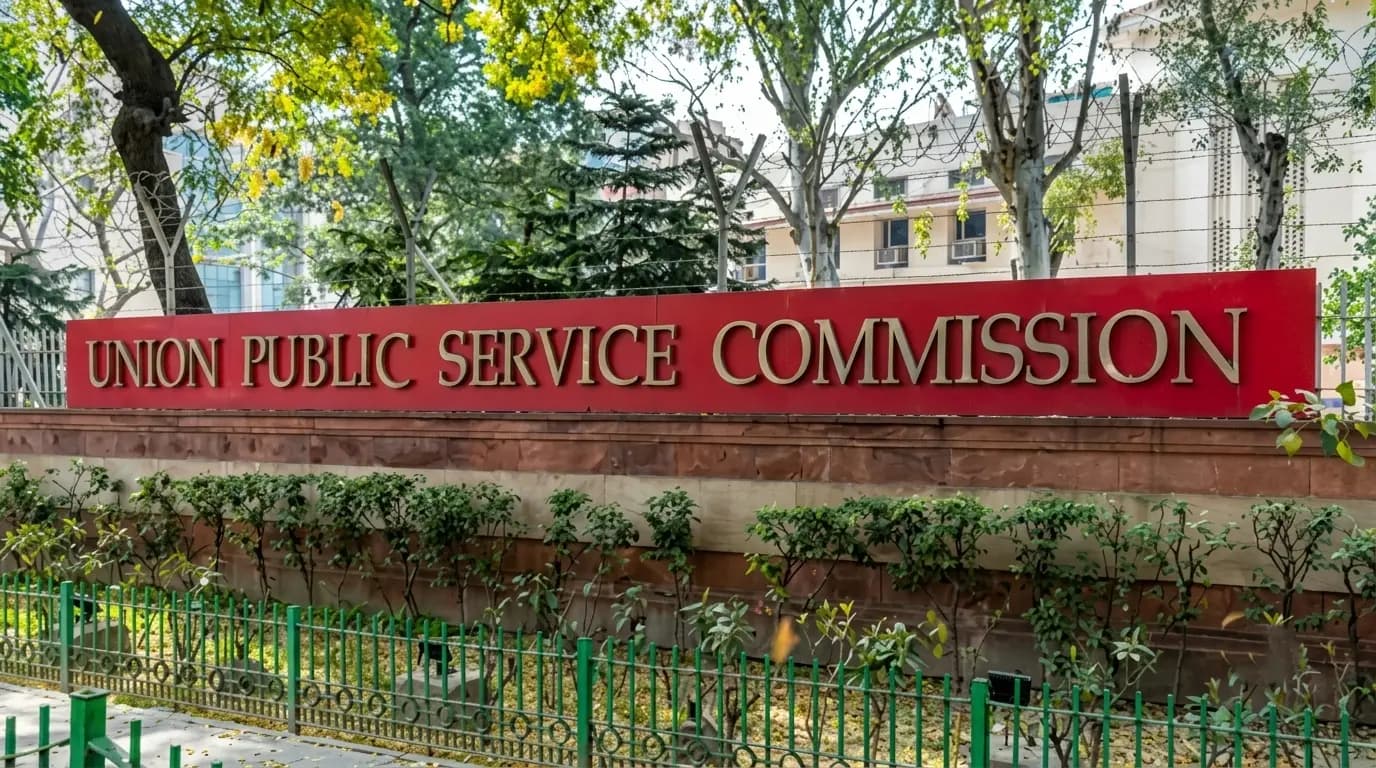
Every year, nearly a million Indians sit down with a pencil and a dream. The Civil Services Examination is not merely a test — it is a rite of passage, a national obsession, the singular corridor into the steel frame that holds the Republic together. For generations, the gatekeepers of that corridor were human. Diligent, experienced, and — as it turned out — occasionally outmaneuvered. Not anymore.
The Union Public Service Commission made a quiet but consequential decision ahead of the 2025 cycle: embed Artificial Intelligence at the very first gate — the Preliminary application. The result was surgical. Before a single exam hall was booked, 569 ineligible candidates had been identified and removed. The system had read what human eyes missed.
Learning From the Past
The catalyst, as with most institutional overhauls, was scandal. The 2024 controversy surrounding former trainee IAS officer Puja Khedkar — who allegedly altered her name, her parents' names, and medical records to circumvent the maximum attempt ceiling — exposed a structural vulnerability that had existed, unaddressed, for years. UPSC responded not with tighter paperwork, but with technology that does not forget and cannot be charmed.
Inside the 15-Year Forensic Audit
The AI system operates as a forensic auditor, combing through a 15-year archival database of applications. It cross-references names, photographs, dates of birth, and parental details to detect duplicate profiles — identities reshaped just enough to look new. It tracks attempt counts with mathematical precision, checking each applicant against the constitutional limits that govern their category.
And it watches for category-shifting: applicants who moved from General to EWS, or SC to OBC, not because their circumstances changed, but because a new category meant a reset attempt counter. Of the 43,000 candidates who had altered reservation categories across cycles, 133 were found to have done so for no other purpose.
Enforcing Fairness with Restraint
What makes UPSC's deployment distinctive — and worth watching — is its restraint. This is not AI deciding who is smart enough or worthy enough to serve the nation. It is AI enforcing the rules that already exist, with an accuracy and consistency no human review board could match at scale. Flagged anomalies receive automated email notices before final cancellation, preserving due process. The remaining 94% of applicants, who voluntarily linked their official identification for biometric verification, sailed through without friction. For them, the AI was invisible.
“Technology must serve the cause of fairness. In an examination where the margin between selection and rejection can be a fraction of a mark — where candidates spend three, four, five years in preparation — the integrity of the process is not bureaucratic formality. It is the foundation of trust in the institution itself.”
— Ajay Kumar, UPSC Chairman
India is watching an experiment unfold in real time — one where AI governance is not a private sector innovation story, but a public sector accountability tool. As this model matures, it signals a larger truth: the modernization of the state is no longer optional. The Steel Frame must be built on transparent foundations, and the algorithm is now one of its architects.
IDC India Innovation Development Council
As India's governance ecosystem continues its digital transformation, policymakers, technologists, and institutional leaders are invited to engage with IDC, where conversations on AI in public administration are already underway.
The future of accountable governance is being written now. Be part of the authorship.
The Cosminnox • Reporting compiled from Union Public Service Commission institutional directives, civil services administrative disclosures, and analytical briefs from the India Innovation Development Council (IDC INDIA).