What Happened
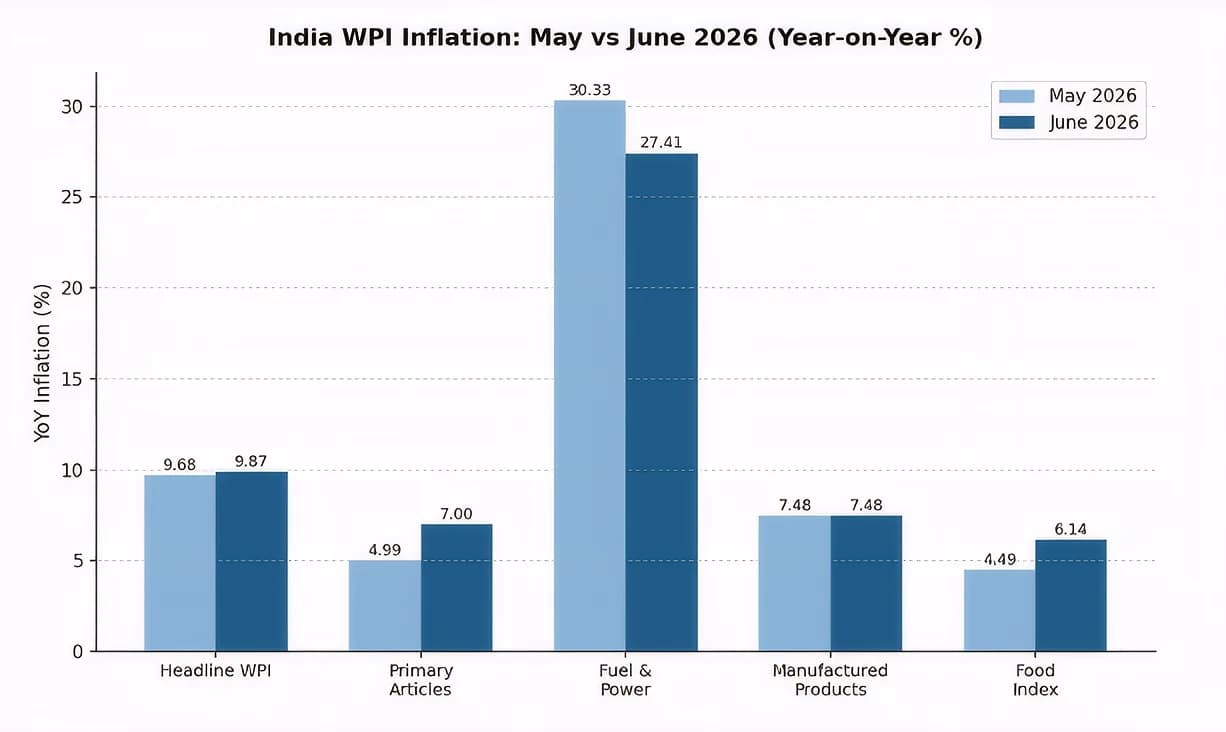
India's wholesale inflation surged to 9.87 percent in June 2026, up from 9.68 percent in May, according to data released by the government. The All India Wholesale Price Index (WPI) inflation for June 2026 stood at 9.87 per cent on a year-on-year basis, compared to 9.68 per cent in May 2026. The headline index for all commodities climbed to 110.2 in June from 109.9 in May.
The reading marks the highest level of wholesale inflation in 27 months. The government also revised its earlier estimate for April upward. The final WPI estimate for April 2026 was revised to 108.9 from the provisional figure of 108.8, pushing April's inflation rate up to 8.36 percent from the initially reported 8.26 percent.
When
The figures were released in mid-July 2026 as provisional data for June, alongside the finalised numbers for April. The provisional estimate for June was compiled with an 82.6 percent weighted response rate, while the April final estimate reflected a 97.5 percent response rate. Revisions to the June figure are expected when final data is published in the following months, as is standard practice for WPI reporting.
What is Wholesale Inflation
Wholesale inflation measures price changes at the producer level rather than the retail level, tracked through the Wholesale Price Index. It captures the change in prices of goods traded between businesses — such as manufacturers, wholesalers, and bulk traders — before those goods reach the final consumer. This distinguishes it from the Consumer Price Index (CPI), which measures retail prices actually paid by consumers, whereas WPI tracks price movements experienced by producers and wholesalers.
Because WPI reflects costs incurred earlier in the supply chain, it is often viewed as an early indicator of price pressures that could eventually filter through to retail markets. Sustained increases in wholesale prices can eventually push up consumer prices, influence corporate profit margins, and affect the Reserve Bank of India's monetary policy decisions.
Why Wholesale Inflation Rose
According to the Ministry of Commerce and Industry, the primary drivers behind the wholesale price pressures during June included mineral oils containing petroleum products, food articles, basic metals, and chemicals and chemical products.
A breakdown of the major sub-groups shows a mixed picture. Year-on-year inflation rates for Primary Articles, Fuel and Power, and Manufactured Products stood at 7 percent, 27.41 percent, and 7.48 percent respectively in June 2026, compared with 4.99 percent, 30.33 percent, and 7.48 percent in May 2026. This indicates that while fuel inflation remained the largest contributor by rate, it had actually eased slightly from May's level even as it stayed elevated in absolute terms. Primary Articles, on the other hand, saw a sharper acceleration.
Reasons Behind the Rise in Food Prices
Food emerged as one of the key contributors to the overall increase. The WPI Food Index, which carries a combined weight of 24.99 percent and includes both food articles from primary goods and manufactured food items, registered year-on-year inflation of 6.14 percent in June, up sharply from 4.49 percent in May.
Officials attributed part of this jump to seasonal and supply-side pressures affecting agricultural produce, alongside continued cost pressures in processed and manufactured food categories. Rising prices of both food and non-food items were cited as factors intensifying overall price pressure across the economy during the month.
Broader Context
Wholesale inflation is closely watched because it influences the cost of doing business, household spending, and investment decisions, and the latest data signals that businesses are facing higher input costs. While these cost increases are not always immediately reflected in retail prices, they can gradually be passed on to consumers if the pressures persist. Sectors most likely to feel the impact include manufacturing, consumer goods, transportation, chemicals, metals, and other energy-intensive industries.
The next set of provisional WPI figures, covering July 2026, is scheduled for release in mid-August, which will indicate whether the current trend of elevated wholesale inflation continues or begins to moderate.