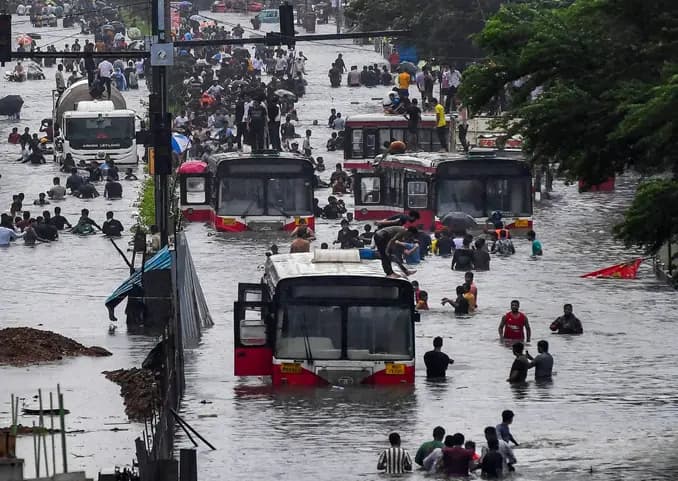
For two weeks, Mumbai waited. The southwest monsoon, due by June 10 or 11, simply didn't show up — and a city built for extremes treated the delay as a small mercy. Then, on the night of June 23, it arrived all at once, and the mercy ran out by morning.
The Numbers Behind the Night
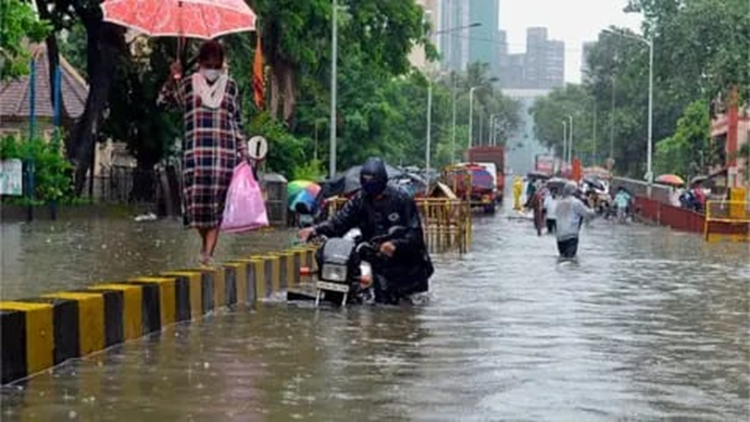
The India Meteorological Department's math tells the story better than any adjective could. The southwest monsoon arrived in Mumbai 13 days after its normal onset date of June 11, bringing heavy overnight rainfall of up to 208 mm in the western suburbs. The island city logged 195 mm and the eastern suburbs 167 mm in the same 24-hour window — three different Mumbais, three different deluges, one paralysed transport network. The IMD didn't undersell it either: a three-hour red alert went out at 4 a.m. for Mumbai and Palghar, warning of gusts up to 60 kmph, before being eased to an orange alert three hours later.
Geography did the rest. A high tide of 3.41 metres struck at 8:28 a.m., compounding the runoff problem — a reminder that much of Mumbai's stormwater system still drains toward a sea that, on tide-heavy mornings, simply drains back.
Where the City Buckled
Andheri's subway flooded first, as it almost always does, along with Hindmata, King's Circle, and Everard Nagar. Two BMC officers waded in to rescue a rickshaw driver whose vehicle had stalled in the centre of the flooded Andheri underpass, before authorities barricaded the route entirely. The candour from the ground was unusually blunt for a civic statement — a rare admission that the city has, for now, run out of fixes.
"We have not been able to find a temporary solution for this severe water logging."
— Rhitik, BMC Official, to ANI
The railways fared no better. Excess water flow caused a track collapse on the Trans-Harbour line between Turbhe and Koparkhairane, suspending services for over two hours before speed-restricted trains resumed.
A Delay With a History
There's a grim symmetry here. This onset ties as the third most-delayed monsoon arrival in Mumbai since 1951, matching the delay recorded in 1974. The drainage system absorbing this week's downpour, meanwhile, was largely sized for storms a third as intense — a mismatch the Chitale Committee flagged after the catastrophic floods of 2005 and that successive monsoons have re-flagged every year since.
The monsoon, it turns out, doesn't need to be early to be unforgiving. It only needs to arrive — and Mumbai, infrastructure half a century behind its rainfall, will be doing the same math next June.
The Cosminnox • Compiled from IMD, BMC, and Central Railway statements, June 2026