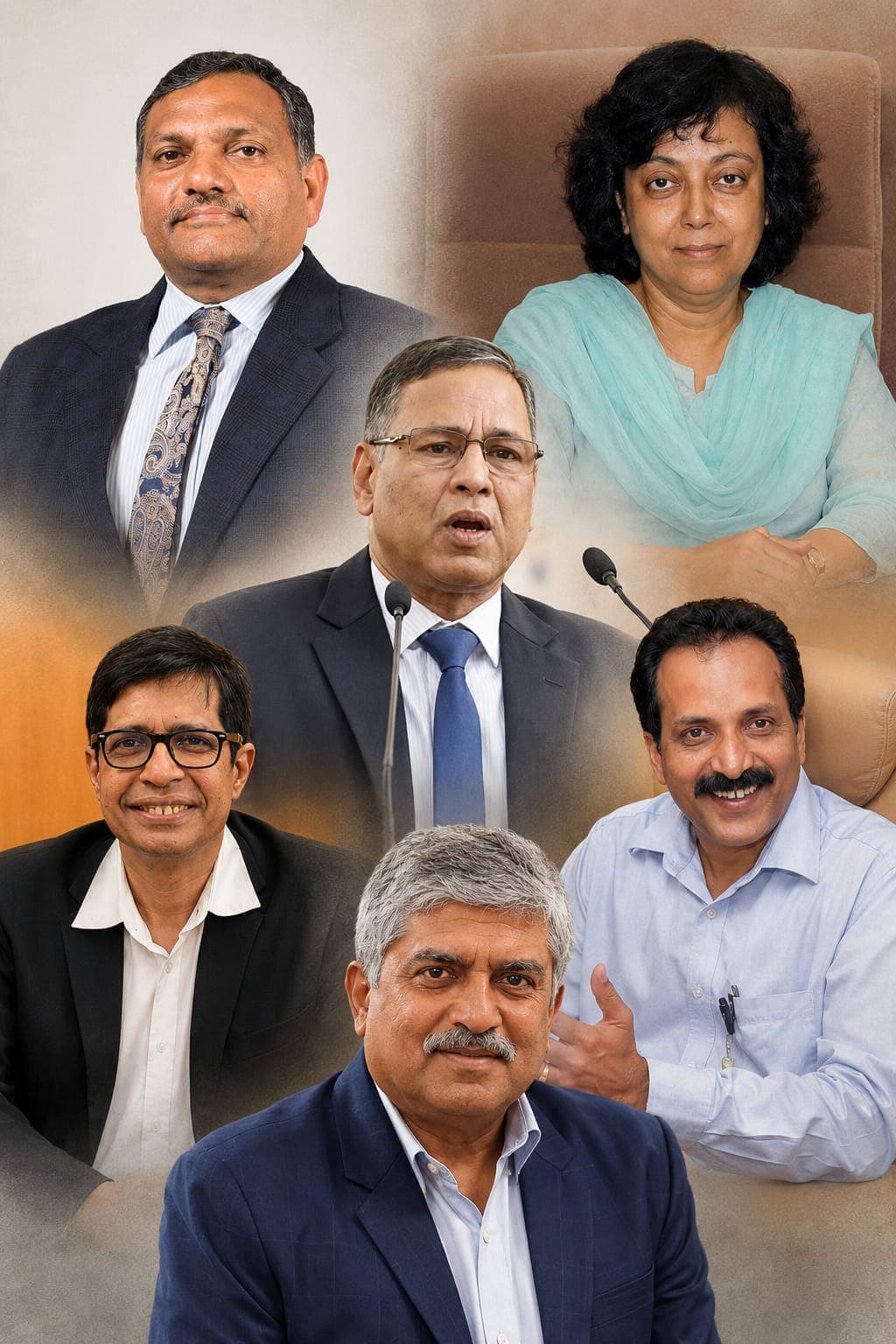
Six names, six specialisations, one mandate: fix an examination system that has been rocked by repeated paper leaks. Prime Minister Narendra Modi on Sunday announced a high-powered task force to recommend reforms to ensure a leak-proof examination system, pulling together a technologist, a former space agency chief, an ex-intelligence chief, an IIT director, a former education secretary, and a logistics veteran.
The Announcement
The move comes amid nationwide student protests against paper leaks in entrance examinations. Announcing the panel, Modi said those who "played with the future of the students" have been put in jails, and the government will bring a new bill in Parliament to enact a stricter law against examination paper leaks. He added that the government wants the examination system to be trustworthy and transparent, with technology used optimally, and for that a high-powered committee headed by "world-renowned technology expert" Nandan Nilekani has been constituted. Modi said the panel's recommendations will be implemented as soon as its report is submitted.
The Six Members
Nandan Nilekani — Chairman. The Infosys co-founder and architect of India's Aadhaar biometric identity system heads the task force. Nilekani, former chairman of the Unique Identification Authority of India, is credited with building India's digital public infrastructure ecosystem and currently serves as non-executive chairman of Infosys. His brief is expected to centre on building an end-to-end encrypted examination platform and steering the system's digital overhaul.
S Somanath — Former ISRO Chairman. An aerospace engineer with over three decades of experience, Somanath led India's space programmes including the Chandrayaan-3 lunar mission. His track record in running complex, zero-failure systems positions him to focus on operational reliability — designing multi-layered checks so a single point of failure, such as a leak, does not collapse the entire process.
Tapan Deka — Former Intelligence Bureau Director. An IPS officer of the Himachal Pradesh cadre from Assam, Deka headed the Intelligence Bureau from June 2022 to June 2026 and played a key role in counter-terrorism operations in Jammu and Kashmir, the Northeast, and the investigation into the 26/11 Mumbai attacks. On the task force, his national-security background is expected to strengthen the exam system's defences against leaks, hacking, and insider threats.
V Kamakoti — Director, IIT Madras. A computer scientist who has led IIT Madras since January 2022, Kamakoti also heads the Centre-funded Microprocessor Development Program and sits on the National Security Advisory Board. He is expected to bring academic and research expertise, particularly on protecting software and server infrastructure and applying AI to exam-setting, evaluation, and anomaly detection.
Anita Karwal — Former Education Secretary. A 1988-batch Gujarat-cadre IAS officer, Karwal served as CBSE chairperson from 2017 to 2021 and later as secretary of the Department of School Education and Literacy, where she helped shape the National Education Policy 2020 and the National Curriculum Framework. Her governance experience is seen as central to any structural or policy reform of the National Testing Agency (NTA) itself.
Amrit Lal Meena — Logistics Expert. A 1989-batch IAS officer of the Bihar cadre who retired as Bihar's chief secretary, Meena has also served as Special Secretary for Logistics in the Ministry of Commerce and Industry. His task will likely involve identifying vulnerabilities in the supply chain — ensuring question papers move securely from printing press to examination hall.
The Bigger Picture
The task force has been asked to ensure examinations conducted by the NTA become trustworthy and transparent through greater use of technology. Alongside it, the government is scheduled to introduce the Public Examinations (Prevention of Unfair Means) Amendment Bill, 2026, in the Lok Sabha, which proposes fast-track courts in every state for paper-leak cases and a two-month deadline for completing investigations. The bill also proposes prison terms of up to ten years and fines up to Rs 50 lakh for individuals involved in leaks, with fines up to Rs 10 crore for organised crimes linked to paper leaks.
Together, the task force and the proposed law mark the government's twin-track response — technological and legal — to a crisis of confidence that has kept students on the streets for weeks.
The Cosminnox • Reporting based on the Prime Minister's announcement and official information regarding India's examination system reform initiative.