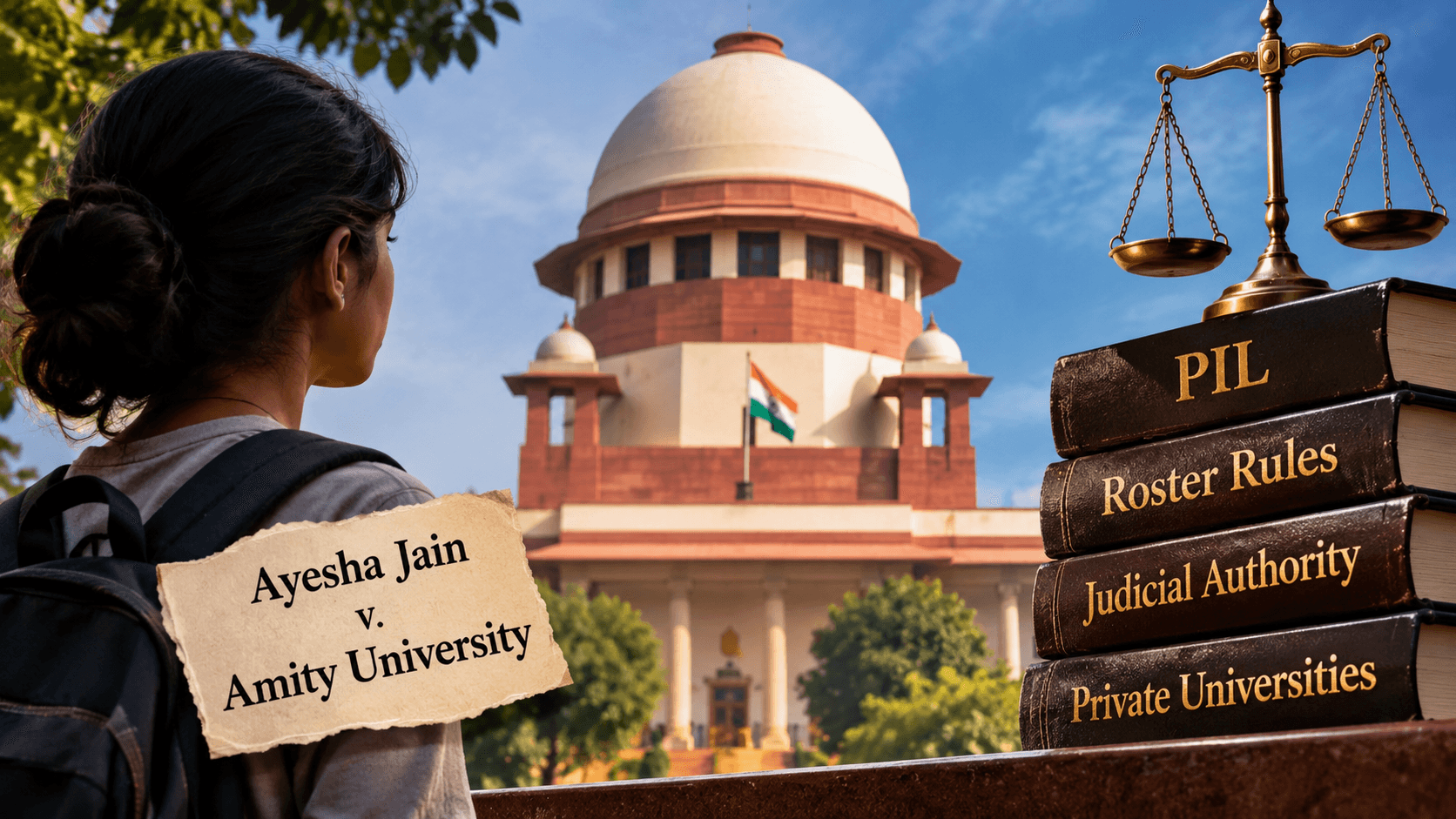
A student’s dispute with a university has brought an important judicial principle into focus: who decides which Supreme Court judges hear which cases? Chief Justice of India Surya Kant has reportedly reassigned Ayesha Jain v. Amity University, Noida & Ors. from a bench headed by Justice Ahsanuddin Amanullah to a three-judge bench led by Justice Vikram Nath. The reported concern is procedural: an individual complaint expanded into a nationwide public-interest inquiry outside the earlier bench’s assigned roster.
From one grievance to a national inquiry
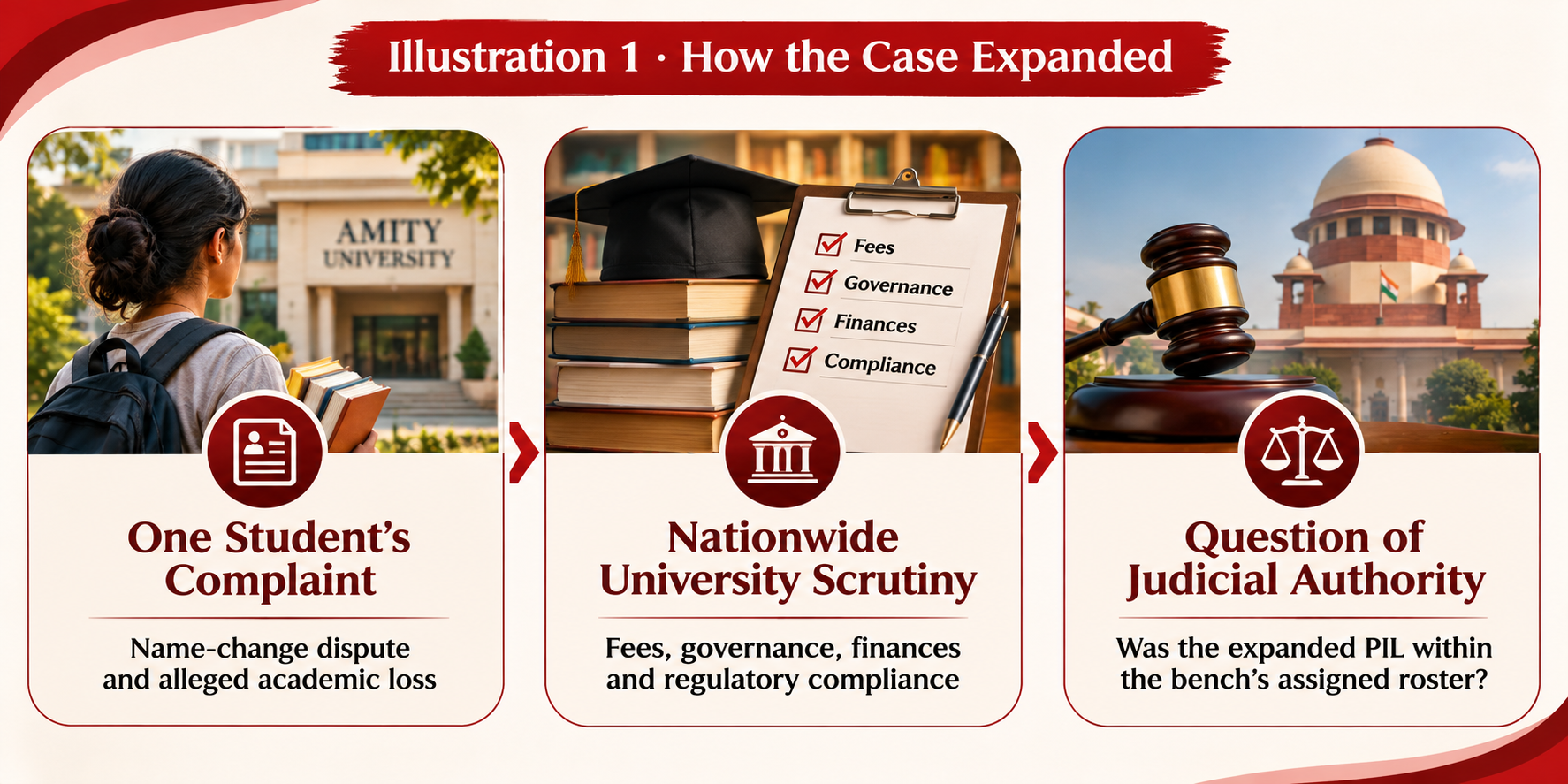
Ayesha Jain approached the Supreme Court in 2025 alleging that Amity University, Noida, failed to recognise her legally changed name. She said she had changed her name from Khushi Jain in 2021, and alleged harassment, exclusion from classes and loss of an academic year. These are allegations, not established findings.
The bench of Justices Amanullah and N.V. Anjaria examined her grievance. In November 2025, however, the case widened into an examination of how private universities across India are established, financed and regulated.
What did the Court seek to examine?
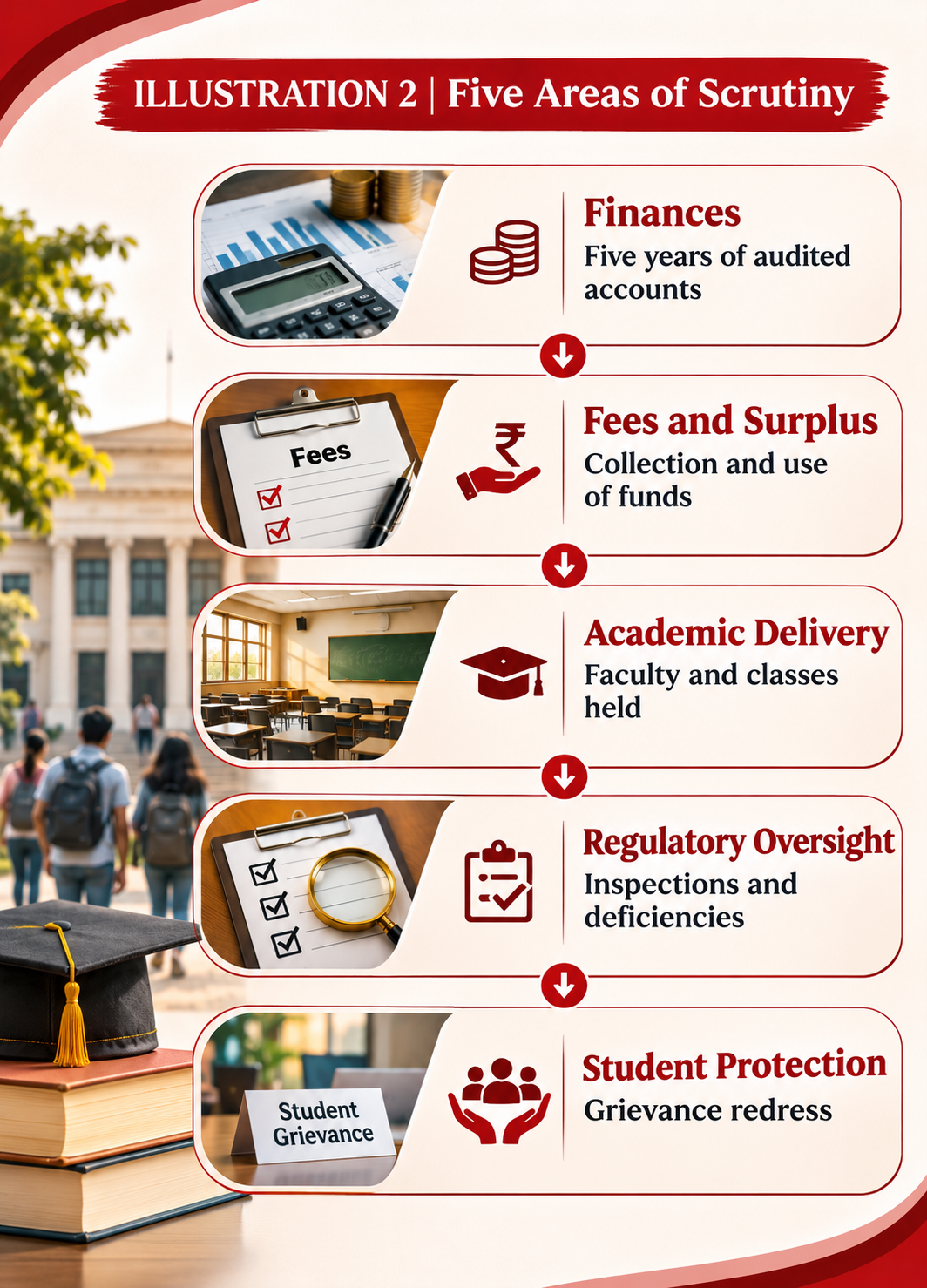
On 17 September 2026, the bench sought five years of audited accounts and disclosures about fees, surplus funds, faculty recruitment, actual teaching, inspection deficiencies and student grievances. The Court also said private universities should not be operated as profit-making ventures, while recognising legitimate reserves and fair compensation. The disclosures were requests for scrutiny, not findings that institutions had committed wrongdoing.
Why was the case reassigned?
Reports published in November 2026 attributed the move to concerns that the earlier bench retained a nationwide PIL despite PIL matters falling outside its allocated roster. The new bench comprises Justices Vikram Nath, R. Mahadevan and Aparesh Kumar Singh. The reported reason relies on accounts from people familiar with the administrative decision; it should not be presented as an official judicial finding.
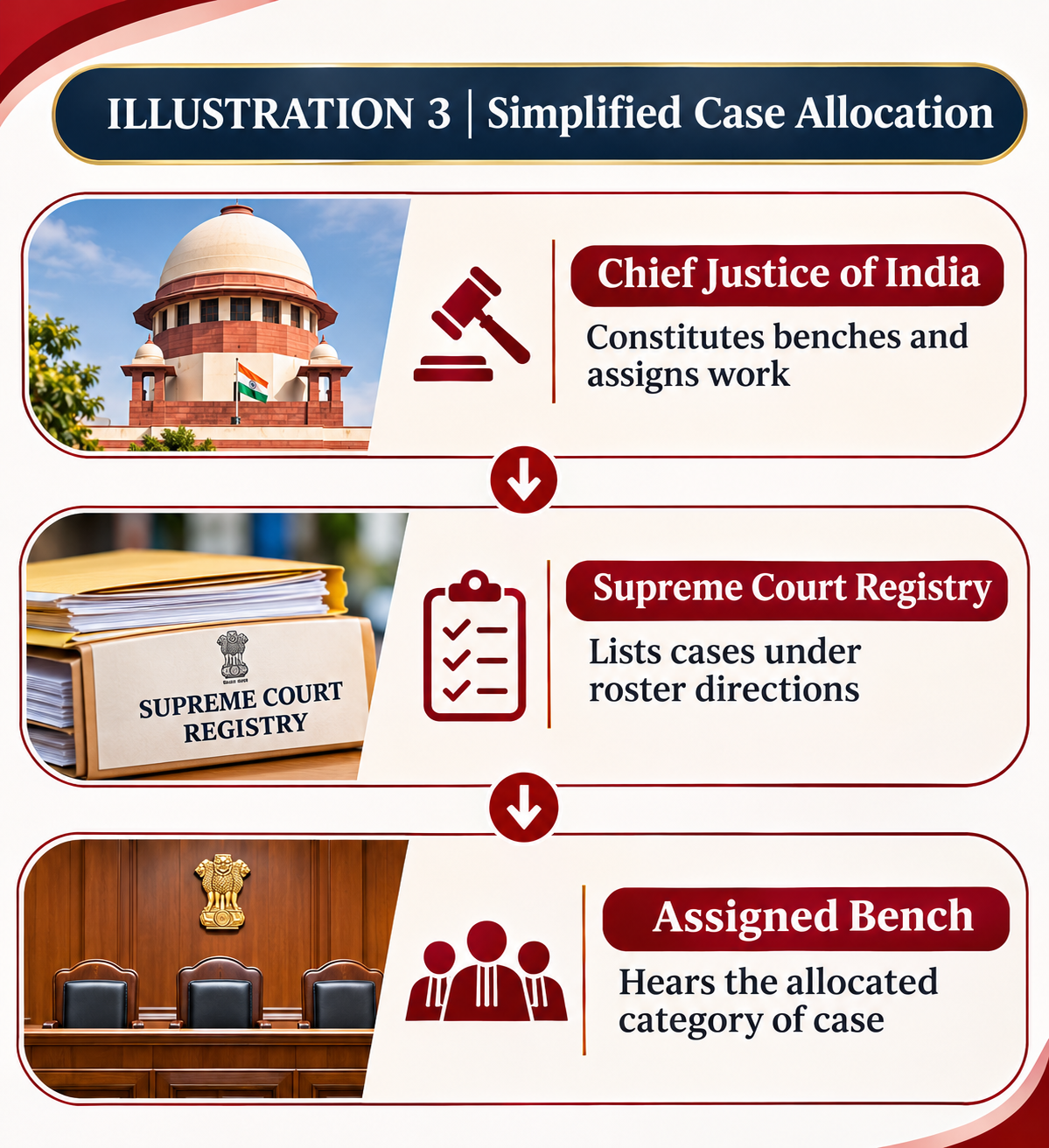
Under the “master of the roster” principle, the Chief Justice constitutes benches and allocates case categories. The Supreme Court reaffirmed that authority in Campaign for Judicial Accountability and Reforms v. Union of India (2017). The central distinction is between identifying a legitimate public issue and following the correct process to assign it.
What changes now?
The reassignment does not automatically cancel the September directions or establish wrongdoing by the earlier bench. The new bench must decide whether to continue, narrow or otherwise manage the broader inquiry. The hearing was scheduled for 19 November 2026; the outcome should be checked against the latest court record before publication.
Who is affected | What remains at stake |
Students | Fair treatment and effective grievance systems |
Private universities | Transparent finances and academic accountability |
Judiciary | Consistent case allocation and procedural legitimacy |
The COSMINNOX verdict
The case brings two forms of accountability into one debate. Universities must respect student rights and meet their academic and regulatory obligations. Courts must be free to address systemic problems, while following the institutional rules governing which bench hears a matter. These are complementary, not competing, principles. Public confidence depends on both the purpose of judicial action and the procedure through which it is taken.
Sources and editorial qualification
Supreme Court proceedings, 17 September 2026: https://indiankanoon.org/doc/138236808/
LiveLaw, 18 November 2026: https://www.livelaw.in/top-stories/case-on-regulating-private-universities-shifted-from-justice-amanullahs-bench-558905
Hindustan Times, 18 November 2026: https://www.hindustantimes.com/india-news/ht-exclusive-cji-surya-kant-pulls-two-cases-from-justice-ahsanuddin-amanullah-over-pil-roster-101794965325309-amp.html
NDTV, 18 November 2026: https://www.ndtv.com/india-news/supreme-court-turned-into-pils-why-chief-justice-surya-kant-took-2-cases-away-from-a-justice-amanullah-bench-12342635/amp/1
Editorial note: The administrative rationale is attributed to news reports, not a published judicial finding. Verify any developments from the scheduled 19 November hearing before publication.